J&K Frames Draft Hydel Policy To Boost Private Investment
ECONOMY & POLICY

J&K Frames Draft Hydel Policy To Boost Private Investment

Jammu and Kashmir has accelerated hydropower development and aims to triple installed capacity to 11,000 megawatt (MW) by 2035 after the suspension of the Indus Water Treaty following the Pahalgam attack last year. The Chief Minister Omar Abdullah informed the Legislative Assembly that a decade-long road map has been drawn and is under implementation. The plan seeks to expand generation and create local employment.

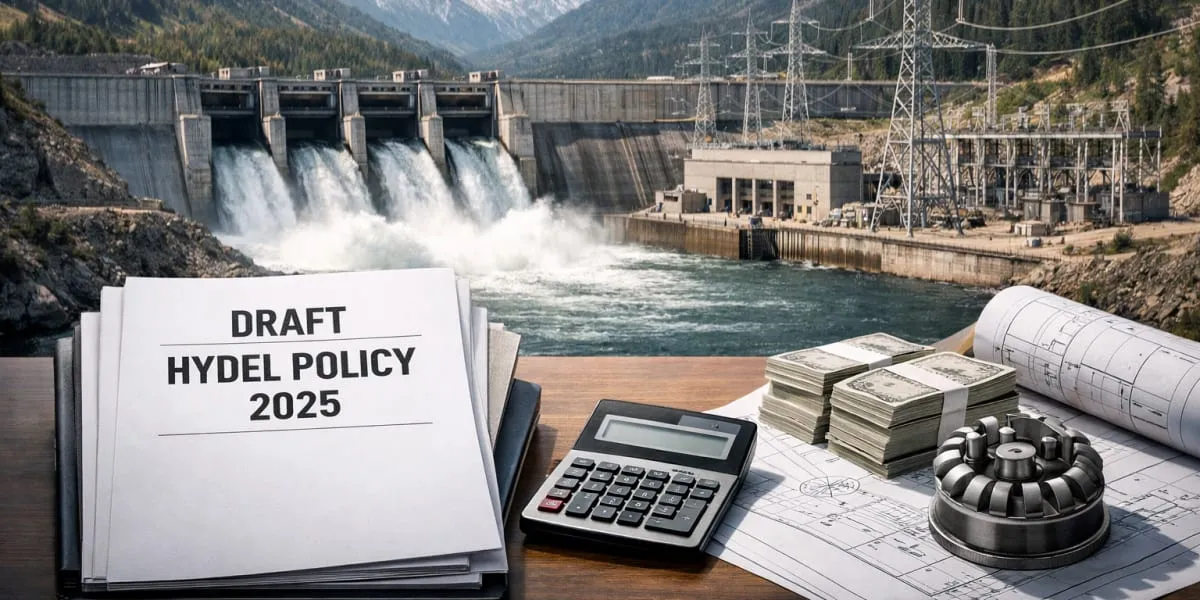
A draft J&K Hydel Policy 2025 has been framed to attract private investment in small hydropower projects and improve local socio-economic conditions, and the draft has been placed in the public domain for stakeholder feedback. The policy draws on earlier lessons and neighbouring best practices and seeks public comments. Officials expect it to stimulate investment and streamline delivery.

The policy emphasises small rivers and streams with private sector participation and mandates that independent power producers supply free power or pay royalty to Jammu and Kashmir after a specified commercial period, which should reduce electricity procurement costs. Officials said the suspension of the treaty removes the need for Pakistan's clearance and will speed up works. Efforts to identify potential storage projects have been intensified to maximise balanced hydropower use.

The Union territory is estimated to have hydropower potential of around 18,000 MW, of which 15,000 MW has been identified and 3,540.15 MW, representing 24 per cent, has been developed to date. This includes capacities aggregating 1,197.4 MW in the Union territory sector, 2,250 MW in the central sector and 92.75 MW in the independent power producer sector. Officials said the figures reflect both completed works and ongoing private participation.

The road map covers 3,063.5 MW from six under-construction hydroelectric projects and 4,507 MW from eight projects in tendering, award, detailed project report (DPR) or clearance stages, and around 100 to 150 MW is expected to be added by independent power producers. Officials said the pipeline and the draft policy are intended to accelerate harnessing of hydropower potential and promote local development.

Jammu and Kashmir has accelerated hydropower development and aims to triple installed capacity to 11,000 megawatt (MW) by 2035 after the suspension of the Indus Water Treaty following the Pahalgam attack last year. The Chief Minister Omar Abdullah informed the Legislative Assembly that a decade-long road map has been drawn and is under implementation. The plan seeks to expand generation and create local employment. A draft J&K Hydel Policy 2025 has been framed to attract private investment in small hydropower projects and improve local socio-economic conditions, and the draft has been placed in the public domain for stakeholder feedback. The policy draws on earlier lessons and neighbouring best practices and seeks public comments. Officials expect it to stimulate investment and streamline delivery. The policy emphasises small rivers and streams with private sector participation and mandates that independent power producers supply free power or pay royalty to Jammu and Kashmir after a specified commercial period, which should reduce electricity procurement costs. Officials said the suspension of the treaty removes the need for Pakistan's clearance and will speed up works. Efforts to identify potential storage projects have been intensified to maximise balanced hydropower use. The Union territory is estimated to have hydropower potential of around 18,000 MW, of which 15,000 MW has been identified and 3,540.15 MW, representing 24 per cent, has been developed to date. This includes capacities aggregating 1,197.4 MW in the Union territory sector, 2,250 MW in the central sector and 92.75 MW in the independent power producer sector. Officials said the figures reflect both completed works and ongoing private participation. The road map covers 3,063.5 MW from six under-construction hydroelectric projects and 4,507 MW from eight projects in tendering, award, detailed project report (DPR) or clearance stages, and around 100 to 150 MW is expected to be added by independent power producers. Officials said the pipeline and the draft policy are intended to accelerate harnessing of hydropower potential and promote local development.

Next Story
Real Estate

Loomcraft Enters South India with Kerala Store Launch

Loomcraft has launched its exclusive store in Kerala, marking its entry into South India and a key step in its nationwide expansion strategy. The move targets a region driven by tourism and premium real estate demand, where outdoor spaces play a central role in hospitality and residential experiences.Kerala’s growing base of luxury resorts, boutique hotels, villas and gated communities has created strong demand for specialised outdoor furniture. However, the region has remained underserved, with buyers relying on imports or generic products not suited to humid, coastal and monsoon-heavy cond..

Next Story
Building Material

Mild Steel Prices Seen Rising to Rs 61,000 Per Tonne

Mild steel prices in India, currently around Rs 58,000 per tonne, are expected to rise to nearly Rs 61,000 per tonne in April, indicating an increase of about Rs 3,000 per tonne. The anticipated rise reflects structural pressures driven by geopolitical tensions, energy constraints and limited raw material availability.Ongoing global conflict has disrupted energy markets, leading to LNG shortages that are affecting domestic steel production. Small and mid-sized manufacturers, particularly those dependent on gas-based processes, are witnessing production cuts due to constrained energy supply, re..

Next Story
Infrastructure Urban

Vedanta Expands Transgender Workforce to 75 Employees

Vedanta has strengthened its commitment to workplace inclusion by employing 75 transgender individuals across its businesses, including Vedanta Aluminium, Hindustan Zinc, Sesa Goa, FACOR and Cairn Oil & Gas. The initiative reflects sustained hiring efforts since 2022 to build equitable opportunities across operations, corporate and technical roles.Transgender employees are engaged in functions such as operations, finance, logistics, HR, CSR, healthcare and security, with provisions for internal mobility to support career progression. The company has implemented structured policies, includi..

Advertisement

Subscribe to Our Newsletter

Get daily newsletters around different themes from Construction world.

STAY CONNECTED

Advertisement

Advertisement

Advertisement