Mumbai’s Redevelopment Push
Real Estate

Mumbai’s Redevelopment Push

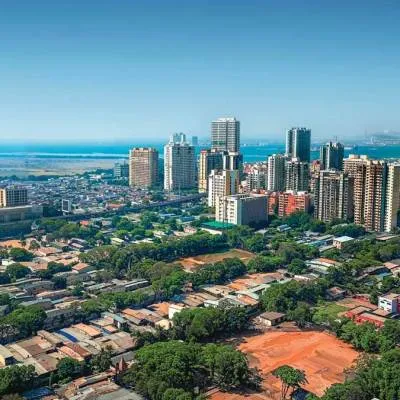
Nearly 70 per cent of India’s GDP is generated in cities, yet India’s urban core is ageing faster than it is being renewed. Mumbai, with virtually no greenfield land left, is now dependent almost entirely on redevelopment to sustain housing supply. Urban population growth – from 54.5 cror...

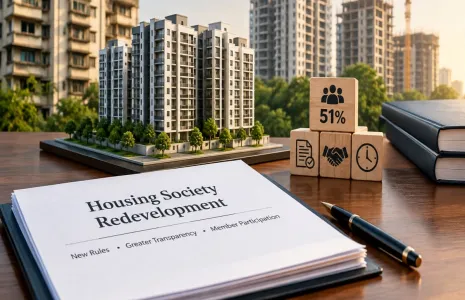
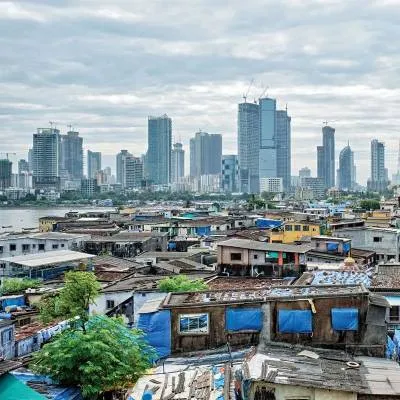
Nearly 70 per cent of India’s GDP is generated in cities, yet India’s urban core is ageing faster than it is being renewed. Mumbai, with virtually no greenfield land left, is now dependent almost entirely on redevelopment to sustain housing supply. Urban population growth – from 54.5 crore today to an estimated 60 crore within five years – has further intensified pressure on existing neighbourhoods.As highlighted at the Mumbai Redevelopment Summit, unchecked urban sprawl is no longer viable. According to ISRO estimates (2022), India consumes nearly 1.5 million hectare of farmland annually owing to outward expansion, even as inner-city areas continue to decay. Redevelopment, therefore, has shifted from a planning preference to a structural necessity.The scale mismatchData shared by Knight Frank India reveals a stark execution gap. While the Mumbai Metropolitan Region (MMR) has 40,000-50,000 housing societies, nearly 25,000 of them are over 25-30 years old and technically eligible for redevelopment. Yet, between 2019 and November 2025, only about 1,000 development agreements (DAs) have been registered.Even more telling is the nature of these projects. Nearly 90 per cent of DAs are on plots smaller than 1 acre, largely undertaken by smaller developers. Such projects are far more vulnerable to approval delays, financing stress and prolonged rental obligations – factors that have contributed to an estimated 25 per cent of registered redevelopment projects being stalled or delayed.Policy abundance, predictability deficitMumbai does not lack redevelopment frameworks. From multiple DCR 33 provisions – including 33(5), 33(7), 33(9), 33(12B) and 33(20B) – to cluster redevelopment, slum rehabilitation and self-redevelopment, the regulatory toolkit is extensive. However, summit panellists repeatedly pointed to complexity and discretion as key impediments.Each additional incentive layer increases interpretation risk, elongates approval timelines and raises the cost of capital. In redevelopment, time risk has overtaken construction risk as the primary viability threat. Delays in IODs, CCs and NOCs directly erode IRRs, while rental payouts and interest continue to accrue.Financing exists – but cash flows don’t alignContrary to perception, funding availability is not the core constraint. Banks, NBFCs, cooperative lenders and alternative capital providers are active in the sector. The challenge lies in non-linear cash flows, particularly in the early years before societies vacate and sales commence.As discussed at the summit, lenders are increasingly relying on milestone-based disbursements, escrow controls and independent monitoring to manage risk. However, these safeguards cannot compensate for weak feasibility assumptions or prolonged approval cycles, both of which remain endemic.Trust, expectations and the litigation trapConsumer representatives and legal experts flagged a growing trust deficit between societies and developers. Unrealistic expectations around additional carpet area, rentals and timelines – often shaped by informal advice or social media narratives – frequently undermine project viability. When expectations collide with economic reality, disputes escalate into litigation. With thousands of redevelopment-related cases pending in courts, capital gets locked, timelines stretch indefinitely and confidence across the ecosystem erodes.Self-redevelopment: promise with preconditionsThe Maharashtra Housing Policy 2025, along with proposals for state-backed redevelopment funds of Rs 2,000-3,000 crore and a dedicated self-redevelopment authority, has renewed interest in society-led projects. Yet, speakers cautioned that self-redevelopment is not a panacea.Successful cases are typically small, cohesive societies with strong governance, professional project management and bank-led financial controls. Without these, self-redevelopment risks replicating the same execution failures seen in developer-led projects.Execution realitiesIn Mumbai’s island city, cessed buildings under DCR 33(7) and 33(9) – many over 70-100 years old – present an urgent safety challenge. Repair-based approaches are no longer viable, yet redevelopment approvals alone can take two to three years before demolition begins.Speakers underscored the critical role of project management consultants (PMCs) as system integrators and the growing relevance of BIM and digital dashboards to control cost, timelines and transparency – provided planning authorities also embrace digital scrutiny.What comes nextThe Mumbai Redevelopment Summit made one reality unmistakably clear: the city’s housing future will be decided less by policy intent and more by execution discipline. Across panel discussions – from financing and DCR complexity to self-redevelopment and stalled projects –experts repeatedly flagged the same fault lines: time overruns, trust deficits, fragmented approvals and fragile viability. As redevelopment becomes Mumbai’s primary growth engine, the unresolved question is no longer whether it will happen, but how it can be delivered without repeating past failures. The February issue will take this conversation forward with deeper data, case studies and on-ground insights.

Next Story
Infrastructure Transport

METRO MOVES!

There is no clearer sign that India’s metro-rail revolution is no longer a big-city story than having a metro in 23 cities. From being one-off projects in Kolkata and Delhi, metro rails have evolved into a national urban transformation project aiming at reshaping mobility, land use and sustainability in every city with an operational metro.However, this project has neither seen uniform success across cities, nor success in every city.Experts in unison agree with the observation of Vipul Surana, Senior Vice President and Head of Transit and Rail, India, AECOM: “The Delhi Metro Rail Cor..

Next Story
Infrastructure Urban

Multimodal Corridors Reshape India’s Freight Logistics

India’s freight and logistics landscape is undergoing a structural transformation, driven by Dedicated Freight Corridors (DFCs) and an expanding network of multimodal logistics infrastructure. Purpose-built freight rail corridors, combined with integrated logistics parks, are enabling faster, more predictable and cost-efficient cargo movement across the country. The Eastern and Western DFCs together span more than 2,800 km, with most sections now operational. Designed exclusively for freight, these corridors allow longer, heavier and faster trains, significantly improving throughput. Freigh..

Next Story
Infrastructure Urban

Jyoti Structures Secures TÜV ISO Certifications

Jyoti Structures (JSL), a listed global Engineering, Procurement and Construction (EPC) company, has secured ISO 9001:2015, ISO 14001:2015 and ISO 45001:2018 certifications following an independent audit by TÜV, one of the world’s most stringent and internationally recognised certification bodies. The certifications were awarded after an extensive, organisation-wide evaluation process spanning more than a year. They apply across JSL’s EPC operations, including design, engineering, manufacturing, procurement, erection and commissioning of transmission, substation and distribution projects..

Advertisement

Subscribe to Our Newsletter

Get daily newsletters around different themes from Construction world.

STAY CONNECTED

Advertisement

Advertisement

Advertisement

Advertisement

Open In App