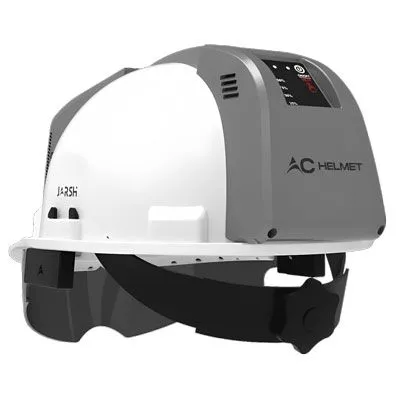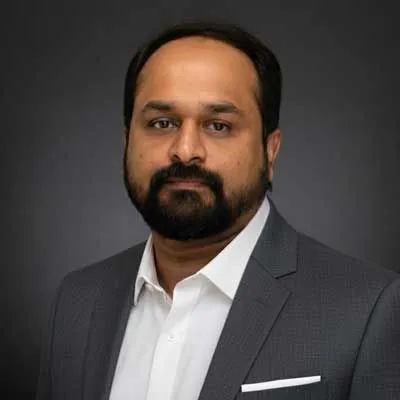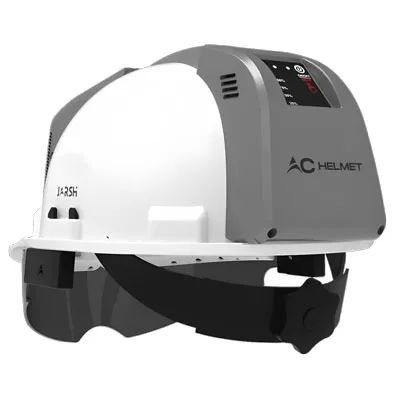
Jarsh Safety, the Hyderabad-based industrial deep-tech startup, is redefining frontline worker protection with advanced safety wearables. In conversation with CW, Kausthub Kaundinya, Founder and CEO, discusses the company’s vision, breakthrough technology and fast-expanding global footprint. What was the core gap you were trying to address with safety technology and how did it all begin?We never set out to work only on wearable safety. Most safety equipment is wearable because it protects the individual but our aim is broader: to prevent accidents rather than only mitigate consequences. Traditional safety focuses on protection after an incident occurs. For example, insulating suits reduce the severity of burns from high-voltage contact but do not prevent the accident. We created a small, helmet-mounted device that detects high-voltage sources and alerts the wearer before they enter a danger zone. The principle is early warning and prevention.The Jarsh Active Cooling™ AC Helmet also follows this philosophy; it reduces heat exposure rather than simply adding comfort. Beyond this, we have developed smart fall-protection products, such as anchors that continuously monitor integrity and automatically report fall events. In category-three hazards, such as high voltage or working at height, incidents are almost always fatal. These are the areas we focus on. We also built a remote-inspection device that functions like a hands-free communication tool for technicians working in hazardous locations. It reduces exposure, digitises inspections and enables remote guidance. Our approach combines safety with measurable productivity benefits.What distinguishes your technology from conventional safety gear in terms of materials and engineering?The core materials and certifications remain the same because compliance is essential. Whether it is a smart or AC helmet, the first question is always about meeting safety standards. Our differentiation lies in integrating electronics into standard equipment, which enhances its value while retaining the proven structural design.Apart from traffic police departments, where in the construction industry are your solutions being used?The construction industry purchases safety equipment in bulk but usually at the basic level. Premium or value-added solutions are rarely adopted because of contract labour, rapid worker turnover and constant site movement. Expensive assets become hard to track and maintain over multiple projects. Construction is a significant market but our current portfolio is not designed for large-scale adoption there yet. Compliance-focused monitoring systems may gain traction and we are working towards such solutions.Do industries such as mining and manufacturing show higher awareness and acceptance?Yes. In mining, chemicals and similar sectors, accidents can have consequences beyond the immediate site. This drives a far stronger safety culture. In nuclear or chemical plants, for instance, a single incident can affect the lives of thousands of people.How do you plan to build awareness in the construction sector, where many fatal accidents occur?This largely depends on lawmakers. A new OSH code – still in draft – is expected to define responsibility for site safety, something that exists abroad but not in India. In construction, several parties are involved, making accountability unclear. Once responsibility is legally defined, adoption of advanced safety solutions will naturally improve. Larger contractors already follow global norms but industrywide change requires regulatory clarity.Can you share an example where your solution improved both safety and productivity?A renewable-energy client operates 32 wind and solar sites across remote locations. Quarterly inspections required teams to travel long distances and climb windmills – equivalent to a 30-storey ladder. Travel risks and onsite hazards were high. With our remote-inspection device, technicians at the site wear the system while inspectors guide them from the office. Around 60-70 per cent of inspections can now be done remotely, reducing exposure and costs while generating digital records that improve traceability.Given India’s varied climate, how adaptable are your solutions across regions?The AC helmet reduces heat exposure from machinery, not from weather. Machinery may generate 80-90°C regardless of climate. The product functions reliably between about 5°C and 55-60°C, so regional climate has limited influence on usage.After the September 2024 seed round, which markets are you expanding into?We are expanding domestically and into the Middle East. Some launches were delayed, slowing Middle East progress, but we have grown from two to four states in India and plan to reach up to 10. We target industrial belts, not political boundaries. Our potential client base is limited – roughly 5,000 to 7,000 companies – so opening new accounts is critical. Once we enter a client, we can cross-sell multiple products to address different hazards.Beyond power and mining, which industries do you currently serve?Renewable energy, automobile, discoms, glass manufacturing and oil and gas. We focus on category-three hazards where accidents have major consequences, including high shutdown costs.What new technology can we expect beyond the AC helmet?We are launching a new fall-protection product in December. It includes smart anchors, lanyards and blocks that monitor integrity, report fall events automatically, digitise inspection schedules and prevent unauthorised use. It also enables asset optimisation by tracking actual usage. This solution has construction applications as well, though adoption will depend on budget priorities.- KAVITA PARABPull Out Quotes: “In most cases, the first accident is the last accident. There's no midway.”“Once responsibility is legally defined, adoption of advanced safety solutions will naturally improve.”