+
We want to bring a real system of intelligence to construction
Technology

We want to bring a real system of intelligence to construction

For EPC and infrastructure companies, fragmented project data can delay critical decisions. Srikar Chintalagiri, Co-Founder & CEO, AlfredWorks, explains how AlfredWorks connects contracts with project information to identify risks, improve traceability and support faster decision-making across c...

For EPC and infrastructure companies, fragmented project data can delay critical decisions. Srikar Chintalagiri, Co-Founder & CEO, AlfredWorks, explains how AlfredWorks connects contracts with project information to identify risks, improve traceability and support faster decision-making across complex construction projects. Where does AlfredWorks fit within the technology ecosystem of EPC and infrastructure companies, and what gap does it address beyond existing ERP, scheduling and document-management systems? AlfredWorks is a system of intelligence that sits on top of existing systems of record such as ERP, scheduling, document-management and project-management platforms. These systems have traditionally remained siloed, with different workflows, owners and data. AlfredWorks connects this information and provides contract-risk intelligence to support faster project decision-making. We place the contract at the centre and provide project context, leading indicators, risk indicators and an audit trail from bidding through to project close-out. Which organisations are currently using AlfredWorks, and where are you seeing the strongest adoption? We are working with the Energy Department of the Government of Andhra Pradesh, Greenco and Pure Light Energy. The Energy Department is using AlfredWorks to monitor solar projects under PM-KUSUM, while Greenco has started piloting contract-risk intelligence on some of its large projects. We initially thought AlfredWorks would primarily be used by head-office teams. However, site teams have found it extremely useful, particularly for extension-of-time requests, change or variation orders and contractual notices. What technology enables AlfredWorks to connect contracts with schedules, correspondence and other project data? AlfredWorks is built around project ontology and a project knowledge graph. We create deterministic relationships between project entities rather than relying only on probabilistic large language models. AlfredWorks absorbs contractual documents and creates a live graph of the project. As events occur across planning, procurement and site progress, the graph is updated and assesses their potential impact on schedules, milestones, the critical path and contractual obligations. Can you share an instance where AlfredWorks helped a project team address a contractual risk? On one pilot project in Maharashtra, heavy flooding swept away a project foundation. The team used AlfredWorks to understand its contractual position, identify the relevant clauses and determine that the first action required was to issue a notice. AlfredWorks created the notice using the contract documents and event details. The project manager edited it before sending it, and the company was able to avoid a significant penalty. What does AlfredWorks’ current project pipeline look like? We started almost a year ago and, within roughly nine to ten months, had more than six pilot or design partners, with a few more coming up. AlfredWorks is still being piloted, and we are open to working with other large companies as we strengthen the platform in India. How is AlfredWorks addressing the industry’s dependence on experienced contracts professionals and fragmented project knowledge? One area we are addressing is construction-contract memory. On long-duration projects, teams change, and the reasons behind earlier delays or decisions can become difficult to trace. AlfredWorks is intended to create continuous project memory and provide traceability across the project lifecycle. The main adoption challenge is not resistance to AI; it is getting enough time and feedback from project teams that are constantly under pressure. We have therefore introduced forward-deployed AI engineers who work alongside project managers and planners and feed improvements back to our engineering team. What are AlfredWorks’ priorities for growth over the next three to five years? Large construction projects are fundamentally driven by contracts, so we made the contract the baseline for project intelligence. Our aim is to build world-class enterprise software from India for global construction markets. We plan to strengthen AlfredWorks in India before expanding into the Middle East, particularly the UAE, Saudi Arabia and Oman, and into the US. The exact timing is still to be decided, but these are the two major international markets we intend to focus on. -PRANJAL PATIL

Related Stories

Gold Stories

Next Story
Infrastructure Urban

Infrastructure Opportunity Outlook by IMPACCT.Info

India’s infrastructure pipeline is witnessing dynamic activity across stages — from immediate bidding to future planning. IMPACCT segments these into three categories: Immediate, 3–6 Month, and Future Opportunities, enabling businesses to identify, prepare, and participate in high-value tenders and projects across sectors...To read the full story Click Here..
Next Story
Equipment

The Next-Gen Concrete Equipment

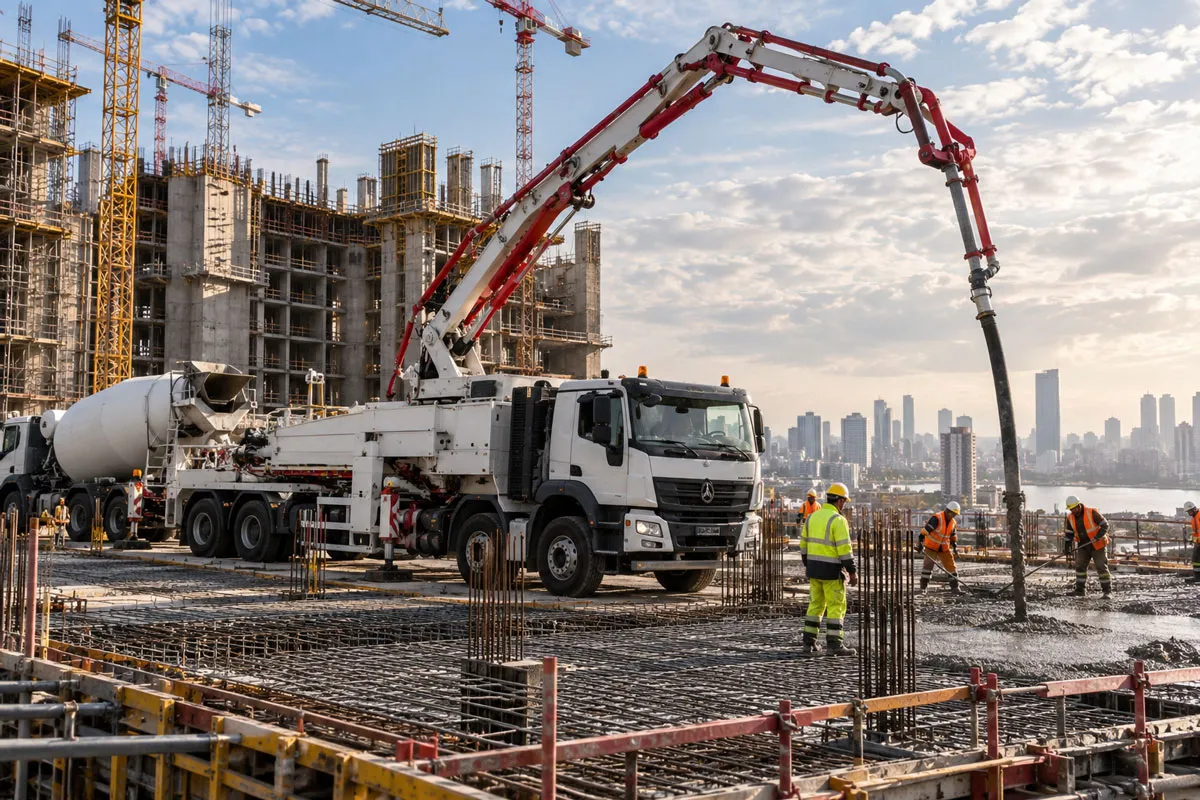
India has transitioned to higher Bharat Stage (BS) emission standards across vehicle types. Concrete equipment is no exception, with the latest engines generation in that category being CEV Stage IV and V models. This shift has fundamentally transformed how this critical equipment is operated and maintained.Fuel-efficiencyUpgrading to advanced BS-compliant engines has replaced older mechanical fuel systems with Electronic Control Units (ECUs) and Common Rail Direct Injection (CRDI). Rather than running at a constant high output, these new systems precisely meter fuel based on the immediate loa..

Next Story
Real Estate

The Energy-Smart Buildings

Passive design is an integral part of energy-efficient architecture. Sophisticated building systems also contribute to this end. But what role do materials play in enhancing a building’s energy-efficiency?“Material selection is one of the earliest opportunities to influence how a building performs,” says Tejbeer Singh, Principal Architect & Founder, Expressionist by Tejbeer Singh. “The objective is not simply to select materials that look appropriate but to understand how they behave within the climate and construction system.”To read the full story Click Here ..

Advertisement

Subscribe to Our Newsletter

Get daily newsletters around different themes from Construction world.

STAY CONNECTED

Advertisement

SPECIAL OFFER
QR Code