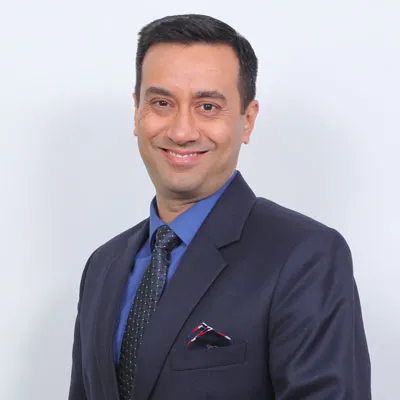
Amid sweeping changes in the global construction industry, India must urgently overhaul its approach to procurement, regulation and the training of engineers, says Prashant Kapila, President, Consulting Engineers Association of India (CEAI), an industry body. Holding a master’s degree in civil & environmental Engineering from Carnegie Mellon University, US, he tells CW that the early passage of the Professional Engineers’ Bill, 2025, is critical to this transformation.At a time when the construction sector is at an inflexion point, what do you see as the key challenges for the industry?The overall built environment needs a sea change. The issues we have often discussed include building sustainable and equitable infrastructure for everyone, which also means inclusive. To bring about this change in the way we build infrastructure in India, the entire method of how we procure and run projects needs to change. The call for engineers, government and industry is to collectively work on reforming the procurement framework and making quality an integral part of it. This must start right from Day 1 of the project lifecycle.These issues have taken centre-stage as the world moves towards Industry 5.0. How aligned is India with the transformations happening globally?Engineering is the key and it will always remain central to every development a country undertakes. We need good people entering the stream. Unfortunately, we lost talent to computer engineering. I am not complaining but, at the same time, we need the right quality in other core branches of engineering. An important topic I would like to highlight here is the Professional Engineers’ Bill, 2025. In 75 years of independence, the engineering profession in India is still not regulated. We have a doctors’ bill, a lawyers’ bill and an architect’s bill, but no engineer’s bill. Unless we have a regulatory framework for each engineer to abide by ethics and professional standards, we will not be able to enforce quality. We call upon the Government to urgently bring in the Professional Engineers’ Bill and make it an Act of Parliament. This will lead to higher quality development as we move towards Viksit Bharat.You mentioned the past trend of engineers moving to more lucrative professions, such as IT. How has that impacted the sector?It is not only computer science and IT. We now have a whole new phenomenon with social media, where people become influencers. They are not doing anything meaningful; they are simply standing and talking about a product, yet they consider it a job. But that is not a real job, as you are not making a difference. There is an interesting statistic in Andhra Pradesh and Telangana, where the brand value of an engineer is judged by whether he is working in the US as a software engineer or in a construction company in India. That perception even influences demand in the matrimonial market. We need to change that mindset. The engineering profession must be recognised as the backbone of development to once again make it an attractive career option.However, in recent conversations with industry leaders, one hears that the trend is gradually reversing, with talent returning to core engineering segments. Do you see this happening?Yes, that trend is visible. I completed my engineering degree 27 years ago, in 1998. At that time, civil engineering had come to be considered the most useless branch. Back then, there were 120 seats for civil engineering. Once the second year started – the first year being common – 80 students out of 120 shifted to other branches. By the time we graduated three years later, only 40 civil engineers came out of our college, which was the top engineering institution in Bengaluru. There was a time when there was a huge vacuum. That vacuum is being filled today. However, the mid‑level, trained, good quality manpower is missing. Yes, young people are returning to the profession but there is a gap at the mid‑management level. While we have industry stalwarts and fresh entrants, there is a complete shortage of good quality professionals in the middle. Because so many candidates moved to computer science, branches such as civil, electrical and mechanical did not attract enough talent.Given these developments, how do you see the engineering profession being redefined?We can no longer afford to be specialists in just one domain. Engineers today need to be all‑rounders: change agents, arbitrators and risk managers all at once. The complexity of coordinated, integrated projects requires engineers to adopt a managerial mindset. For that, we need better training in colleges. This brings us back to the curricula prescribed by AICTE (All India Council for Technical Education) and followed in most engineering institutions. They are archaic and dated. What students are taught in college is very different from what they encounter in practical life. Institutions must evolve; the more intensive the changes to education, the better the quality of candidates the industry will receive. With large‑scale development of big‑ticket projects only in the past decade, how do you assess the industry and the profession at this point?India is a healthy democracy, and we have a way of bringing people together. Unlike many countries, we do not follow a purely top‑down approach. Instead, we adopt a collective way of working, which makes us inclusive. But this inclusivity also brings delays, whether in land acquisition or other impediments. We, therefore, need a clear drive and decision that certain infrastructure must be built. All government agencies must be mandated to stick to that as a diktat, with a collective goal of achieving it. There has to be a centralised and unifying decision‑making body to ensure delivery.Since India has become serious about infrastructure development only in recent years, does this not provide an opportunity to learn from others’ mistakes?It does. Human progress is a continuous evolution. We can learn both from others’ mistakes and from their experiences. The key lesson is how to procure correctly and establish equitable contracts. Contractors often claim that risks are disproportionately loaded on their side. When that happens, they factor those risks into their bids – through higher insurance premiums, for example – which makes projects more expensive. Excessive risk allocation also leads to arbitration and disputes downstream, causing delays and escalating costs. We need standard forms of contract, such as those of FIDIC (International Federation of Consulting Engineers), to become part of how we manage projects.What has been the outcome of your recent discussions with the Government?In our meeting with NITI Aayog, we requested three things. First, the adoption of the Professional Engineers’ Bill without delay, to regulate this vital profession. Second, the introduction of standard forms of procurement – internationally recognised frameworks such as FIDIC – so that risks are clearly defined. International players will only enter India if they see contracts that are balanced, equitable and aligned with familiar frameworks. Once that comfort is provided, they will bring in new technologies, resources and investment. Third, quality must be embedded in procurement. The Government’s financial regulations, revised in 2021 after COVID, allow for this. Yet ministries and departments are not adopting the provisions of the GFR (General Financial Rules). Civil servants often hesitate, asking who will take the first step, why they should do it, and whether they will be questioned afterwards. These fears must be removed. They need assurance that they are acting in the project’s best interest. If a project qualifies for QCBS (quality‑cum‑cost-based selection) procurement, it must be implemented according to the prescribed norms.Sustainability has become a major talking point in recent years. How effectively have we embedded sustainable solutions in design and construction?In India, the building industry has taken the lead in embedding sustainability into design. However, when it comes to linear infrastructure, we have not yet achieved much. In fact, we are only beginning to think in that direction. The challenge lies in the upfront costs required to integrate sustainable mechanisms. When projects are costed, these provisions are often curtailed to keep budgets under control.India has a historical ethos of sustainability in construction. How does that compare with today’s practices?That ethos certainly exists. But today, the drive is to build more and to build quickly. We want faster cabinet approvals and civil servants are under constant pressure to control costs to secure those approvals. Projects get sanctioned and executed rapidly but the question of whether they are truly good projects arises only afterwards.Looking ahead, what advice would you give to students pursuing engineering courses? How can they prepare to be future‑ready?Students need to go beyond what is currently taught in the curriculum. They must keep themselves abreast of industry trends and understand the deeper meaning of concepts rather than simply repeating buzzwords. Today, thanks to ChatGPT, terms like sustainability, AI and IoT are often used casually. But the future engineer must truly grasp these ideas and apply them meaningfully. The complete engineer of tomorrow will be one who genuinely understands sustainability and inclusivity, and who integrates these principles into everyday work.- MANISH PANT