
BEML Unveils India’s First 35-Ton Electric Dump Truck
Equipment

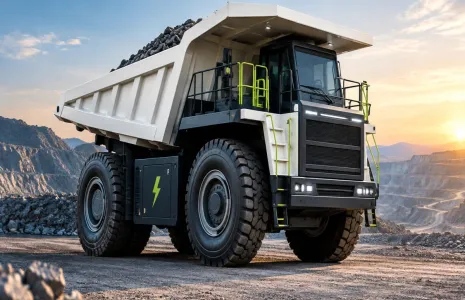
BEML Unveils India’s First 35-Ton Electric Dump Truck

"The second edition of the FICCI Net Zero Forum – ‘Pathways to a Climate-Responsible Future’ was recently held in Hyderabad, bringing together policymakers, industry leaders, sustainability experts, financial institutions and technology innovators.
In a video message, Pralhad Venkatesh Joshi, Minister for New and Renewable Energy, Government of India, reaffirmed India’s commitment to leading the global net-zero transition. He highlighted that the country’s shift to non-fossil energy is a fundamental necessity, supported by strong policy measures and rapid capacity expansion. India is now the third-largest in solar capacity globally and has achieved around 50–55 per cent of installed electricity capacity from non-fossil sources. With nearly 150 GW of solar capacity installed, the transition is expected to generate about 510,000 green jobs in the next four years.
Navin Mittal, Special Chief Secretary, Energy Department, Government of Telangana, emphasised that energy storage will be the next major transformation following solar growth. He noted that India consumes nearly 150 billion litres of petrol and diesel annually, underlining the need for cleaner alternatives. Solar-powered electric mobility can cost as low as Rs 0.60 per kilometre, compared to Rs 10 for fossil fuels, while offering significantly higher efficiency.
Dr Bondada Raghavendra Rao, Chairman, FICCI Telangana Sustainability Panel, stated that India’s net-zero pathway represents a major economic opportunity driven by collaboration between industry, government and financial institutions. Rear Admiral R Sreenivas (Retd.), CEO, Bondada Group, highlighted the importance of integrating digital technologies and smart infrastructure to enable systemic transformation.
Mr Gareth Wynn Owen, British Deputy High Commissioner to Hyderabad, underscored the role of global partnerships, citing UK–India collaborations and investments in clean energy. He stressed that scaling climate finance remains critical to achieving net-zero goals.
The forum hosted over 200 delegates and featured panel discussions on technology, industrial transition, climate finance and carbon markets, along with a workshop on AI-driven tools for emissions tracking. It reinforced FICCI’s commitment to advancing India’s transition to a low-carbon, sustainable economy."

The second edition of the FICCI Net Zero Forum – ‘Pathways to a Climate-Responsible Future’ was recently held in Hyderabad, bringing together policymakers, industry leaders, sustainability experts, financial institutions and technology innovators.In a video message, Pralhad Venkatesh Joshi, Minister for New and Renewable Energy, Government of India, reaffirmed India’s commitment to leading the global net-zero transition. He highlighted that the country’s shift to non-fossil energy is a fundamental necessity, supported by strong policy measures and rapid capacity expansion. India is now the third-largest in solar capacity globally and has achieved around 50–55 per cent of installed electricity capacity from non-fossil sources. With nearly 150 GW of solar capacity installed, the transition is expected to generate about 510,000 green jobs in the next four years.Navin Mittal, Special Chief Secretary, Energy Department, Government of Telangana, emphasised that energy storage will be the next major transformation following solar growth. He noted that India consumes nearly 150 billion litres of petrol and diesel annually, underlining the need for cleaner alternatives. Solar-powered electric mobility can cost as low as Rs 0.60 per kilometre, compared to Rs 10 for fossil fuels, while offering significantly higher efficiency.Dr Bondada Raghavendra Rao, Chairman, FICCI Telangana Sustainability Panel, stated that India’s net-zero pathway represents a major economic opportunity driven by collaboration between industry, government and financial institutions. Rear Admiral R Sreenivas (Retd.), CEO, Bondada Group, highlighted the importance of integrating digital technologies and smart infrastructure to enable systemic transformation.Mr Gareth Wynn Owen, British Deputy High Commissioner to Hyderabad, underscored the role of global partnerships, citing UK–India collaborations and investments in clean energy. He stressed that scaling climate finance remains critical to achieving net-zero goals.The forum hosted over 200 delegates and featured panel discussions on technology, industrial transition, climate finance and carbon markets, along with a workshop on AI-driven tools for emissions tracking. It reinforced FICCI’s commitment to advancing India’s transition to a low-carbon, sustainable economy.

Next Story
Technology

AI-Enabled Workflows Lift Profitability and Productivity

Organisations modernising frontline workflows with artificial intelligence, automation and real-time data are reporting stronger financial performance, higher productivity and improved employee engagement, according to a global study by Zebra Technologies and Oxford Economics.The research covered 1,000 senior leaders across retail, manufacturing, transportation and logistics in the US, Mexico, the UK, Germany, India, Japan, Australia and New Zealand.In transportation and logistics, 54 per cent of companies that improved picking and packing operations reported faster operational performance, wh..

Next Story
Real Estate

India Leads Global AI Readiness but Implementation Lags

Indian companies lead global averages across all eight artificial intelligence readiness indicators tracked by JLL, but only 19 per cent have started making changes to their workplaces, according to the JLL 2026 Future of Work Survey.The study found that 77 per cent of Indian business leaders expect AI to change their office requirements, creating a 58-percentage-point gap between awareness and implementation. The survey covered more than 2,200 CEOs, CFOs and real estate leaders across 21 countries during the first quarter of 2026.Despite concerns over automation, 58 per cent of Indian leaders..

Next Story
Equipment

Three WOLFF Cranes Build Riyadh Cable-Stayed Bridges

Three WOLFF 180 B luffing jib cranes are supporting the construction of two cable-stayed bridges alongside the existing Wadi Laban Bridge in Riyadh, Saudi Arabia. The project is being developed for the Royal Commission for Riyadh City and executed by the ICRC joint venture comprising IC Ictas and Al Rashid Trading & Contracting Company.The cranes are handling lifting operations including formwork, reinforcement, concrete placement, work platforms, surveying equipment and other construction materials. Each crane is fitted with a 40 m jib, reaches a hook height of 157 m and offers a maximum ..

Advertisement

Subscribe to Our Newsletter

Get daily newsletters around different themes from Construction world.

STAY CONNECTED

Advertisement

Advertisement

Advertisement