



Covid-19 delays construction of rural homes under PMAY-G
Equipment

Covid-19 delays construction of rural homes under PMAY-G

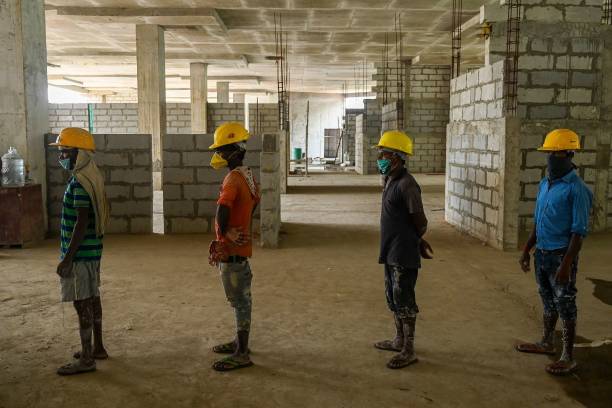
Covid-19 pandemic has significantly derailed the building of rural houses under the government’s flagship Pradhan Mantri Awas Yojana - Gramin in 2020-21, bringing down the total accomplishment so far.

Sadhvi Niranjan Jyoti, Minister of State for Rural Development, said in the Lok Sabha, that against the aim of 2.02 crore houses allotted under the scheme till the financial year 2020-21, 1.50 crore homes or 75% have been achieved.

Additionally, a total of over 12.20 lakh homes have been made during the year 2021-22 against an approximated aim of construction of 44.09 lakh homes under the scheme, the minister for state added.

The ministry of rural development is executing Pradhan Mantri Awas Yojana- Gramin (PMAY-G) to help eligible rural households to construct 2.95 crore pucca homes with basic facilities to accomplish the aim of “Housing for All”.

According to the statement, the rural development ministry is conducting regular virtual meetings with the states and UTs to evaluate the growth of the scheme. In addition, daily monitoring of the progress is done on several parameters like gaps in the permission of houses, provision of land to landless beneficiaries, cleaning of the permanent waitlist (PWL) of PMAY-G, gaps in the release of central share or state matching share from the treasury.

Further, the review meetings are being conducted with states also for better knowledge of the restrictions being met and rectifying the same for developing progress of PMAY-G.

The Pradhan Mantri Awas Yojana Gramin (PMAY-G) is a centrally sponsored scheme, and the funds are shared by the central and state government in a 60:40 ratio (90:10 in North-Eastern State and hill states comprising Jammu & Kashmir & 100% central share in UTs comprising Ladakh).

Image Source


Also read: NAREDCO demands one-time loan restructuring for stuck realty projects

Covid-19 pandemic has significantly derailed the building of rural houses under the government’s flagship Pradhan Mantri Awas Yojana - Gramin in 2020-21, bringing down the total accomplishment so far. Sadhvi Niranjan Jyoti, Minister of State for Rural Development, said in the Lok Sabha, that against the aim of 2.02 crore houses allotted under the scheme till the financial year 2020-21, 1.50 crore homes or 75% have been achieved. Additionally, a total of over 12.20 lakh homes have been made during the year 2021-22 against an approximated aim of construction of 44.09 lakh homes under the scheme, the minister for state added. The ministry of rural development is executing Pradhan Mantri Awas Yojana- Gramin (PMAY-G) to help eligible rural households to construct 2.95 crore pucca homes with basic facilities to accomplish the aim of “Housing for All”. According to the statement, the rural development ministry is conducting regular virtual meetings with the states and UTs to evaluate the growth of the scheme. In addition, daily monitoring of the progress is done on several parameters like gaps in the permission of houses, provision of land to landless beneficiaries, cleaning of the permanent waitlist (PWL) of PMAY-G, gaps in the release of central share or state matching share from the treasury. Further, the review meetings are being conducted with states also for better knowledge of the restrictions being met and rectifying the same for developing progress of PMAY-G. The Pradhan Mantri Awas Yojana Gramin (PMAY-G) is a centrally sponsored scheme, and the funds are shared by the central and state government in a 60:40 ratio (90:10 in North-Eastern State and hill states comprising Jammu & Kashmir & 100% central share in UTs comprising Ladakh). Image Source Also read: NAREDCO demands one-time loan restructuring for stuck realty projects

Next Story
Infrastructure Urban

India Expands Semiconductor Training To 500 Institutions

Under the Chips to Startups programme of the India Semiconductor Mission, the Union minister responsible for Railways, Information and Broadcasting, and Electronics and IT reported notable progress in talent development. He indicated that over the past four years substantial steps have been taken towards a 10-year target of training 85,000 engineers in semiconductor design. World-class EDA tools have been deployed in 315 academic institutions across the country to provide students with practical exposure to chip design. These EDA tools are supported by leading global firms and are accessible t..

Next Story
Infrastructure Urban

Delhi Institutions Support India Semiconductor Mission

The Government of India has prioritised talent development through training, upskilling and workforce development under the Chips to Startups initiative of the India Semiconductor Mission, with officials noting progress in four years towards a 10-year target of training 85,000 engineers in semiconductor design. Electronic design automation tools provided by Synopsys, Cadence, Siemens, Renesas, Ansys and AMD have been deployed in 315 academic institutions, enabling students to gain practical chip design experience. Chips have been fabricated and tested at the Semiconductor Laboratory, Mohali, a..

Next Story
Infrastructure Urban

NHA Announces Winners Of NHCX Hackathon At IIT Hyderabad

The National Health Authority (NHA) has concluded the NHCX Hackathon under the Ayushman Bharat Digital Mission (ABDM) to stimulate innovation around the National Health Claims Exchange (NHCX). The winning teams presented their solutions at the NHCX Innovation Meet held at IIT Hyderabad during a two-day event in March 2026 that also served as the hackathon grand finale. The hackathon itself ran from 22 to 28 February 2026 and aimed to accelerate paperless, transparent claims processing across India. The event was organised with a range of ecosystem partners, including the Insurance Regulatory a..

Advertisement

Subscribe to Our Newsletter

Get daily newsletters around different themes from Construction world.

STAY CONNECTED

Advertisement

Advertisement

Advertisement