Deere Launches Backhoes with New Cabs and Advanced Camera System
Equipment

Deere Launches Backhoes with New Cabs and Advanced Camera System

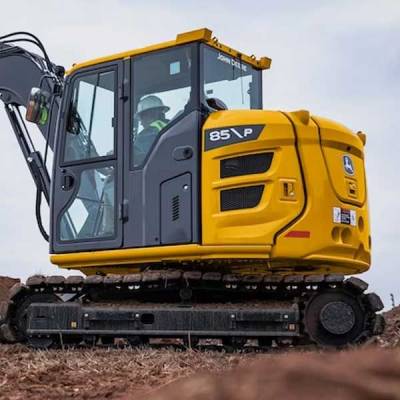
John Deere has redesigned its next-generation backhoes with a strong emphasis on operator comfort, visibility, and advanced technology. The company introduced significant improvements to five models—310 G-Tier and 310, 320, 410, and 710 P-Tier—while confirming that the updates will not extend to the 210 tractor loader models.

Among the key changes is a revamped cab structure, where two side posts have been consolidated into one to provide better all-around visibility, particularly during truck loading and trenching tasks. A newly designed overhead rear window system, inspired by excavators, now folds upward to minimise damage risks and offer clearer visibility when working in trenches or confined areas.

A notable technological addition is the industry’s first factory-installed rear camera system for backhoes. This system includes two cameras mounted at the back corners of the cab and an integrated 8-inch touchscreen display inside the cab. Operators can customise the camera views to monitor the left side, right side, or a combined wide-angle view with the rear structure digitally removed for better situational awareness.

Additional enhancements include upgraded LED work lights and LED turn signals to improve visibility in low-light environments.

John Deere has redesigned its next-generation backhoes with a strong emphasis on operator comfort, visibility, and advanced technology. The company introduced significant improvements to five models—310 G-Tier and 310, 320, 410, and 710 P-Tier—while confirming that the updates will not extend to the 210 tractor loader models.Among the key changes is a revamped cab structure, where two side posts have been consolidated into one to provide better all-around visibility, particularly during truck loading and trenching tasks. A newly designed overhead rear window system, inspired by excavators, now folds upward to minimise damage risks and offer clearer visibility when working in trenches or confined areas.A notable technological addition is the industry’s first factory-installed rear camera system for backhoes. This system includes two cameras mounted at the back corners of the cab and an integrated 8-inch touchscreen display inside the cab. Operators can customise the camera views to monitor the left side, right side, or a combined wide-angle view with the rear structure digitally removed for better situational awareness.Additional enhancements include upgraded LED work lights and LED turn signals to improve visibility in low-light environments.

Next Story
Infrastructure Urban

ABB to Invest Rs 6.25 Billion to Expand India Manufacturing

ABB recently announced plans to invest approximately Rs 6.25 billion ($75 million) in India during 2026 to expand its manufacturing footprint and research and development capabilities. The investment follows more than $35 million spent in 2025 and reflects the company’s continued focus on strengthening its ‘local-for-local’ strategy in the country.The investment will support ABB’s Electrification, Motion and Automation businesses and expand manufacturing capacity for infrastructure sectors such as renewable energy, metro rail, data centres and industrial applications. Approximately 300..

Next Story
Equipment

Six WOLFF Cranes Handle 60,000 m³ Concrete for German Hospital

Six WOLFF tower cranes are playing a key role in constructing a new hospital complex in Memmingen, Germany, supporting large-scale material handling for the project. The facility is being built on a 7.7-hectare site and will feature six floors, around 480 beds and a gross floor area exceeding 75,000 sq m.Building shell works began recently in February 2025. One WOLFF 6531.12 Cross crane supported early site preparation before being dismantled in autumn 2025, while five remaining cranes continue operations. Over an average deployment period of 16 months, the cranes are expected to move approxim..

Next Story
Equipment

REC Funds Rs 115.6 Million CSR Support for Bihar Eye Hospital

REC recently committed Rs 115.6 million under its Corporate Social Responsibility (CSR) programme for the procurement of clinical and non-clinical equipment at Sankara Eye Hospital in Saharsa, Bihar. The initiative aims to strengthen healthcare infrastructure and improve access to specialised eye care services in the region.A Memorandum of Agreement (MoA) was recently signed between Pradeep Fellows, Executive Director (CSR), REC Limited, and Wg Cdr V. Shankar (Retd), Trustee and Executive Director of Sankara Eye Hospital, at the REC office in the SCOPE Complex, New Delhi.The support is expecte..

Advertisement

Subscribe to Our Newsletter

Get daily newsletters around different themes from Construction world.

STAY CONNECTED

Advertisement

Advertisement

Advertisement