Wolffkran Wraps 4.5-Year Alpine Crane Mission at Grimsel Pass
Equipment

Wolffkran Wraps 4.5-Year Alpine Crane Mission at Grimsel Pass

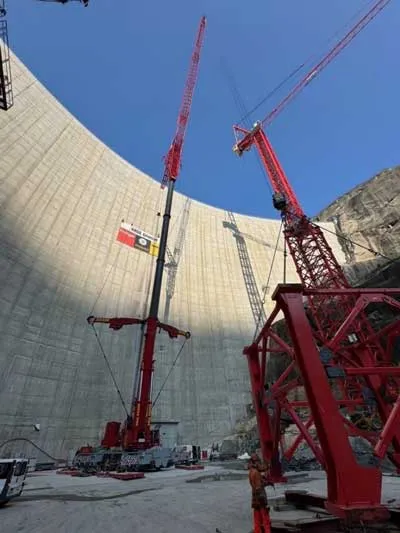
Wolffkran has successfully concluded a challenging four-and-a-half-year crane deployment at Switzerland’s Grimsel Pass, where its largest luffing cranes supported construction of the new Spitallamm Dam. The project required two nearly 100-metre-tall WOLFF cranes, including the WOLFF 1250 B, which lifted around 500,000 tonnes of concrete across 32,000 operations.

To withstand the harsh Alpine conditions, Wolffkran developed the XXL TV 60 tower element with a six-metre side length, enabling the cranes to operate freestanding on pile foundations weighing over 1,500 tonnes. Crews worked in intense seasonal cycles, manning the cranes round-the-clock from May to October each year. The equipment was also fitted with a special over-wintering system to ensure reliability after heavy snowfalls and storms.

By June 2025, dismantling was completed and 1,281 tonnes of crane components were transported down to the valley in more than 60 oversized truck journeys. The cranes have now been redeployed to Saudi Arabia’s Prince Mohammed Bin Salman Stadium project in Qiddiya, where they will again be used in exposed conditions. Wolffkran’s Managing Director, Ralph Stump, described the Grimsel  project as a milestone that showcased both the resilience of the company’s technology and the dedication of its team.

Wolffkran has successfully concluded a challenging four-and-a-half-year crane deployment at Switzerland’s Grimsel Pass, where its largest luffing cranes supported construction of the new Spitallamm Dam. The project required two nearly 100-metre-tall WOLFF cranes, including the WOLFF 1250 B, which lifted around 500,000 tonnes of concrete across 32,000 operations.To withstand the harsh Alpine conditions, Wolffkran developed the XXL TV 60 tower element with a six-metre side length, enabling the cranes to operate freestanding on pile foundations weighing over 1,500 tonnes. Crews worked in intense seasonal cycles, manning the cranes round-the-clock from May to October each year. The equipment was also fitted with a special over-wintering system to ensure reliability after heavy snowfalls and storms.By June 2025, dismantling was completed and 1,281 tonnes of crane components were transported down to the valley in more than 60 oversized truck journeys. The cranes have now been redeployed to Saudi Arabia’s Prince Mohammed Bin Salman Stadium project in Qiddiya, where they will again be used in exposed conditions. Wolffkran’s Managing Director, Ralph Stump, described the Grimsel  project as a milestone that showcased both the resilience of the company’s technology and the dedication of its team.

Next Story
Infrastructure Urban

Teknovace, Remmers Forge Rs 3 Bn Deal for Global Coatings Hub

Teknovace has entered into a strategic global partnership with Germany-based Remmers Gruppe SE to build a large-scale, export-oriented wood coatings manufacturing platform in India. As part of the alliance, Remmers will make a strategic equity investment of Rs 3 billion to acquire a 50.01 per cent stake in Teknovace in two tranches, marking one of the largest foreign strategic investments in India’s wood coatings sector.The partnership comes at a time when India’s wood coatings market, valued at around $1.3 billion (Rs 100 billion), is growing at an estimated 11% annually, driven by demand..

Next Story
Infrastructure Urban

Jyoti Structures Commissions Galvanisation at Second Nashik Unit

Jyoti Structures has commissioned galvanisation operations at its second tower manufacturing unit in Nashik, strengthening its in-house capabilities across critical stages of power transmission infrastructure production. The listed Engineering, Procurement and Construction (EPC) company operates globally and has delivered projects for customers across more than 50 countries.The second Nashik unit, with an annual manufacturing capacity of 36,000 metric tonnes, has become operational following the completion of installation, testing and readiness of the new galvanising facilities. With this deve..

Next Story
Infrastructure Energy

Rosatom Connects First Kursk NPP-2 Unit to National Grid

Rosatom has launched the first power unit of the Kursk Nuclear Power Plant-2 (Kursk NPP-2) into Russia’s Unified Energy System, marking a key milestone in the country’s nuclear energy programme. The initial grid connection took place at the end of the year, bringing a new source of low-carbon electricity online for the Kursk region and the broader Central Energy System.The newly commissioned unit is the first implementation of the VVER-TOI reactor design, which incorporates advanced safety and performance features. With an installed capacity of 1,250 MW, it is the most powerful nuclear pow..

Advertisement

Subscribe to Our Newsletter

Get daily newsletters around different themes from Construction world.

STAY CONNECTED

Advertisement

Advertisement

Advertisement

Advertisement

Open In App