Arvind SmartSpaces Signs First Redevelopment Project In Santacruz
Real Estate

Arvind SmartSpaces Signs First Redevelopment Project In Santacruz

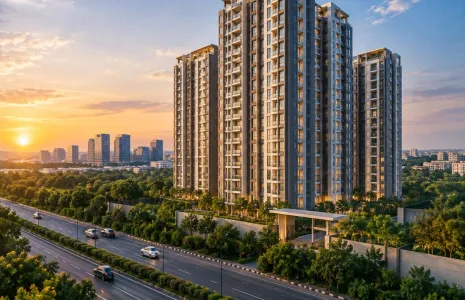
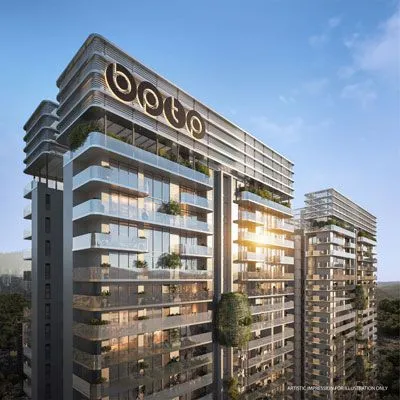
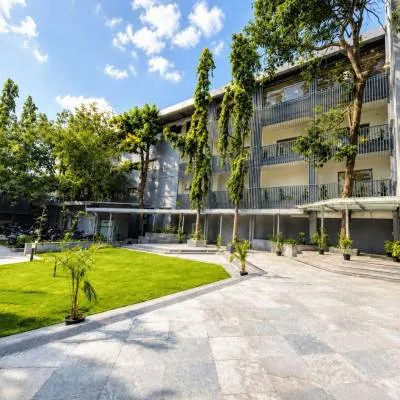
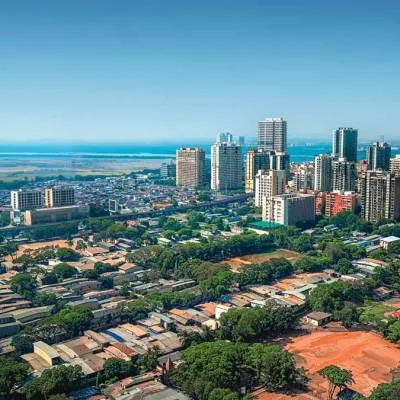
Arvind SmartSpaces has signed its first redevelopment project in Santacruz in Mumbai, opening a new chapter in its urban housing strategy. The deal carries a revenue potential estimated at Rs three billion (bn), marking the company's initial entry into redevelopment in the city. The project is positioned to reinforce the firm's credibility in the redevelopment segment. Santacruz is a well established suburb that connects to central business districts and transport nodes.

Redevelopment projects typically involve replacing older housing stock with modern residential structures while addressing compliance and infrastructure upgrades for residents. The company indicated that the transaction reflects its approach to creating long term value through design led redevelopment and stakeholder engagement. Analysts expect such projects to support sustainable urban densification and address housing quality concerns. Such schemes often require close coordination with resident associations and municipal authorities to finalise plans and entitlements.

The revenue potential of Rs three billion (bn) is likely to expand the firm's project pipeline and contribute to medium term earnings visibility. Management presented the opportunity as significant for balance sheet momentum and as a template for future town centre engagements. The firm plans to leverage its construction and sales channels to optimise delivery timelines and cost management. Successful execution will depend on timely approvals, sales velocity and construction sequencing.

Market observers noted that Mumbai remains a focal point for organised redevelopment activity given land scarcity and regulatory incentives, and developers with execution capabilities stand to benefit. Arvind SmartSpaces will now be watched for progress milestones and approvals as the redevelopment moves through design and statutory stages. The transaction underscores a broader shift in the industry towards structured partnerships for urban renewal. Investors will monitor presale rates and construction milestones as indicators of execution risk and return potential.

Arvind SmartSpaces has signed its first redevelopment project in Santacruz in Mumbai, opening a new chapter in its urban housing strategy. The deal carries a revenue potential estimated at Rs three billion (bn), marking the company's initial entry into redevelopment in the city. The project is positioned to reinforce the firm's credibility in the redevelopment segment. Santacruz is a well established suburb that connects to central business districts and transport nodes. Redevelopment projects typically involve replacing older housing stock with modern residential structures while addressing compliance and infrastructure upgrades for residents. The company indicated that the transaction reflects its approach to creating long term value through design led redevelopment and stakeholder engagement. Analysts expect such projects to support sustainable urban densification and address housing quality concerns. Such schemes often require close coordination with resident associations and municipal authorities to finalise plans and entitlements. The revenue potential of Rs three billion (bn) is likely to expand the firm's project pipeline and contribute to medium term earnings visibility. Management presented the opportunity as significant for balance sheet momentum and as a template for future town centre engagements. The firm plans to leverage its construction and sales channels to optimise delivery timelines and cost management. Successful execution will depend on timely approvals, sales velocity and construction sequencing. Market observers noted that Mumbai remains a focal point for organised redevelopment activity given land scarcity and regulatory incentives, and developers with execution capabilities stand to benefit. Arvind SmartSpaces will now be watched for progress milestones and approvals as the redevelopment moves through design and statutory stages. The transaction underscores a broader shift in the industry towards structured partnerships for urban renewal. Investors will monitor presale rates and construction milestones as indicators of execution risk and return potential.

Next Story
Infrastructure Transport

Sector 51-52 Metro skywalk in Noida remains shut despite being ready for over a year

Thousands of commuters travelling between Delhi Metro Rail Corporation’s (DMRC) Sector 52 station and Noida Metro Rail Corporation’s (NMRC) Sector 51 station continue to face daily inconvenience as the 300-metre air-conditioned skywalk connecting the two stations remains closed, despite being completed over a year ago, according to a report.The Noida Metro Rail Corporation built the foot overbridge to enable a seamless interchange between the Delhi Metro and Noida Metro networks. However, pending finishing work and a structural obstruction have delayed its opening.Krishna Karunesh, Chief E..

Next Story
Infrastructure Transport

Maharashtra clears Metro Line 5A, expansion of Mumbai Metro Line 5

The Maharashtra government has approved the expansion of Mumbai Metro Line 5 along with a new integrated corridor, Metro Line 5A, forming a combined 34.2-km metro network across the Thane-Bhiwandi-Kalyan-Ulhasnagar belt. The integrated project has been cleared at an estimated cost of ₹18,130.55 crore, according to a government resolution (GR).Metro Line 5 was originally approved in October 2017 as a 24.9-km fully elevated corridor with 17 stations connecting Thane, Bhiwandi and Kalyan, with an initial project cost of ₹8,416.51 crore. The corridor is being developed in two phases.The first ..

Next Story
Infrastructure Transport

Bengaluru Metro expansion seen driving office demand

Bengaluru’s expanding metro network is expected to emerge as a major catalyst for real estate growth, with the Yellow and Pink Lines likely to boost both office demand and residential prices across key micro-markets, according to a report by Colliers India.The report estimates that over the next two years, Bengaluru could witness an additional 5–7 million sq ft of Grade A office space demand across the Central Business District (CBD), Secondary Business District (SBD) and Electronic City. Improved metro connectivity and reduced commute times are expected to drive higher occupier interest a..

Advertisement

Subscribe to Our Newsletter

Get daily newsletters around different themes from Construction world.

STAY CONNECTED

Advertisement

Advertisement

Advertisement