+
Delhi-NCR, Bengaluru; India’s biggest office markets in 2022
Real Estate

Delhi-NCR, Bengaluru; India’s biggest office markets in 2022

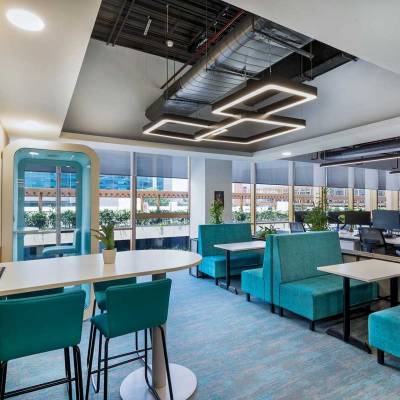
As offices are opening up once again almost after two years of the pandemic, the net absorption of office properties across the top seven cities (Mumbai, Delhi-NCR, Bengaluru, Hyderabad, Chennai, Kolkata, and Pune) has surpassed pre-pandemic levels, a report by real estate company JLL revealed.

Interestingly, the net absorption of office properties this year has also surpassed the five-year pre-pandemic average (2015-2019) by 3.1%. At 38.25 million sq. ft, the net absorption this year is second only to the 2019’s net absorption numbers for the past 10 years, showcasing the strong resilience of the Indian office markets, as per JLL.

“The office market in India has made a strong recovery in 2022 with the year emerging as the strongest in terms of office market performance post-Covid and second only to 2019 over the last decade. Even with the evolving hybrid work ecosystem, we have seen a sharp rise in office occupancy levels,” Rahul Arora, head office leasing advisory India and MD, Karnataka, Kerala at JLL India said.

Also Read
NHAI invites bids for 4-laning of road in Karnataka
Gadkari to inspect B’luru-Mysuru expressway on Jan 5

As offices are opening up once again almost after two years of the pandemic, the net absorption of office properties across the top seven cities (Mumbai, Delhi-NCR, Bengaluru, Hyderabad, Chennai, Kolkata, and Pune) has surpassed pre-pandemic levels, a report by real estate company JLL revealed. Interestingly, the net absorption of office properties this year has also surpassed the five-year pre-pandemic average (2015-2019) by 3.1%. At 38.25 million sq. ft, the net absorption this year is second only to the 2019’s net absorption numbers for the past 10 years, showcasing the strong resilience of the Indian office markets, as per JLL. “The office market in India has made a strong recovery in 2022 with the year emerging as the strongest in terms of office market performance post-Covid and second only to 2019 over the last decade. Even with the evolving hybrid work ecosystem, we have seen a sharp rise in office occupancy levels,” Rahul Arora, head office leasing advisory India and MD, Karnataka, Kerala at JLL India said. Also Read NHAI invites bids for 4-laning of road in Karnataka Gadkari to inspect B’luru-Mysuru expressway on Jan 5

Next Story
Infrastructure Urban

Implementation Status of Jal Jeevan Mission

Since August 2019 the Government has implemented Jal Jeevan Mission to provide assured potable water through household tap connections in rural India. At the start of the mission only 32.3 million (mn) rural households, representing 16.7 per cent, were reported to have tap water connections. States and union territories have reported that 125.8 mn additional rural households have since been provided with tap connections. As a result, of about 193.6 mn rural households roughly 158.2 mn, or 81.71 per cent, are reported to have tap water supply at home.\n\nThe State, district and village level st..

Next Story
Infrastructure Urban

Jal Jeevan Mission Reaches Eighty One Per Cent Rural Coverage

The Government reported substantial progress under the Jal Jeevan Mission, launched in August 2019 to provide tap water to every rural household. At launch only 32.3 million (mn) rural households had tap connections and states and Union territories reported provision of 125.8 mn additional households by March 2026. Consequently, out of about 193.6 mn rural households around 158.2 mn, or 81.71 per cent, are reported to have tap water at home. The Finance Minister announced extension of the mission until 2028 in the 2025-26 budget speech. The Swachh Bharat Mission Grameen, launched in October 20..

Next Story
Infrastructure Urban

Empowering Local Governance for Sustainable Rural Water Supply

The Ministry of Jal Shakti has aligned the Jal Jeevan Mission (JJM) with the 73rd Amendment to strengthen village level planning and community ownership of water supply. Gram Panchayats, village water and sanitation committees and Pani Samitis are to plan, implement, manage and maintain piped water systems, with gram sabha processes formalising handover and oversight. Implementation support agencies including non government organisations, community based organisations and self help groups have been empanelled to train local committees and promote women participation. Under JJM, the department ..

Advertisement

Subscribe to Our Newsletter

Get daily newsletters around different themes from Construction world.

STAY CONNECTED

Advertisement

Advertisement

Advertisement