High Rises Reshape Landscape Of Visakhapatnam Housing Market
Real Estate

High Rises Reshape Landscape Of Visakhapatnam Housing Market

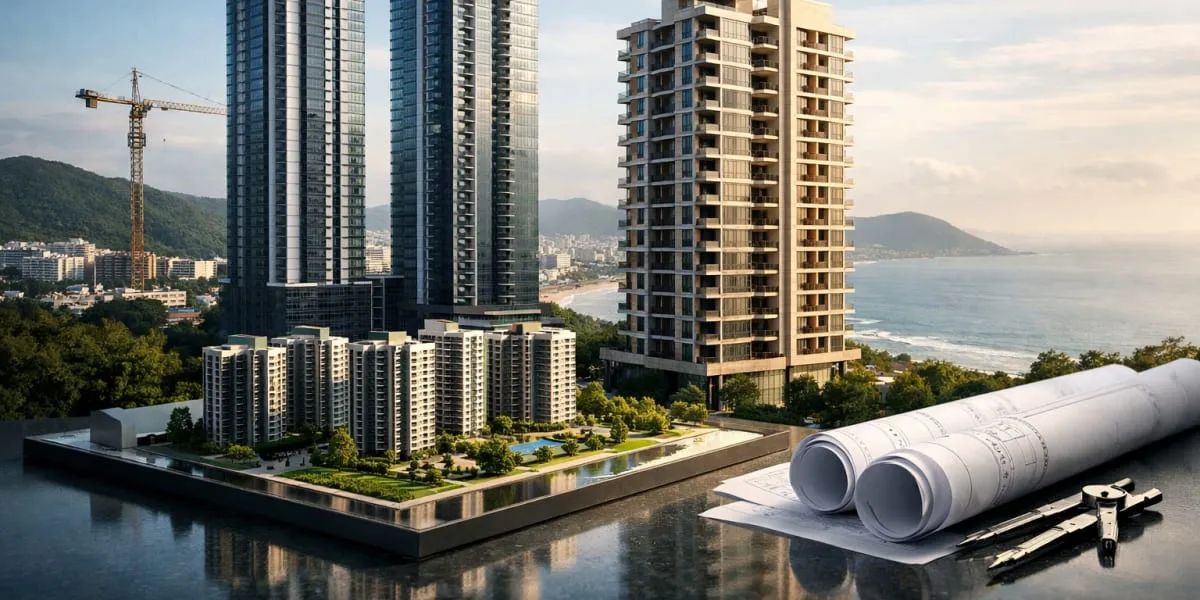
Developers in Visakhapatnam are increasingly turning to high rise housing as rising land prices and scarcity of large, well located plots make low rise schemes less viable. The Confederation of Real Estate Developers' Associations of India (CREDAI) Visakhapatnam chapter president E Ashok Kumar said that vertical projects enable optimisation of land use and help maintain project viability. He added that distributing land costs across a greater number of housing units helps developers manage rising expenses and preserve price balance in a competitive market.

Industry representatives linked steady demand for city housing to employment growth in the information technology (IT) sector and allied industries, especially near new business hubs. Buyer preferences were described as shifting towards secure developments with dedicated parking and shared amenities, which high rise projects can deliver efficiently. Developers are therefore prioritising projects that combine density with modern conveniences.

Several micro markets were identified as witnessing increased vertical residential activity, including the Madhurawada Kapuluppada corridor, Anandapuram Kommadi, the Bhogapuram Bheemili stretch and the Yendada Rushikonda coastal belt. The president attributed the interest in these locations to road expansions, infrastructure upgrades and improved connectivity. He said that such factors are encouraging developers to focus investment and launches in precisely those corridors.

CREDAI Visakhapatnam warned that vertical expansion requires adequate civic infrastructure to be beneficial and to support planned urban growth. The chapter called for clear regulations and faster approvals from authorities to ensure projects are completed on schedule and to control costs. Officials urged coordinated planning so that higher density does not outpace utilities and services.

Urban planners and industry sources suggested that when supported by infrastructure, high rise development can improve land use efficiency and accommodate the city's growth without extensive sprawl. They recommended continued monitoring of market absorption and infrastructure delivery to sustain the trend.

Developers in Visakhapatnam are increasingly turning to high rise housing as rising land prices and scarcity of large, well located plots make low rise schemes less viable. The Confederation of Real Estate Developers' Associations of India (CREDAI) Visakhapatnam chapter president E Ashok Kumar said that vertical projects enable optimisation of land use and help maintain project viability. He added that distributing land costs across a greater number of housing units helps developers manage rising expenses and preserve price balance in a competitive market. Industry representatives linked steady demand for city housing to employment growth in the information technology (IT) sector and allied industries, especially near new business hubs. Buyer preferences were described as shifting towards secure developments with dedicated parking and shared amenities, which high rise projects can deliver efficiently. Developers are therefore prioritising projects that combine density with modern conveniences. Several micro markets were identified as witnessing increased vertical residential activity, including the Madhurawada Kapuluppada corridor, Anandapuram Kommadi, the Bhogapuram Bheemili stretch and the Yendada Rushikonda coastal belt. The president attributed the interest in these locations to road expansions, infrastructure upgrades and improved connectivity. He said that such factors are encouraging developers to focus investment and launches in precisely those corridors. CREDAI Visakhapatnam warned that vertical expansion requires adequate civic infrastructure to be beneficial and to support planned urban growth. The chapter called for clear regulations and faster approvals from authorities to ensure projects are completed on schedule and to control costs. Officials urged coordinated planning so that higher density does not outpace utilities and services. Urban planners and industry sources suggested that when supported by infrastructure, high rise development can improve land use efficiency and accommodate the city's growth without extensive sprawl. They recommended continued monitoring of market absorption and infrastructure delivery to sustain the trend.

Next Story
Equipment

India CE Industry Ends FY26 on a Steady Recovery Path

India’s construction equipment industry closed FY26 on a stable note, reflecting measured resilience and gradually improving momentum. Total sales in Q4 FY26 rose 4 per cent year on year to 42,906 units, extending the recovery seen over the past two years.Domestic demand for the full year remained under pressure, declining 7 per cent, but exports provided strong support. Overall exports grew 31 per cent, while non-OEM exports increased 13 per cent, highlighting sustained demand from overseas markets.March 2026 further underlined the recovery, with sales rising 6 per cent year on year and 13 ..

Next Story
Infrastructure Urban

Leaders Question FIR Against Anil Agarwal

Several industry and public figures have questioned the FIR filed against Anil Agarwal following the boiler accident in Chhattisgarh, while also expressing condolences over the loss of lives and calling for a thorough investigation.Naveen Jindal said the tragedy was deeply painful and stressed that compensation, livelihood support for affected families and a fair probe were essential. He also questioned naming Agarwal in the FIR before completion of the investigation.Kiran Bedi urged restraint, saying investigations should focus on learning lessons and strengthening systems rather than prematu..

Next Story
Infrastructure Urban

Tier 2, 3 Cities Drive 66% of New D2C Orders

Tier 2 and Tier 3 cities accounted for 66 per cent of new direct-to-consumer (D2C) orders in FY 2026, according to a new analysis by Unicommerce.The report said buyers from smaller cities also contributed 60 per cent of incremental gross merchandise value (GMV) in FY 2026 compared with FY 2025, highlighting rising demand beyond metro markets.Overall, India’s D2C segment recorded strong growth, with order volumes rising 33 per cent and GMV increasing 32 per cent year-on-year. The findings are based on more than 400 million order items processed through brand websites on Unicommerce’s Uniwar..

Advertisement

Subscribe to Our Newsletter

Get daily newsletters around different themes from Construction world.

STAY CONNECTED

Advertisement

Advertisement

Advertisement