Jhabua witnesses 100% surge in property registration revenue
Real Estate

Jhabua witnesses 100% surge in property registration revenue

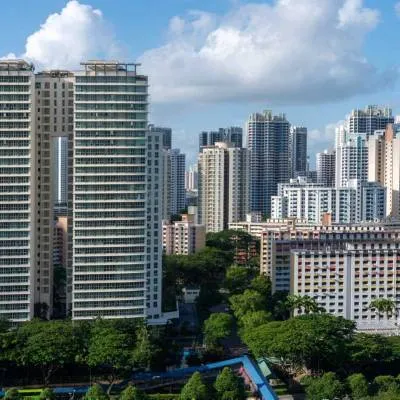
In 2021-22, the tribal-dominated Jhabua district saw a 100% increase in revenue produced via property registration, leaving the state's commercial city Indore behind.

The state government set a target of Rs 24 crore in 2021-22, based on a surge in the real estate industry in Jhabua, which earned revenue of Rs 19.69 crore in 2019-20 and Rs 26.94 crore through property registration.

Balkrishna More, DIG stamp and registrar (Indore and Ujjain division), told the media that the Jhabua stamp and registrar department managed to develop around Rs 48 crore of income via the registration of properties in the last financial year (FY) at a 100% growth rate.

He said that nearly 90% of the population of the Jhabua district is tribal, who mainly used to move to Gujarat, Maharashtra and other states to make their livelihood.

Though after the Covid-19 outbreak, many of them returned to their hometown and are exploring options of earning here.

More said that not just Jhabua but nearby districts with a substantial population of tribal such as Dhar, Alirajpur, Khargone, Barwani, Khandwa and Burhanpur of Nimar area have crossed the overall revenue target of Rs 476 crore from property registration for 2021-22 by registering an overall income of approximately Rs 560 crore in last FY.

According to the DIG, though Mandsaur and Ratlam districts failed their annual target by around 10%, other districts in the Indore and Ujjain division performed well, and the division was able to generate nearly 42% of revenue, or around Rs 3,400 crore, of the state's target of Rs 8,200 crore for 2021-22.

Image Source

Also read: Property registrations’ revenue hits record of Rs 12,700 cr in TN

In 2021-22, the tribal-dominated Jhabua district saw a 100% increase in revenue produced via property registration, leaving the state's commercial city Indore behind. The state government set a target of Rs 24 crore in 2021-22, based on a surge in the real estate industry in Jhabua, which earned revenue of Rs 19.69 crore in 2019-20 and Rs 26.94 crore through property registration. Balkrishna More, DIG stamp and registrar (Indore and Ujjain division), told the media that the Jhabua stamp and registrar department managed to develop around Rs 48 crore of income via the registration of properties in the last financial year (FY) at a 100% growth rate. He said that nearly 90% of the population of the Jhabua district is tribal, who mainly used to move to Gujarat, Maharashtra and other states to make their livelihood. Though after the Covid-19 outbreak, many of them returned to their hometown and are exploring options of earning here. More said that not just Jhabua but nearby districts with a substantial population of tribal such as Dhar, Alirajpur, Khargone, Barwani, Khandwa and Burhanpur of Nimar area have crossed the overall revenue target of Rs 476 crore from property registration for 2021-22 by registering an overall income of approximately Rs 560 crore in last FY. According to the DIG, though Mandsaur and Ratlam districts failed their annual target by around 10%, other districts in the Indore and Ujjain division performed well, and the division was able to generate nearly 42% of revenue, or around Rs 3,400 crore, of the state's target of Rs 8,200 crore for 2021-22. Image Source Also read: Property registrations’ revenue hits record of Rs 12,700 cr in TN

Next Story
Infrastructure Urban

Implementation Status of Jal Jeevan Mission

Since August 2019 the Government has implemented Jal Jeevan Mission to provide assured potable water through household tap connections in rural India. At the start of the mission only 32.3 million (mn) rural households, representing 16.7 per cent, were reported to have tap water connections. States and union territories have reported that 125.8 mn additional rural households have since been provided with tap connections. As a result, of about 193.6 mn rural households roughly 158.2 mn, or 81.71 per cent, are reported to have tap water supply at home.\n\nThe State, district and village level st..

Next Story
Infrastructure Urban

Jal Jeevan Mission Reaches Eighty One Per Cent Rural Coverage

The Government reported substantial progress under the Jal Jeevan Mission, launched in August 2019 to provide tap water to every rural household. At launch only 32.3 million (mn) rural households had tap connections and states and Union territories reported provision of 125.8 mn additional households by March 2026. Consequently, out of about 193.6 mn rural households around 158.2 mn, or 81.71 per cent, are reported to have tap water at home. The Finance Minister announced extension of the mission until 2028 in the 2025-26 budget speech. The Swachh Bharat Mission Grameen, launched in October 20..

Next Story
Infrastructure Urban

Empowering Local Governance for Sustainable Rural Water Supply

The Ministry of Jal Shakti has aligned the Jal Jeevan Mission (JJM) with the 73rd Amendment to strengthen village level planning and community ownership of water supply. Gram Panchayats, village water and sanitation committees and Pani Samitis are to plan, implement, manage and maintain piped water systems, with gram sabha processes formalising handover and oversight. Implementation support agencies including non government organisations, community based organisations and self help groups have been empanelled to train local committees and promote women participation. Under JJM, the department ..

Advertisement

Subscribe to Our Newsletter

Get daily newsletters around different themes from Construction world.

STAY CONNECTED

Advertisement

Advertisement

Advertisement