Office Leasing Falls 20 Per Cent Across Eight Major Cities
Real Estate

Office Leasing Falls 20 Per Cent Across Eight Major Cities

Net office leasing across eight major Indian cities fell 20 per cent year on year to 36.7 mn sq ft in January-September, compared with 46 mn sq ft in the year-ago period, as limited additions of quality workspace and a high base restrained absorption, according to Cushman & Wakefield. Net absorption measures the change in occupied office space in a market over a specified period.

The real estate consultant said net leasing declined in Mumbai, Delhi-NCR, Pune, Chennai and Kolkata, while Bengaluru, Hyderabad and Ahmedabad recorded growth. Gross leasing, which includes fresh absorption, open-market renewals and pre-leasing, rose 1 per cent to a record 64.6 mn sq ft. The figure represented the highest gross leasing for the first nine months of a year and indicated sustained overall market activity.

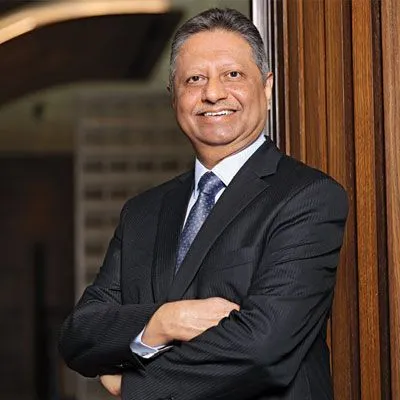
Anshul Jain, chief executive for India, Southeast Asia, Middle East and Africa, and Asia-Pacific office and retail at Cushman & Wakefield, said the office market remained structurally strong despite macroeconomic and geopolitical uncertainty. He attributed demand to global capability centres (GCCs), noting that India's large talent pool and cost competitiveness continued to attract global companies establishing such centres.

Veera Babu, executive managing director for tenant representation in India at Cushman & Wakefield, said net absorption reached 14.1 mn sq ft in Q3 and 36.7 mn sq ft in the first nine months. He linked the moderation to a strong 2025 base and limited supply additions in H1, which reduced occupier options. Completions increased significantly in Q3, adding capacity for expansion, while pre-commitments and interest in locations beyond established hubs gained traction.

Mumbai's net leasing fell 46 per cent to 4.1 mn sq ft, while Delhi-NCR declined 48 per cent to 5 mn sq ft. Chennai and Pune recorded decreases of 48 per cent and 39 per cent to 2.8 mn sq ft and 4.2 mn sq ft, respectively. Kolkata fell 12 per cent to 1.1 mn sq ft. Bengaluru rose 16 per cent to 11 mn sq ft, Hyderabad increased 41 per cent to 7.3 mn sq ft and Ahmedabad surged 81 per cent to 1.2 mn sq ft.

Net office leasing across eight major Indian cities fell 20 per cent year on year to 36.7 mn sq ft in January-September, compared with 46 mn sq ft in the year-ago period, as limited additions of quality workspace and a high base restrained absorption, according to Cushman & Wakefield. Net absorption measures the change in occupied office space in a market over a specified period. The real estate consultant said net leasing declined in Mumbai, Delhi-NCR, Pune, Chennai and Kolkata, while Bengaluru, Hyderabad and Ahmedabad recorded growth. Gross leasing, which includes fresh absorption, open-market renewals and pre-leasing, rose 1 per cent to a record 64.6 mn sq ft. The figure represented the highest gross leasing for the first nine months of a year and indicated sustained overall market activity. Anshul Jain, chief executive for India, Southeast Asia, Middle East and Africa, and Asia-Pacific office and retail at Cushman & Wakefield, said the office market remained structurally strong despite macroeconomic and geopolitical uncertainty. He attributed demand to global capability centres (GCCs), noting that India's large talent pool and cost competitiveness continued to attract global companies establishing such centres. Veera Babu, executive managing director for tenant representation in India at Cushman & Wakefield, said net absorption reached 14.1 mn sq ft in Q3 and 36.7 mn sq ft in the first nine months. He linked the moderation to a strong 2025 base and limited supply additions in H1, which reduced occupier options. Completions increased significantly in Q3, adding capacity for expansion, while pre-commitments and interest in locations beyond established hubs gained traction. Mumbai's net leasing fell 46 per cent to 4.1 mn sq ft, while Delhi-NCR declined 48 per cent to 5 mn sq ft. Chennai and Pune recorded decreases of 48 per cent and 39 per cent to 2.8 mn sq ft and 4.2 mn sq ft, respectively. Kolkata fell 12 per cent to 1.1 mn sq ft. Bengaluru rose 16 per cent to 11 mn sq ft, Hyderabad increased 41 per cent to 7.3 mn sq ft and Ahmedabad surged 81 per cent to 1.2 mn sq ft.

Related Stories

Gold Stories

Next Story
Resources

Kalpataru Projects International elevates Amit Uplenchwar as Joint MD and CEO

Kalpataru Projects International (KPIL) has elevated Amit Uplenchwar as Joint Managing Director and CEO (designate), following approval by its board on 5 November 2026. He will take charge as Additional Director, Joint Managing Director and CEO from 1 January 2027 for a five-year term ending 31 December 2031, subject to shareholders' approval.Uplenchwar brings over three decades of experience in corporate strategy, business operations, business development, mergers and acquisitions, and international business management. His experience spans transportation, power, water, oil and gas, aerospace..

Next Story
Resources

HCC appoints Vivek Singhal as CEO

Hindustan Construction Company (HCC) has appointed Vivek Singhal as Chief Executive Officer, effective 5 November 2026. He brings over four decades of experience in infrastructure and engineering, procurement and construction (EPC), covering project execution, business leadership, business development and profit and loss management.Singhal has spent 16 years in international markets, delivering projects and managing assets worth approximately Rs 285 billion across five countries. His experience spans airports, metro rail, urban transport, hydropower, bridges and other infrastructure sectors.He..

Next Story
Infrastructure Energy

Essar Signs PPA for 300 MW Hybrid Renewable Energy Project

Essar Renewables, the renewable energy arm of Essar Power, has signed a Power Purchase Agreement (PPA) with NHPC for a 300 MW renewable energy project in Andhra Pradesh. The agreement follows the company’s successful bid for the project two years ago. Essar Power will invest approximately Rs. 45 bn in the development. The project will combine solar and wind generation with Battery Energy Storage Systems (BESS), enabling the supply of reliable and dispatchable renewable power. It forms part of Essar Power’s plan to build a diversified energy portfolio of approximately 5 GW across renewable,..

Advertisement

Subscribe to Our Newsletter

Get daily newsletters around different themes from Construction world.

STAY CONNECTED

Advertisement

SPECIAL OFFER
QR Code