+
Over 5,000 trees to be felled for building six lane highway in Delhi
Real Estate

Over 5,000 trees to be felled for building six lane highway in Delhi

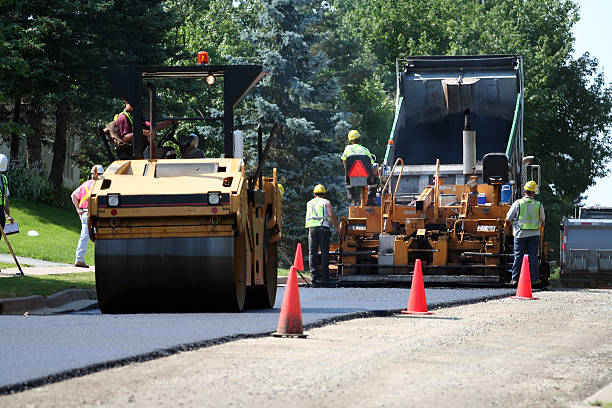
The National Highways Authority of India (NHAI) has sought permission from the forest department of Delhi for the 14.75 km long six-lane Delhi-Saharanpur highway development. East and North Delhi has over 14 hectares of forest land with 5,104 trees, which are proposed to be diverted for the six-lane highway construction.

The stretch of land has 5,104 trees between Akshardham National Highway - 9 junctions and the Delhi-Uttar Pradesh border, an official said.

The official said that an inspection was conducted in August. The agency skipped some trees during the counting process, and those have been told to consider. NHAI is yet to grant land for compensatory afforestation.

The total species of trees include Peepal, Sheesham, Sahtut, Ashok, Champa, Neem, Eucalyptus, Subabul, Kikar, Ber, Gular, and Jamun.

The highway project worth Rs 1,500 crore is a part of the Phase I Bharatmala Pariyojana, which is the second-largest highway construction programme in India, with 50,000 km of road constructed under the project.

The highway project falls in deemed forest land, and the diversion of this land is unavoidable, as per the proposal. The central agency sought permission for the 0.35 hectares of forest land diversion for the six-lane access-controlled highway from DND Maharani Bagh to the junction with the Jaitpur-Pushta Road of the national highway-148.

Some 191 tree species, including Beri, Neem, Sahtut, Peepal, Siras, are proposed to be translocated during the highway construction.

Image Source

The National Highways Authority of India (NHAI) has sought permission from the forest department of Delhi for the 14.75 km long six-lane Delhi-Saharanpur highway development. East and North Delhi has over 14 hectares of forest land with 5,104 trees, which are proposed to be diverted for the six-lane highway construction. The stretch of land has 5,104 trees between Akshardham National Highway - 9 junctions and the Delhi-Uttar Pradesh border, an official said. The official said that an inspection was conducted in August. The agency skipped some trees during the counting process, and those have been told to consider. NHAI is yet to grant land for compensatory afforestation. The total species of trees include Peepal, Sheesham, Sahtut, Ashok, Champa, Neem, Eucalyptus, Subabul, Kikar, Ber, Gular, and Jamun. The highway project worth Rs 1,500 crore is a part of the Phase I Bharatmala Pariyojana, which is the second-largest highway construction programme in India, with 50,000 km of road constructed under the project. The highway project falls in deemed forest land, and the diversion of this land is unavoidable, as per the proposal. The central agency sought permission for the 0.35 hectares of forest land diversion for the six-lane access-controlled highway from DND Maharani Bagh to the junction with the Jaitpur-Pushta Road of the national highway-148. Some 191 tree species, including Beri, Neem, Sahtut, Peepal, Siras, are proposed to be translocated during the highway construction. Image Source

Next Story
Infrastructure Urban

Implementation Status of Jal Jeevan Mission

Since August 2019 the Government has implemented Jal Jeevan Mission to provide assured potable water through household tap connections in rural India. At the start of the mission only 32.3 million (mn) rural households, representing 16.7 per cent, were reported to have tap water connections. States and union territories have reported that 125.8 mn additional rural households have since been provided with tap connections. As a result, of about 193.6 mn rural households roughly 158.2 mn, or 81.71 per cent, are reported to have tap water supply at home.\n\nThe State, district and village level st..

Next Story
Infrastructure Urban

Jal Jeevan Mission Reaches Eighty One Per Cent Rural Coverage

The Government reported substantial progress under the Jal Jeevan Mission, launched in August 2019 to provide tap water to every rural household. At launch only 32.3 million (mn) rural households had tap connections and states and Union territories reported provision of 125.8 mn additional households by March 2026. Consequently, out of about 193.6 mn rural households around 158.2 mn, or 81.71 per cent, are reported to have tap water at home. The Finance Minister announced extension of the mission until 2028 in the 2025-26 budget speech. The Swachh Bharat Mission Grameen, launched in October 20..

Next Story
Infrastructure Urban

Empowering Local Governance for Sustainable Rural Water Supply

The Ministry of Jal Shakti has aligned the Jal Jeevan Mission (JJM) with the 73rd Amendment to strengthen village level planning and community ownership of water supply. Gram Panchayats, village water and sanitation committees and Pani Samitis are to plan, implement, manage and maintain piped water systems, with gram sabha processes formalising handover and oversight. Implementation support agencies including non government organisations, community based organisations and self help groups have been empanelled to train local committees and promote women participation. Under JJM, the department ..

Advertisement

Subscribe to Our Newsletter

Get daily newsletters around different themes from Construction world.

STAY CONNECTED

Advertisement

Advertisement

Advertisement