Punjab Cabinet approves allotment of 25,000 EWS houses
Real Estate

Punjab Cabinet approves allotment of 25,000 EWS houses

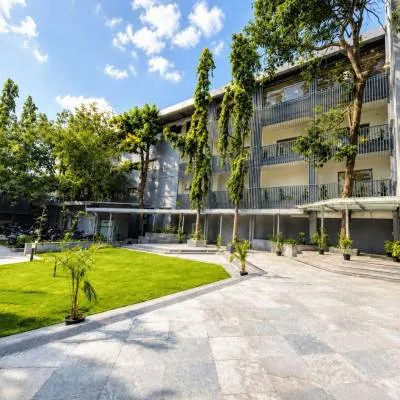
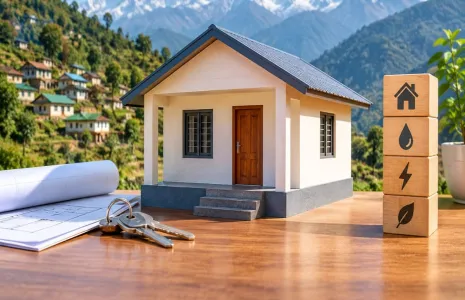
Approval for the allotment of 25,000 economically weaker section houses has been given by the Punjab government. These dwelling units are expected to have a size of around 30 square meters and will be available on rent for families economically weaker than other individuals in the area. The applications for these dwellings as well as necessary documents should arrive from eligible applicants according to approved policy.

Nearly 25,000 EWS families of the state will be reaping benefits due to this scheme. The statement said 397.048 acres are currently available for housing development with local authorities and that 80 percent of each plot will be used for houses and 20 percent for a school, dispensary, playground, or community centre.

In every EWS pocket, the area set aside is 80% to build homes and 20% to build an educational facility such as a school or clinic.

On March 9, 2021, the Punjab cabinet gave the go-ahead to an EWS housing policy. It specified that 25,000 houses would be built by special urban planning and development authorities. The state cabinet also decided to reduce 10 percent simple interest plus three percent penal interest on outstanding dues of developers with a move that will give relief both for developers and the real estate sector in general.

The cabinet approved exempting contract carriage vehicles from motor vehicle tax during the COVID-19 pandemic period. The exemption will be applicable only to those who are registered under a contract as per their provisions, in terms of May 20th, 2020 till December 31st, 2020, and March 23rd, 2020 till December 31st, 2020 respectively.

Image Source

Approval for the allotment of 25,000 economically weaker section houses has been given by the Punjab government. These dwelling units are expected to have a size of around 30 square meters and will be available on rent for families economically weaker than other individuals in the area. The applications for these dwellings as well as necessary documents should arrive from eligible applicants according to approved policy. Nearly 25,000 EWS families of the state will be reaping benefits due to this scheme. The statement said 397.048 acres are currently available for housing development with local authorities and that 80 percent of each plot will be used for houses and 20 percent for a school, dispensary, playground, or community centre. In every EWS pocket, the area set aside is 80% to build homes and 20% to build an educational facility such as a school or clinic. On March 9, 2021, the Punjab cabinet gave the go-ahead to an EWS housing policy. It specified that 25,000 houses would be built by special urban planning and development authorities. The state cabinet also decided to reduce 10 percent simple interest plus three percent penal interest on outstanding dues of developers with a move that will give relief both for developers and the real estate sector in general. The cabinet approved exempting contract carriage vehicles from motor vehicle tax during the COVID-19 pandemic period. The exemption will be applicable only to those who are registered under a contract as per their provisions, in terms of May 20th, 2020 till December 31st, 2020, and March 23rd, 2020 till December 31st, 2020 respectively. Image Source

Next Story
Infrastructure Urban

Implementation Status of Jal Jeevan Mission

Since August 2019 the Government has implemented Jal Jeevan Mission to provide assured potable water through household tap connections in rural India. At the start of the mission only 32.3 million (mn) rural households, representing 16.7 per cent, were reported to have tap water connections. States and union territories have reported that 125.8 mn additional rural households have since been provided with tap connections. As a result, of about 193.6 mn rural households roughly 158.2 mn, or 81.71 per cent, are reported to have tap water supply at home.\n\nThe State, district and village level st..

Next Story
Infrastructure Urban

Jal Jeevan Mission Reaches Eighty One Per Cent Rural Coverage

The Government reported substantial progress under the Jal Jeevan Mission, launched in August 2019 to provide tap water to every rural household. At launch only 32.3 million (mn) rural households had tap connections and states and Union territories reported provision of 125.8 mn additional households by March 2026. Consequently, out of about 193.6 mn rural households around 158.2 mn, or 81.71 per cent, are reported to have tap water at home. The Finance Minister announced extension of the mission until 2028 in the 2025-26 budget speech. The Swachh Bharat Mission Grameen, launched in October 20..

Next Story
Infrastructure Urban

Empowering Local Governance for Sustainable Rural Water Supply

The Ministry of Jal Shakti has aligned the Jal Jeevan Mission (JJM) with the 73rd Amendment to strengthen village level planning and community ownership of water supply. Gram Panchayats, village water and sanitation committees and Pani Samitis are to plan, implement, manage and maintain piped water systems, with gram sabha processes formalising handover and oversight. Implementation support agencies including non government organisations, community based organisations and self help groups have been empanelled to train local committees and promote women participation. Under JJM, the department ..

Advertisement

Subscribe to Our Newsletter

Get daily newsletters around different themes from Construction world.

STAY CONNECTED

Advertisement

Advertisement

Advertisement