Alstom Signalling Enters Service on Bengaluru Metro's Pink Line
Technology

Alstom Signalling Enters Service on Bengaluru Metro's Pink Line

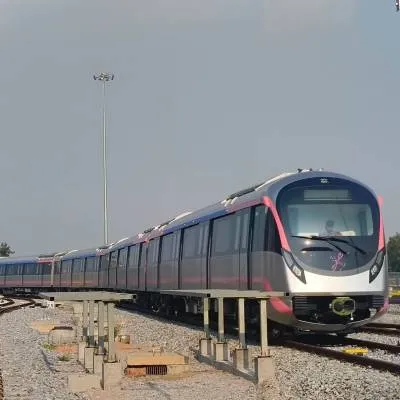
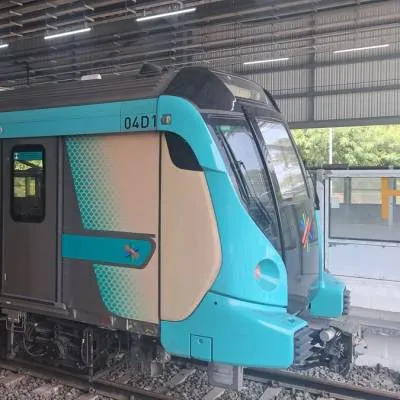
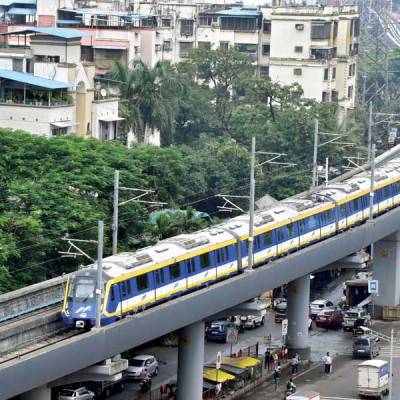
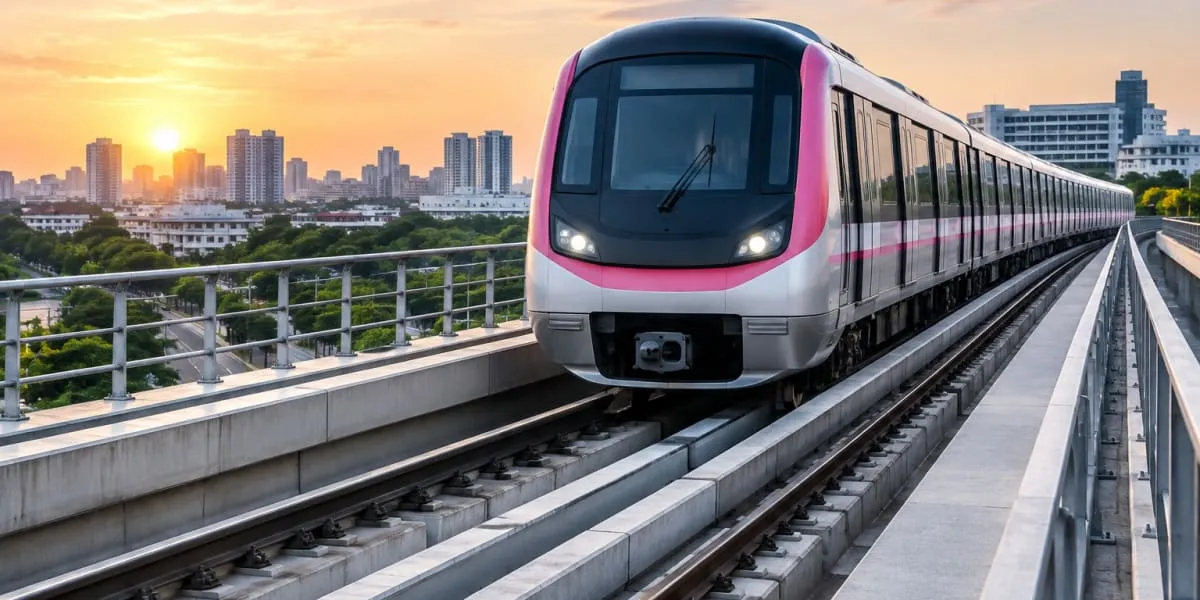
Alstom’s communications-based train control (CBTC) signalling solution has entered revenue service on Reach 6’s Priority Section of Bengaluru Metro’s Pink Line. The 7.5-km elevated stretch links residential, educational and healthcare hubs in south Bengaluru and marks the start of operations on a key section of the city’s urban rail network.

The section operates at Grade of Automation 2 (GoA2), with automatic train operation (ATO) on the main line from the first day of service. Train acceleration and braking are automated, while a driver retains responsibility for essential operational functions. The Kothanur depot is fully commissioned with automatic train protection (ATP), and an integrated test track supports ATO.

Six stations are serving passengers: Swagath Road, Jayadeva Hospital, JP Nagar 4th Phase, Indian Institute of Management, Hulimavu and Gottigere. Jayadeva Hospital provides an interchange with the Yellow Line, expanding links between communities in south Bengaluru. The signalling system maintains continuous communication between trains and trackside equipment, enabling precise positioning and supporting operations for six equipped trainsets.

Operations are supervised through Alstom’s Urbalis Vision platform at the Operations Control Centre in Baiyappanahalli, eastern Bengaluru. Its HealthHub predictive maintenance solution provides real-time, condition-based monitoring of signalling assets, which is intended to reduce downtime and optimise lifecycle costs. The arrangement is designed to support safe, reliable and frequent metro services.

The project is Alstom’s third contract with Bengaluru Metro Rail Corporation (BMRCL). Earlier work included the signalling solution for Phase 1’s Purple and Green lines, delivered between 2009 and 2017, while traction and power supply electrification is being delivered for Phase 2. Alstom has more than 30 years of CBTC experience, with its solutions selected for 190 metro lines worldwide and 18 lines equipped or under development across India. The company said the Pink Line deployment strengthens its contribution to sustainable urban mobility and its relationship with BMRCL.

Alstom’s communications-based train control (CBTC) signalling solution has entered revenue service on Reach 6’s Priority Section of Bengaluru Metro’s Pink Line. The 7.5-km elevated stretch links residential, educational and healthcare hubs in south Bengaluru and marks the start of operations on a key section of the city’s urban rail network. The section operates at Grade of Automation 2 (GoA2), with automatic train operation (ATO) on the main line from the first day of service. Train acceleration and braking are automated, while a driver retains responsibility for essential operational functions. The Kothanur depot is fully commissioned with automatic train protection (ATP), and an integrated test track supports ATO. Six stations are serving passengers: Swagath Road, Jayadeva Hospital, JP Nagar 4th Phase, Indian Institute of Management, Hulimavu and Gottigere. Jayadeva Hospital provides an interchange with the Yellow Line, expanding links between communities in south Bengaluru. The signalling system maintains continuous communication between trains and trackside equipment, enabling precise positioning and supporting operations for six equipped trainsets. Operations are supervised through Alstom’s Urbalis Vision platform at the Operations Control Centre in Baiyappanahalli, eastern Bengaluru. Its HealthHub predictive maintenance solution provides real-time, condition-based monitoring of signalling assets, which is intended to reduce downtime and optimise lifecycle costs. The arrangement is designed to support safe, reliable and frequent metro services. The project is Alstom’s third contract with Bengaluru Metro Rail Corporation (BMRCL). Earlier work included the signalling solution for Phase 1’s Purple and Green lines, delivered between 2009 and 2017, while traction and power supply electrification is being delivered for Phase 2. Alstom has more than 30 years of CBTC experience, with its solutions selected for 190 metro lines worldwide and 18 lines equipped or under development across India. The company said the Pink Line deployment strengthens its contribution to sustainable urban mobility and its relationship with BMRCL.

Related Stories

Gold Stories
Next Story
Technology

Motherson to Bring Global Technologies to India to Drive Growth

Samvardhana Motherson International (SAMIL) plans to use technologies acquired through its global expansion to pursue opportunities in India’s automotive market, where improving product standards and stricter emission norms are increasing demand for advanced solutions. The company’s strategy forms part of its Vision 2030 ambition to achieve USD 108 bn in topline gross revenue by 2029-30. Pankaj Mital, whole-time director and president, and Gandharv Tongia, group chief financial officer, said the company intended to bring technologies from its international portfolio to India. They said ris..
Next Story
Infrastructure Transport

GMR Group to Develop 500-Acre Aviation Hub in Andhra Pradesh

GMR Group is developing an aviation city and a 500-acre aviation and aerospace ecosystem in Andhra Pradesh, Chairman G M Rao said at the Confederation of Indian Industry Partnership Summit. The project will be developed alongside airport infrastructure and is intended to create a broader aviation-focused economic hub in the state. Rao said airports had become new engines of economic growth as commercial activity evolved from ports and railway stations towards urban centres and, increasingly, airports. He described the airport as a platform around which new businesses, services and supporting i..

Next Story
Building Material

Cement Companies May See Earnings Recovery in Q3 FY27

Cement companies may record an earnings recovery in the third quarter of FY27 as recent price increases and a seasonal revival in demand support operating performance, although cost inflation and new capacity could restrict the improvement, according to a research report by Dolat Capital. The brokerage estimates that earnings before interest, tax, depreciation and amortisation (EBITDA) per tonne will rise by Rs. 135, or 16.2 per cent, sequentially in Q3 FY27. The improvement is expected to be supported by a 2.1 per cent increase in blended realisations and a 0.3 per cent decline in operating e..

Advertisement

Subscribe to Our Newsletter

Get daily newsletters around different themes from Construction world.

STAY CONNECTED

Advertisement

SPECIAL OFFER
QR Code