


BIM in design, construction and operations
Technology

BIM in design, construction and operations

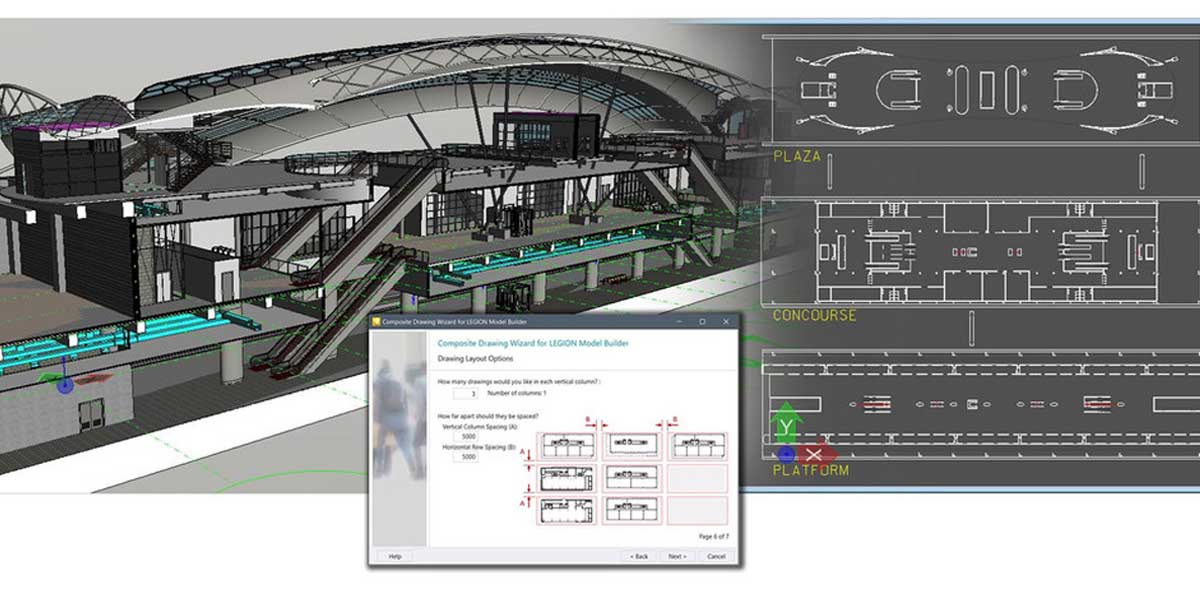
Building Information Modelling (BIM) has made a revolution in the way we design, construct and manage our project’s life-cycle. BIM has far and reaching consequences on both building procurement and infrastructure. This recent emergence constitutes one of the most exciting developments in the field of the Built Environment. These advances have offered project teams multi-sensory collaborative tools and opportunities for new communication structures.

To delve into the innovative solutions BIM can offer and predict the future trends, Construction World Magazine, under the aegis of ASAPP Info Global Group and FIRST Construction Council, organised the CONSTRUCTION TECHNOLOGY SUMMIT virtually on July 22-23, 2021, to identify proven, innovative and globally established construction technologies. The summit is presented by Bentley Systems, with Autodesk as the design and technology partner, and is supported by the India BIM Association.

In the session on ‘BIM in Design, Construction, and Operations’, moderator Yash Pratap Singh, Partner-Major Projects Advisory, KPMG, began the session highlighting, “As far as the BIM penetration is concerned vis-à-vis what the infrastructure market has to offer, my perspective is that we are only scratching the surface right now and this is despite the fact that BIM has been in India for more than a decade now.” Clearly this is a massive untapped market as far the BIM-based system digitilisation is concerned. In fact, considering the current pandemic, it has also heightened the need for digitalisation using BIM and given us the opportunity to leapfrog – whether in the private sector or public sector – to leverage this pandemic and and exploit the full potential of BIM. 

If you look at the investments coming up in the country, overall, we need to be better geared to deliver using technologies like BIM, and this will be successful if we have the entire ecosystem – whether it's the government, the private sector organisations, the OEMS, the service providers – come together to make this work because everyone has as a critical role to play and this ecosystem has to work together to make this happen on a much larger scale.

Click here to know more.


Building Information Modelling (BIM) has made a revolution in the way we design, construct and manage our project’s life-cycle. BIM has far and reaching consequences on both building procurement and infrastructure. This recent emergence constitutes one of the most exciting developments in the field of the Built Environment. These advances have offered project teams multi-sensory collaborative tools and opportunities for new communication structures.To delve into the innovative solutions BIM can offer and predict the future trends, Construction World Magazine, under the aegis of ASAPP Info Global Group and FIRST Construction Council, organised the CONSTRUCTION TECHNOLOGY SUMMIT virtually on July 22-23, 2021, to identify proven, innovative and globally established construction technologies. The summit is presented by Bentley Systems, with Autodesk as the design and technology partner, and is supported by the India BIM Association.In the session on ‘BIM in Design, Construction, and Operations’, moderator Yash Pratap Singh, Partner-Major Projects Advisory, KPMG, began the session highlighting, “As far as the BIM penetration is concerned vis-à-vis what the infrastructure market has to offer, my perspective is that we are only scratching the surface right now and this is despite the fact that BIM has been in India for more than a decade now.” Clearly this is a massive untapped market as far the BIM-based system digitilisation is concerned. In fact, considering the current pandemic, it has also heightened the need for digitalisation using BIM and given us the opportunity to leapfrog – whether in the private sector or public sector – to leverage this pandemic and and exploit the full potential of BIM. If you look at the investments coming up in the country, overall, we need to be better geared to deliver using technologies like BIM, and this will be successful if we have the entire ecosystem – whether it's the government, the private sector organisations, the OEMS, the service providers – come together to make this work because everyone has as a critical role to play and this ecosystem has to work together to make this happen on a much larger scale.Click here to know more.

Related Stories

Gold Stories

Next Story
Infrastructure Urban

KONE Opens India's First Digital Experience Centre in Pune

KONE, a global elevator and escalator manufacturer, has inaugurated its first Digital Experience Centre (DEC) in India, located in Pune. The facility aims to showcase how artificial intelligence (AI), connectivity and data-driven technologies can enhance customer experiences and improve building operations.The centre was inaugurated by Jussi Herlin, Executive Vice Chair, KONE Corporation; Philippe Delorme, President and CEO, KONE; and Nandan Nilekani, Co-founder and Chairman of the Board, Infosys.Designed as an interactive customer environment, the facility demonstrates digital solutions cover..

Next Story
Infrastructure Urban

CII GreenCo Launches Circularity Guidelines for Indian Industry

The Confederation of Indian Industry (CII) GreenCo Council has launched the CII GreenCo Circularity Guidelines – Pilot Version at the 17th CII GreenCo Waste & Resource Management Summit 2026 in Chennai. The initiative aims to strengthen resource efficiency, waste reduction and circular economy practices across Indian manufacturing and process industries.The guidelines introduce a structured framework with circularity indices covering raw materials, consumables, packaging and other resource inputs. These indicators will help industries assess existing practices, identify opportunities to ..

Next Story
Infrastructure Energy

Global Electronics Association Launches IPC-1783-CO2E Standard

The Global Electronics Association has introduced IPC-1783-CO2E, a new international standard aimed at improving consistency, transparency and comparability in product carbon footprint reporting across the electronics manufacturing industry.The standard, titled International Standard for Data Collection and Reporting of CO2 Equivalent (CO2e) Emissions for the Electronics Manufacturing Supply Chain, provides industry-specific guidance for collecting, estimating and reporting carbon emissions data.With increasing regulatory requirements and customer expectations, electronics manufacturers face c..

Advertisement

Subscribe to Our Newsletter

Get daily newsletters around different themes from Construction world.

STAY CONNECTED

Advertisement

SPECIAL OFFER
QR Code