Duerr introduces new software for better first-run rate
Technology

Duerr introduces new software for better first-run rate

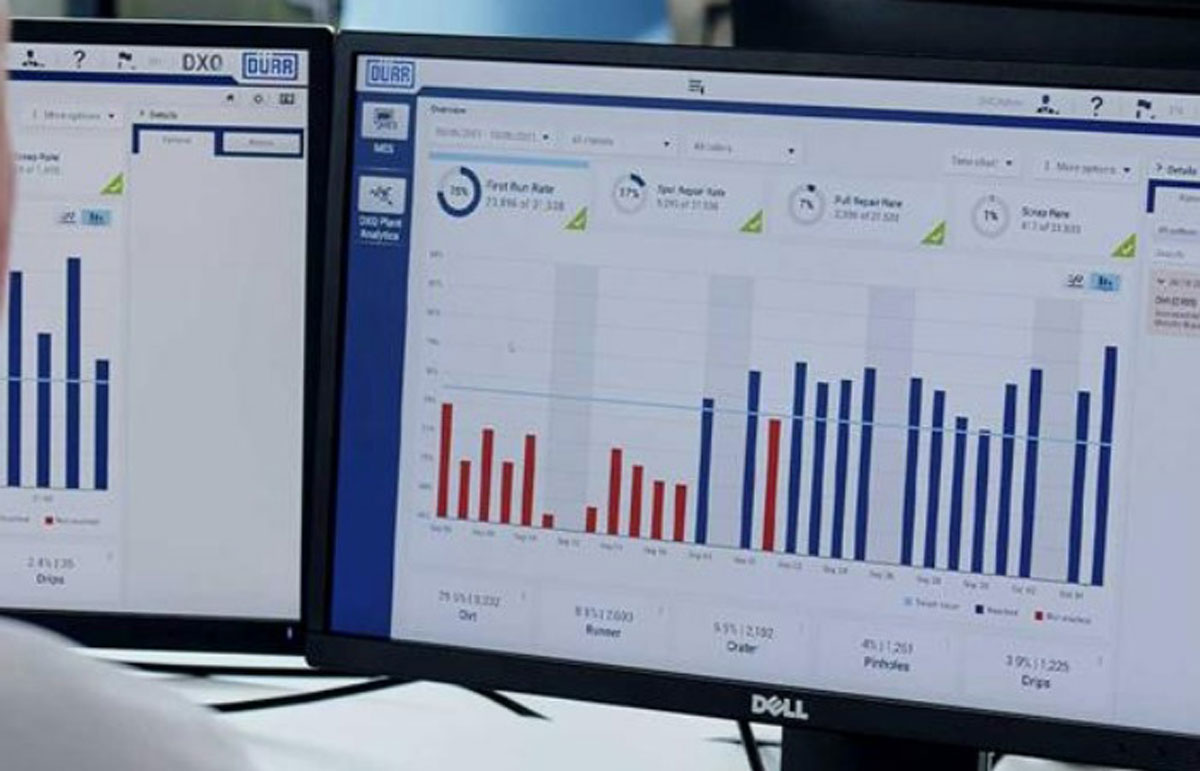
Higher first-run rate, less rework, systematic fault analysis: DXQplant.analytics helps paint shop operators improve production quality and effectiveness. The latest software tool from Dürr’s DXQanalyze product family detects systematic fault patterns and their causes early, making it much easier to find the relevant fault source. AI algorithms and data-driven machine learning make this possible.

With the Advanced Analytics module, the first market-ready AI application for paint shops, DXQplant.analytics has access to a wealth of data for fault analysis. The software can then detect whether the fault is a one-time or systematic issue, such as recurring quality defects with particular colours. Data from recognized patterns can identify the process step responsible for the fault. This makes it possible to analyse systematic production quality deficiencies, which can be hard to recognise, and quickly identify and fix their causes.

Simplified detection and cause analysis make it possible to avoid the fault in the future and increase the first-run rate.

The basis of DXQplant.analytics is quality information recorded digitally for each workpiece during the surface inspection. In addition, process parameters, alarms, and anomalies from the individual processing steps supplement the workpiece-related data records. This creates a digital file for each body that models the entire production and life cycle, including any faults found. Machine learning can help identify patterns and correlations in data records. If there are frequent contaminants in the paint, the software will detect this and immediately assign information about the underlying cause to the fault pattern.

Detecting recurring paint defects is very laborious, and locating faults is time-consuming and expensive. DXQplant.analytics flags problematic fault sources to the quality manager and provides targeted help with analysing the cause. Correlating graphics and automatically generated reports easily document insights to share with colleagues, workers, and management. Integrated documentation functions allow the DXQplant.analytics user to save and manage defined optimisation measures and track their impact on quality. Therefore, DXQplant.analytics helps the paint shop operator increase the first-run rate in a targeted way, thus boosting overall equipment effectiveness.

Software solutions must always be kept up to date for users to leverage their full potential. With DXQsupport, Duerr offers its customers a comprehensive service package for use and maintenance of its digital solutions. Providing support for the entire software life cycle increases availability, performance and quality and maintains them at this level. In addition to regular updates, Duerr offers a team of experts who constantly monitor live production activity to react quickly in the event of failures or irregularities. These services are complemented by a comprehensive modular training catalogue, allowing operators to leverage the full potential of their digital portfolio.

Higher first-run rate, less rework, systematic fault analysis: DXQplant.analytics helps paint shop operators improve production quality and effectiveness. The latest software tool from Dürr’s DXQanalyze product family detects systematic fault patterns and their causes early, making it much easier to find the relevant fault source. AI algorithms and data-driven machine learning make this possible. With the Advanced Analytics module, the first market-ready AI application for paint shops, DXQplant.analytics has access to a wealth of data for fault analysis. The software can then detect whether the fault is a one-time or systematic issue, such as recurring quality defects with particular colours. Data from recognized patterns can identify the process step responsible for the fault. This makes it possible to analyse systematic production quality deficiencies, which can be hard to recognise, and quickly identify and fix their causes. Simplified detection and cause analysis make it possible to avoid the fault in the future and increase the first-run rate. The basis of DXQplant.analytics is quality information recorded digitally for each workpiece during the surface inspection. In addition, process parameters, alarms, and anomalies from the individual processing steps supplement the workpiece-related data records. This creates a digital file for each body that models the entire production and life cycle, including any faults found. Machine learning can help identify patterns and correlations in data records. If there are frequent contaminants in the paint, the software will detect this and immediately assign information about the underlying cause to the fault pattern. Detecting recurring paint defects is very laborious, and locating faults is time-consuming and expensive. DXQplant.analytics flags problematic fault sources to the quality manager and provides targeted help with analysing the cause. Correlating graphics and automatically generated reports easily document insights to share with colleagues, workers, and management. Integrated documentation functions allow the DXQplant.analytics user to save and manage defined optimisation measures and track their impact on quality. Therefore, DXQplant.analytics helps the paint shop operator increase the first-run rate in a targeted way, thus boosting overall equipment effectiveness. Software solutions must always be kept up to date for users to leverage their full potential. With DXQsupport, Duerr offers its customers a comprehensive service package for use and maintenance of its digital solutions. Providing support for the entire software life cycle increases availability, performance and quality and maintains them at this level. In addition to regular updates, Duerr offers a team of experts who constantly monitor live production activity to react quickly in the event of failures or irregularities. These services are complemented by a comprehensive modular training catalogue, allowing operators to leverage the full potential of their digital portfolio.

Next Story
Infrastructure Transport

Kavach 4.0 Commissioned on Delhi–Mumbai and Delhi–Howrah

"Kavach version four has been commissioned on 1,452 route km, covering the high density Delhi–Mumbai and Delhi–Howrah corridors. The rollout included laying 8,570 km of optical fibre, installation of 1,100 telecom towers, deployment of trackside equipment over 6,776 RKm and establishment of 767 station data centres. Trackside implementation has been taken up on 24,427 RKm covering Golden Quadrilateral, Golden Diagonal and High Density Network sections. The programme aims to strengthen signalling and train protection on key routes.Kavach is an indigenously developed automatic train protecti..

Next Story
Infrastructure Transport

Railways Advance Kalyan–Murbad Line And Mumbai Capacity Expansion

"Indian Railways is advancing multiple rail infrastructure projects in Maharashtra, including the sanctioned Kalyan–Murbad new line and sizable investments under the Mumbai Urban Transport Project and the Mumbai–Ahmedabad High Speed Rail project. The Kalyan–Murbad 28 km new line has been sanctioned at Rs 8.36 billion (bn) on a 50:50 cost-sharing basis with the Government of Maharashtra and has been declared a Special Railway Project for land acquisition; proposals covering 214 hectares are at various stages of acquisition. Budgetary outlay for projects falling fully or partly in Maharash..

Next Story
Infrastructure Urban

Parliamentary Panel Flags Funding Gaps in Heavy Industries

"The Department-Related Parliamentary Standing Committee on Industry (Rajya Sabha) presented its 332nd report on the Demands for Grants 2026-27 of the Ministry of Heavy Industries (MHI). Figures converted from crore and lakh are expressed in million (mn). The Budget Estimates 2026-27 for the Ministry stand at Rs 79,399 mn against a projected requirement of Rs 94,843.2 mn, a shortfall of about 16 per cent, with revenue at Rs 79,370.8 mn and capital compressed to Rs 28.2 mn from Rs 5,020 mn.The committee flagged recurring BE-to-RE compression and declining revised estimate utilisation, and calle..

Advertisement

Subscribe to Our Newsletter

Get daily newsletters around different themes from Construction world.

STAY CONNECTED

Advertisement

Advertisement

Advertisement