+
India, UK Launch Centre to Boost 6G and Digital Innovation
Technology

India, UK Launch Centre to Boost 6G and Digital Innovation

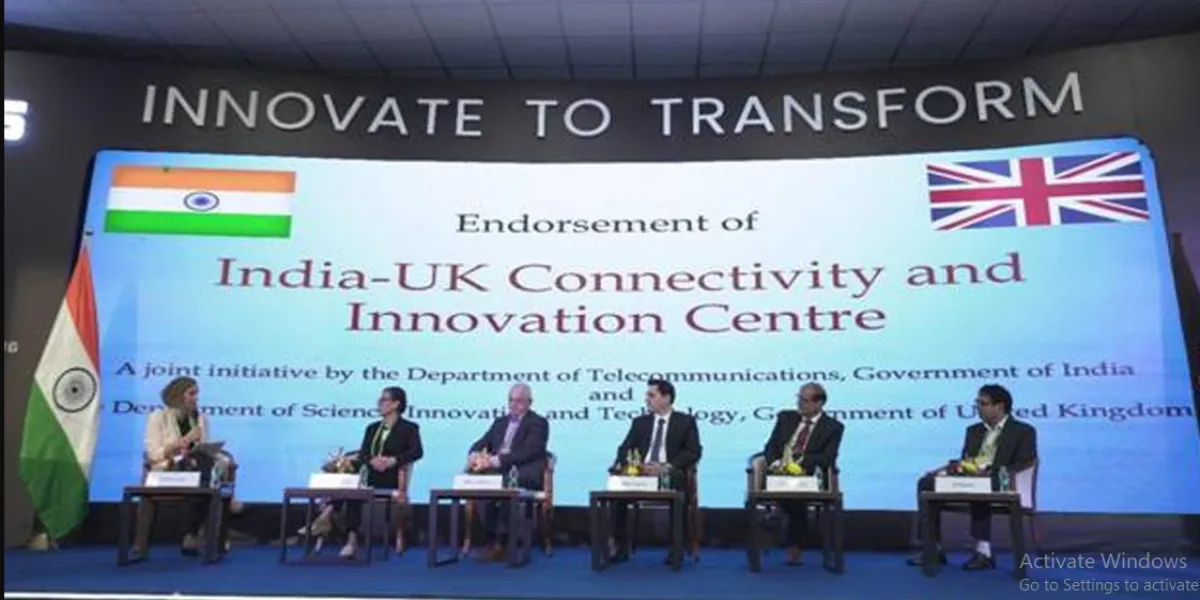
In a landmark step towards shaping the future of global connectivity, India and the United Kingdom have announced a strategic partnership to promote digital inclusion and advance secure, next-generation communication technologies.

The newly launched India–UK Connectivity and Innovation Centre will unite the two nations’ strengths in advanced connectivity, digital research, and innovation — linking cutting-edge academic research, lab testing, field trials, and commercial deployment. The initiative aims to create new industrial and market opportunities, enabling partners to develop, test, and scale technologies with a direct pathway to adoption.

Over the next four years, the Centre will focus on a critical phase in the evolution of 6G technologies, driving progress in three key areas:

AI-driven telecom transformation: Leveraging artificial intelligence to optimise networks, enhance efficiency, and enable new digital services.

Non-terrestrial networks (NTNs): Developing satellite and airborne communication systems to deliver high-speed connectivity to rural and remote areas.

Telecoms cybersecurity: Building open, interoperable, and resilient network systems to strengthen security and reliability for consumers and enterprises alike.

Connectivity technologies are the backbone of modern economies, and this collaboration seeks to combine India’s digital dynamism with the UK’s innovation leadership to deliver mutual economic and security benefits.

The two governments have committed a combined investment of Rs 2.4 billion (£24 million) over four years to support applied research through UK and Indian research institutions, industry–academia partnerships, joint testbeds, and collaborative efforts in global technical standards.

This initiative is being implemented under the UK–India Technology Security Initiative, jointly led by UK Research and Innovation (UKRI) and India’s Department of Telecommunications (DoT). It also serves as a flagship example of the UK–India Research and Innovation Corridor, aligning with the shared ambitions outlined in the Prime Minister–Prime Minister Vision 2035.

The new Centre is expected to accelerate 6G development, strengthen digital resilience, and expand equitable access to advanced connectivity, reinforcing both nations’ leadership in global telecommunications innovation.

In a landmark step towards shaping the future of global connectivity, India and the United Kingdom have announced a strategic partnership to promote digital inclusion and advance secure, next-generation communication technologies. The newly launched India–UK Connectivity and Innovation Centre will unite the two nations’ strengths in advanced connectivity, digital research, and innovation — linking cutting-edge academic research, lab testing, field trials, and commercial deployment. The initiative aims to create new industrial and market opportunities, enabling partners to develop, test, and scale technologies with a direct pathway to adoption. Over the next four years, the Centre will focus on a critical phase in the evolution of 6G technologies, driving progress in three key areas: AI-driven telecom transformation: Leveraging artificial intelligence to optimise networks, enhance efficiency, and enable new digital services. Non-terrestrial networks (NTNs): Developing satellite and airborne communication systems to deliver high-speed connectivity to rural and remote areas. Telecoms cybersecurity: Building open, interoperable, and resilient network systems to strengthen security and reliability for consumers and enterprises alike. Connectivity technologies are the backbone of modern economies, and this collaboration seeks to combine India’s digital dynamism with the UK’s innovation leadership to deliver mutual economic and security benefits. The two governments have committed a combined investment of Rs 2.4 billion (£24 million) over four years to support applied research through UK and Indian research institutions, industry–academia partnerships, joint testbeds, and collaborative efforts in global technical standards. This initiative is being implemented under the UK–India Technology Security Initiative, jointly led by UK Research and Innovation (UKRI) and India’s Department of Telecommunications (DoT). It also serves as a flagship example of the UK–India Research and Innovation Corridor, aligning with the shared ambitions outlined in the Prime Minister–Prime Minister Vision 2035. The new Centre is expected to accelerate 6G development, strengthen digital resilience, and expand equitable access to advanced connectivity, reinforcing both nations’ leadership in global telecommunications innovation.

Next Story
Infrastructure Transport

MMRDA Installs 325-Tonne Steel Spans on Mumbai Metro Line 4

The Mumbai Metropolitan Region Development Authority (MMRDA) has achieved a key construction milestone on Metro Line 4 with the successful installation of three large steel spans at Bhandup West during overnight operations.The spans, together weighing 325 metric tonnes, were launched using eight heavy-duty cranes and 12 multi-axle vehicles. The operation required precise engineering and meticulous planning to minimise disruption in the densely populated suburban area.Due to effective inter-agency coordination, the work—originally scheduled across four nights—was completed within just two n..

Next Story
Infrastructure Transport

CMRL Targets March 2027 Opening for Vadapalani–Panagal Park

Chennai Metro Rail Limited (CMRL) is progressing as scheduled to open the Vadapalani–Panagal Park section of Phase II’s Corridor 4 by March 2027. The 3.5 km underground stretch is part of the 26.1 km Corridor 4 connecting Lighthouse with Poonamallee Bypass.Construction activities are advancing steadily, with tunnelling works between Vadapalani and Panagal Park already completed. Track-laying operations are expected to commence shortly. At Panagal Park station, structural works have reached the concourse and platform levels, while excavation continues at the lowest level.CMRL is also consid..

Next Story
Infrastructure Transport

Maha-Metro Invites Pune Metro Civil Maintenance Bids

Maharashtra Metro Rail Corporation Limited (Maha-Metro) has invited bids for the annual civil maintenance contract of the Pune Metro Rail Project. The tender, bearing ID and number P1-O&M-20/2025, is scheduled to close on 23 February 2026, with a pre-bid meeting slated for 10 February 2026. The earnest money deposit (EMD) for the contract is Rs 3,50,500, and the duration of the contract is one year.The scope of work includes annual civil maintenance of 28 elevated and underground stations, 28.079 km of elevated viaduct including steel bridges, 12.15 km of tunnels, and two depots under the ..

Advertisement

Subscribe to Our Newsletter

Get daily newsletters around different themes from Construction world.

STAY CONNECTED

Advertisement

Advertisement

Advertisement

Open In App