84% of districts face heatwaves and irregular rainfall; IPE and Esri
ECONOMY & POLICY

84% of districts face heatwaves and irregular rainfall; IPE and Esri

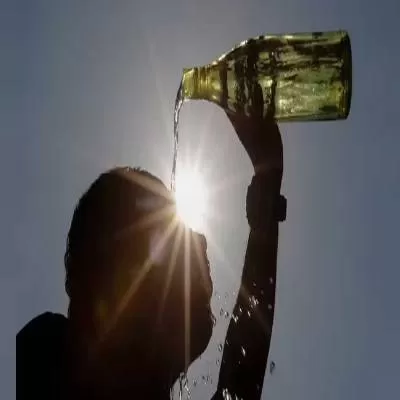
A recent study by IPE-Global and Esri India reveals that more than 84% of Indian districts are experiencing severe heatwaves, with 70% also encountering increased frequency and intensity of rainfall. Released ahead of the Climate Week NYC, where global leaders will discuss climate commitments, the study highlights a significant rise in extreme weather events over the past three decades.

The study notes a 15-fold increase in extreme heatwave days during the March-April-May and June-July-August-September periods over the last 30 years, with a 19-fold rise observed in the past decade alone.

Abinash Mohanty, Head-Climate Change and Sustainability Practice, IPE Global expressed concern over these trends. ?The increase in catastrophic heat and rainfall events is linked to a 0.6 ?C rise in global temperatures over the last century," Mohanty said. He also pointed out the growing impact of El Ni'o, which is exacerbating India's climate patterns with more pronounced and erratic effects.

The study underscores the severe weather impacts witnessed recently, such as the landslides in Kerala caused by relentless rainfall, highlighting the changing climate reality. Mohanty warned, "Our analysis predicts that by 2036, 8 out of 10 Indians will face high exposure to extreme events."

Agendra Kumar, Managing Director, Esri India, emphasised the role of Geographic Information System (GIS) technology in tackling these challenges. "GIS technology provides a comprehensive understanding of climate impacts from economic, social, and environmental perspectives," Kumar said. He advocated for its use in resilient infrastructure planning, disaster management, and enhancing community engagement through detailed spatial and climatic analysis.

The findings from this study stress the urgent need for robust climate resilience strategies and adaptive measures to protect India's agricultural, industrial, and infrastructural sectors from the escalating threats of climate change.

(ET)

A recent study by IPE-Global and Esri India reveals that more than 84% of Indian districts are experiencing severe heatwaves, with 70% also encountering increased frequency and intensity of rainfall. Released ahead of the Climate Week NYC, where global leaders will discuss climate commitments, the study highlights a significant rise in extreme weather events over the past three decades. The study notes a 15-fold increase in extreme heatwave days during the March-April-May and June-July-August-September periods over the last 30 years, with a 19-fold rise observed in the past decade alone. Abinash Mohanty, Head-Climate Change and Sustainability Practice, IPE Global expressed concern over these trends. ?The increase in catastrophic heat and rainfall events is linked to a 0.6 ?C rise in global temperatures over the last century, Mohanty said. He also pointed out the growing impact of El Ni'o, which is exacerbating India's climate patterns with more pronounced and erratic effects. The study underscores the severe weather impacts witnessed recently, such as the landslides in Kerala caused by relentless rainfall, highlighting the changing climate reality. Mohanty warned, Our analysis predicts that by 2036, 8 out of 10 Indians will face high exposure to extreme events. Agendra Kumar, Managing Director, Esri India, emphasised the role of Geographic Information System (GIS) technology in tackling these challenges. GIS technology provides a comprehensive understanding of climate impacts from economic, social, and environmental perspectives, Kumar said. He advocated for its use in resilient infrastructure planning, disaster management, and enhancing community engagement through detailed spatial and climatic analysis. The findings from this study stress the urgent need for robust climate resilience strategies and adaptive measures to protect India's agricultural, industrial, and infrastructural sectors from the escalating threats of climate change. (ET)

Next Story
Infrastructure Urban

Implementation Status of Jal Jeevan Mission

Since August 2019 the Government has implemented Jal Jeevan Mission to provide assured potable water through household tap connections in rural India. At the start of the mission only 32.3 million (mn) rural households, representing 16.7 per cent, were reported to have tap water connections. States and union territories have reported that 125.8 mn additional rural households have since been provided with tap connections. As a result, of about 193.6 mn rural households roughly 158.2 mn, or 81.71 per cent, are reported to have tap water supply at home.\n\nThe State, district and village level st..

Next Story
Infrastructure Urban

Jal Jeevan Mission Reaches Eighty One Per Cent Rural Coverage

The Government reported substantial progress under the Jal Jeevan Mission, launched in August 2019 to provide tap water to every rural household. At launch only 32.3 million (mn) rural households had tap connections and states and Union territories reported provision of 125.8 mn additional households by March 2026. Consequently, out of about 193.6 mn rural households around 158.2 mn, or 81.71 per cent, are reported to have tap water at home. The Finance Minister announced extension of the mission until 2028 in the 2025-26 budget speech. The Swachh Bharat Mission Grameen, launched in October 20..

Next Story
Infrastructure Urban

Empowering Local Governance for Sustainable Rural Water Supply

The Ministry of Jal Shakti has aligned the Jal Jeevan Mission (JJM) with the 73rd Amendment to strengthen village level planning and community ownership of water supply. Gram Panchayats, village water and sanitation committees and Pani Samitis are to plan, implement, manage and maintain piped water systems, with gram sabha processes formalising handover and oversight. Implementation support agencies including non government organisations, community based organisations and self help groups have been empanelled to train local committees and promote women participation. Under JJM, the department ..

Advertisement

Subscribe to Our Newsletter

Get daily newsletters around different themes from Construction world.

STAY CONNECTED

Advertisement

Advertisement

Advertisement