



ABB India Posts Resilient Q2 CY2025 Results
ECONOMY & POLICY

ABB India Posts Resilient Q2 CY2025 Results

ABB India posted a 12 per cent revenue growth for the April–June quarter and a 7 per cent increase for the first half of CY2025. The company’s order backlog reached Rs 100.64 billion, marking a historic milestone. While total orders declined to Rs 30.36 billion in Q2 and Rs 67.87 billion for H1 CY2025 due to the absence of large contract wins compared to the same period last year, base orders remained strong. The company attributed the short-term dip to cyclical corrections in the market and the timing of large deals in Electrification and Motion segments.

Profit margins remained in the double digits for the eleventh consecutive quarter, though forex volatility and one-off costs impacted profitability. ABB India also earned a “strong” sustainability rating from CRISIL, underscoring its robust ESG initiatives. The Board declared an interim dividend of Rs 9.77 per equity share.

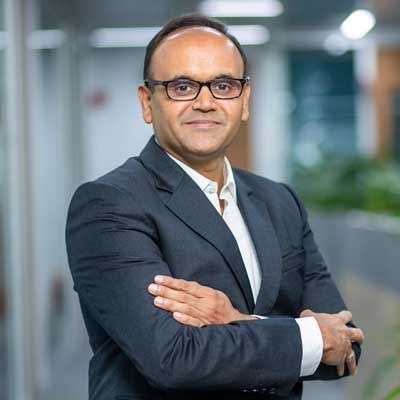
Commenting on the results, Sanjeev Sharma, Managing Director of ABB India, noted that while some sectors experienced a slowdown in orders, the company expects a gradual demand recovery amid easing inflation and expanding market reach. He also highlighted ABB India’s progress on its sustainability goals, particularly in water stewardship, and lauded the CRISIL rating as a reflection of the team’s commitment to responsible growth.

Key sectors contributing to order inflow included railways, metros, electric two-wheelers, mining, pulp and paper, paints, electronics, and industries requiring reliable power distribution and energy efficiency systems. Despite macroeconomic and geopolitical challenges, ABB India remains optimistic about growth in the near to medium term across multiple segments.

ABB India posted a 12 per cent revenue growth for the April–June quarter and a 7 per cent increase for the first half of CY2025. The company’s order backlog reached Rs 100.64 billion, marking a historic milestone. While total orders declined to Rs 30.36 billion in Q2 and Rs 67.87 billion for H1 CY2025 due to the absence of large contract wins compared to the same period last year, base orders remained strong. The company attributed the short-term dip to cyclical corrections in the market and the timing of large deals in Electrification and Motion segments.Profit margins remained in the double digits for the eleventh consecutive quarter, though forex volatility and one-off costs impacted profitability. ABB India also earned a “strong” sustainability rating from CRISIL, underscoring its robust ESG initiatives. The Board declared an interim dividend of Rs 9.77 per equity share.Commenting on the results, Sanjeev Sharma, Managing Director of ABB India, noted that while some sectors experienced a slowdown in orders, the company expects a gradual demand recovery amid easing inflation and expanding market reach. He also highlighted ABB India’s progress on its sustainability goals, particularly in water stewardship, and lauded the CRISIL rating as a reflection of the team’s commitment to responsible growth.Key sectors contributing to order inflow included railways, metros, electric two-wheelers, mining, pulp and paper, paints, electronics, and industries requiring reliable power distribution and energy efficiency systems. Despite macroeconomic and geopolitical challenges, ABB India remains optimistic about growth in the near to medium term across multiple segments.

Next Story
Infrastructure Urban

Implementation Status of Jal Jeevan Mission

Since August 2019 the Government has implemented Jal Jeevan Mission to provide assured potable water through household tap connections in rural India. At the start of the mission only 32.3 million (mn) rural households, representing 16.7 per cent, were reported to have tap water connections. States and union territories have reported that 125.8 mn additional rural households have since been provided with tap connections. As a result, of about 193.6 mn rural households roughly 158.2 mn, or 81.71 per cent, are reported to have tap water supply at home.\n\nThe State, district and village level st..

Next Story
Infrastructure Urban

Jal Jeevan Mission Reaches Eighty One Per Cent Rural Coverage

The Government reported substantial progress under the Jal Jeevan Mission, launched in August 2019 to provide tap water to every rural household. At launch only 32.3 million (mn) rural households had tap connections and states and Union territories reported provision of 125.8 mn additional households by March 2026. Consequently, out of about 193.6 mn rural households around 158.2 mn, or 81.71 per cent, are reported to have tap water at home. The Finance Minister announced extension of the mission until 2028 in the 2025-26 budget speech. The Swachh Bharat Mission Grameen, launched in October 20..

Next Story
Infrastructure Urban

Empowering Local Governance for Sustainable Rural Water Supply

The Ministry of Jal Shakti has aligned the Jal Jeevan Mission (JJM) with the 73rd Amendment to strengthen village level planning and community ownership of water supply. Gram Panchayats, village water and sanitation committees and Pani Samitis are to plan, implement, manage and maintain piped water systems, with gram sabha processes formalising handover and oversight. Implementation support agencies including non government organisations, community based organisations and self help groups have been empanelled to train local committees and promote women participation. Under JJM, the department ..

Advertisement

Subscribe to Our Newsletter

Get daily newsletters around different themes from Construction world.

STAY CONNECTED

Advertisement

Advertisement

Advertisement