

Ajax Engineering Posts Stable Q1 Amid CEV-5 Transition
Equipment

Ajax Engineering Posts Stable Q1 Amid CEV-5 Transition

Ajax Engineering, one of India’s foremost manufacturers of concreting equipment, reported stable financial results for the first quarter of FY26, maintaining momentum after a robust FY25. Despite headwinds such as the complete transition to CEV-5 emission norms, unseasonal rains, and infrastructure execution delays, the company achieved revenues of Rs 4.66 billion and a Profit After Tax (PAT) of Rs 530 million.

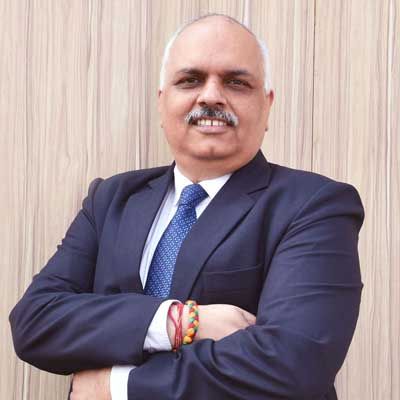
Managing Director and CEO Shubhabrata Saha highlighted that Q1 FY26 marks a strategic transition phase following the company’s record revenue milestone in FY25. He noted the stability in the Self-Loading Concrete Mixer (SLCM) business, while non-SLCM volumes recorded a notable 25 per cent year-on-year growth. He also shared Ajax’s continued investments in capability building, particularly in expanding its B2B go-to-market channels across key metro cities. These efforts are expected to drive sustained long-term growth, especially in the non-SLCM segment.

Ajax is on track to commission its upcoming Adinarayanahosahalli plant in the second half of FY26, positioning the company for its next phase of scalable and diversified growth.

Tuhin Basu, Chief Financial Officer, commented that while revenue remained stable compared to the previous year, margins were affected due to the shift in product mix and increased costs from the CEV-5 transition. Despite these challenges, Ajax remains in a strong financial position—debt-free with a solid cash reserve.

He expressed optimism about improved business momentum in the latter half of FY26, in line with industry trends. The company remains committed to long-term investments in leadership, innovation, and capacity expansion to stay ahead in a competitive market.

Ajax successfully completed the sale of all CEV-4 inventory by Q1 FY26 and will operate a fully CEV-5-compliant product portfolio from Q2 onwards. SLCM revenues were reported at Rs 3.85 billion, flat year-on-year, while the spares and services segment rose 8 per cent to Rs 370 million. Exports contributed 5 per cent to total revenues.

The company plans to sustain its dominance in the SLCM segment through new CEV-5 machines with enhanced value propositions. Continued expansion into metro-based B2B channels, rising demand for mechanised concreting, government infrastructure initiatives, and growing adoption of emission-compliant equipment will be the key growth drivers in the upcoming quarters.

Ajax Engineering, one of India’s foremost manufacturers of concreting equipment, reported stable financial results for the first quarter of FY26, maintaining momentum after a robust FY25. Despite headwinds such as the complete transition to CEV-5 emission norms, unseasonal rains, and infrastructure execution delays, the company achieved revenues of Rs 4.66 billion and a Profit After Tax (PAT) of Rs 530 million.Managing Director and CEO Shubhabrata Saha highlighted that Q1 FY26 marks a strategic transition phase following the company’s record revenue milestone in FY25. He noted the stability in the Self-Loading Concrete Mixer (SLCM) business, while non-SLCM volumes recorded a notable 25 per cent year-on-year growth. He also shared Ajax’s continued investments in capability building, particularly in expanding its B2B go-to-market channels across key metro cities. These efforts are expected to drive sustained long-term growth, especially in the non-SLCM segment.Ajax is on track to commission its upcoming Adinarayanahosahalli plant in the second half of FY26, positioning the company for its next phase of scalable and diversified growth.Tuhin Basu, Chief Financial Officer, commented that while revenue remained stable compared to the previous year, margins were affected due to the shift in product mix and increased costs from the CEV-5 transition. Despite these challenges, Ajax remains in a strong financial position—debt-free with a solid cash reserve.He expressed optimism about improved business momentum in the latter half of FY26, in line with industry trends. The company remains committed to long-term investments in leadership, innovation, and capacity expansion to stay ahead in a competitive market.Ajax successfully completed the sale of all CEV-4 inventory by Q1 FY26 and will operate a fully CEV-5-compliant product portfolio from Q2 onwards. SLCM revenues were reported at Rs 3.85 billion, flat year-on-year, while the spares and services segment rose 8 per cent to Rs 370 million. Exports contributed 5 per cent to total revenues.The company plans to sustain its dominance in the SLCM segment through new CEV-5 machines with enhanced value propositions. Continued expansion into metro-based B2B channels, rising demand for mechanised concreting, government infrastructure initiatives, and growing adoption of emission-compliant equipment will be the key growth drivers in the upcoming quarters.

Next Story
Resources

Jyoti Structures Launches Heat Safety Drive Across Sites

Jyoti Structures (JSL) has strengthened heat safety measures across its project sites and manufacturing facilities as temperatures rise across India. The company has implemented a Summer Safety Plan covering all transmission line projects to address risks related to heat stress, dehydration and worker fatigue.The initiative includes rescheduling work away from peak afternoon temperatures, provision of drinking water, ORS and lemon-salt solutions, and installation of rest shelters near work areas. Daily toolbox talks, worker health monitoring, first-aid preparedness, emergency transport arrange..

Next Story
Real Estate

MHADA Declares 82 Buildings Most Dangerous in Central and South Mumbai

The Maharashtra Housing and Area Development Authority (MHADA) has declared 82 buildings as most dangerous across Central and South Mumbai and has appealed to residents to vacate immediately. The list, prepared after structural assessments by the authority, identifies buildings judged to pose imminent risk to occupants and to passersby. Local civic bodies have been asked to coordinate evacuations and to make arrangements for temporary shelter and rehabilitation for displaced households. Officials said the authority prioritised buildings with visible structural distress, severe cracking, tiltin..

Next Story
Infrastructure Transport

Damage Reported At Halwara Airport Terminal After First Rains

Severe damage was reported at the terminal of Halwara Airport during the first major rain spell of the season, prompting immediate concern among aviation and local authorities. Images from the site showed water ingress and visible deterioration of the terminal interior, affecting passenger areas and ancillary services. The airport authority suspended certain operations temporarily to assess structural safety and ensure passenger wellbeing. Preliminary inspections have prioritised electrical systems and roof seals to prevent further water ingress. State aviation officials ordered a formal inqui..

Advertisement

Subscribe to Our Newsletter

Get daily newsletters around different themes from Construction world.

STAY CONNECTED

Advertisement

Advertisement

Advertisement