Affordable Lenders Need New Catchments as Mature Branches Stagnate
ECONOMY & POLICY

Affordable Lenders Need New Catchments as Mature Branches Stagnate

Affordable housing finance companies may need to expand into new catchments as mature branches experience stagnating growth and competition increases across smaller cities and higher-ticket loan segments, according to a Systematix Research report. The assessment was based on 42 branch-level interactions and checks across Maharashtra, Karnataka, Tamil Nadu, Telangana and Rajasthan.

Branches with assets under management of Rs. 500-600 mn are increasingly seeing growth slow as their existing catchments become more penetrated. The report indicated that lenders will need to continue adding branches and entering newer markets to sustain expansion, rather than relying only on productivity improvements from established outlets.

Demand remains healthy, with channel checks indicating a potential 3 to 7 per cent quarter-on-quarter improvement in disbursements across several markets. Monthly trends suggested that recent weakness was linked more to seasonality than a structural slowdown, while monsoon disruptions and an inauspicious period delayed transactions in some locations.

Specialist lenders retain an advantage in the lower-ticket segment. More than 60 to 65 per cent of customers covered in the checks fell within the Rs. 1-1.5 mn ticket range. Cash-salaried borrowers account for a meaningful share of customers in Tier-2 and smaller markets, making field-based income and employment verification important. Competition is rising from unlisted affordable housing finance companies in Tier-2 and Tier-3 markets and from larger non-banking financial companies at higher ticket sizes.

Higher top-up offers, rather than pricing alone, were identified as a key reason for balance transfers. Employee attrition is also creating pressure, with departing sales staff potentially taking 10 to 15 per cent of their customer pool, while new employees require time to build sourcing relationships and reach full productivity. Collection trends improved in the second quarter across several markets, with reported defaults and non-performing assets generally below 2 per cent in the branches covered. The report concluded that new catchments, stronger sourcing and faster execution will shape lenders’ growth as competition intensifies.

Affordable housing finance companies may need to expand into new catchments as mature branches experience stagnating growth and competition increases across smaller cities and higher-ticket loan segments, according to a Systematix Research report. The assessment was based on 42 branch-level interactions and checks across Maharashtra, Karnataka, Tamil Nadu, Telangana and Rajasthan. Branches with assets under management of Rs. 500-600 mn are increasingly seeing growth slow as their existing catchments become more penetrated. The report indicated that lenders will need to continue adding branches and entering newer markets to sustain expansion, rather than relying only on productivity improvements from established outlets. Demand remains healthy, with channel checks indicating a potential 3 to 7 per cent quarter-on-quarter improvement in disbursements across several markets. Monthly trends suggested that recent weakness was linked more to seasonality than a structural slowdown, while monsoon disruptions and an inauspicious period delayed transactions in some locations. Specialist lenders retain an advantage in the lower-ticket segment. More than 60 to 65 per cent of customers covered in the checks fell within the Rs. 1-1.5 mn ticket range. Cash-salaried borrowers account for a meaningful share of customers in Tier-2 and smaller markets, making field-based income and employment verification important. Competition is rising from unlisted affordable housing finance companies in Tier-2 and Tier-3 markets and from larger non-banking financial companies at higher ticket sizes. Higher top-up offers, rather than pricing alone, were identified as a key reason for balance transfers. Employee attrition is also creating pressure, with departing sales staff potentially taking 10 to 15 per cent of their customer pool, while new employees require time to build sourcing relationships and reach full productivity. Collection trends improved in the second quarter across several markets, with reported defaults and non-performing assets generally below 2 per cent in the branches covered. The report concluded that new catchments, stronger sourcing and faster execution will shape lenders’ growth as competition intensifies.

Related Stories

Gold Stories

Next Story
Equipment

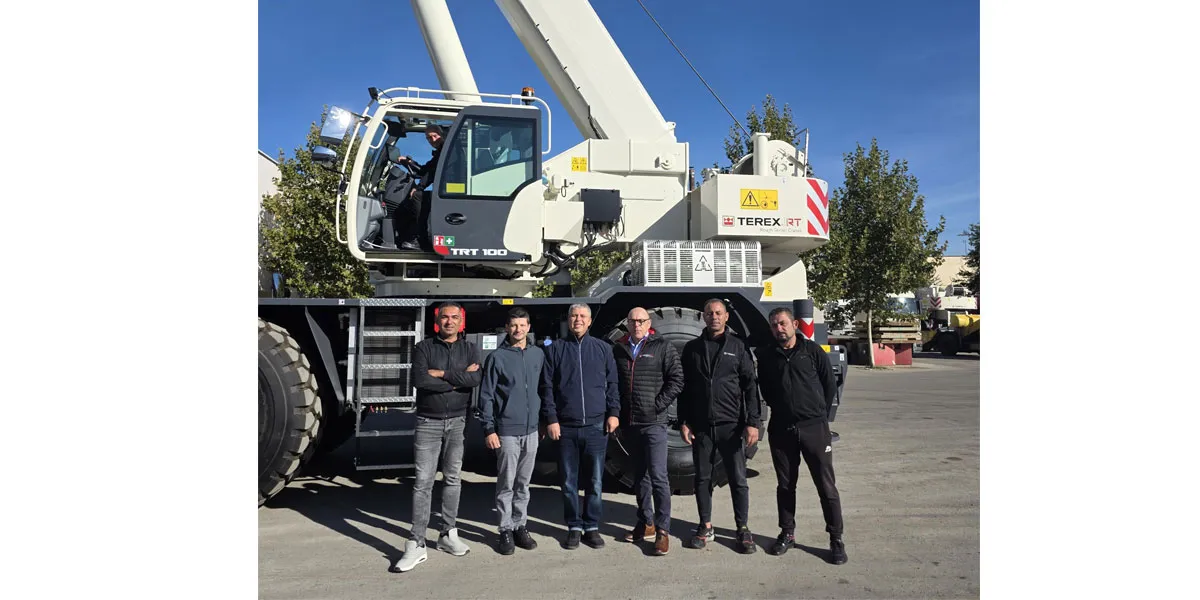
Raimondi Appoints Roland Trading as Terex RT Dealer in Bulgaria

Raimondi Group has recently appointed Roland Trading as the official dealer for its Terex Rough Terrain (RT) crane division in Bulgaria, strengthening its distribution network and customer support capabilities across Eastern Europe. The agreement was marked by the sale of three rough terrain cranes, comprising one TRT 50 and two TRT 100 models.The appointment forms part of Raimondi's strategy to expand its European dealer network and improve access to lifting equipment, technical services and aftermarket support across the region.Roland Trading brings extensive experience with the Terex brand,..

Next Story
Real Estate

India Ranks Among Top 10 Branded Residences Markets: Savills

India has emerged among the world's top 10 markets for branded residences, according to the Savills Branded Residences Report 2026/2027. The report highlights the country's position in the global luxury residential property sector amid growing demand for branded developments.The global branded residences market is expected to record year-on-year growth of 24 per cent by the end of 2026, reflecting continued expansion across major international markets.The Middle East and Africa region is projected to lead annual growth at 51 per cent, followed by Europe at 25 per cent, Asia Pacific at 19 per c..
Next Story
Equipment

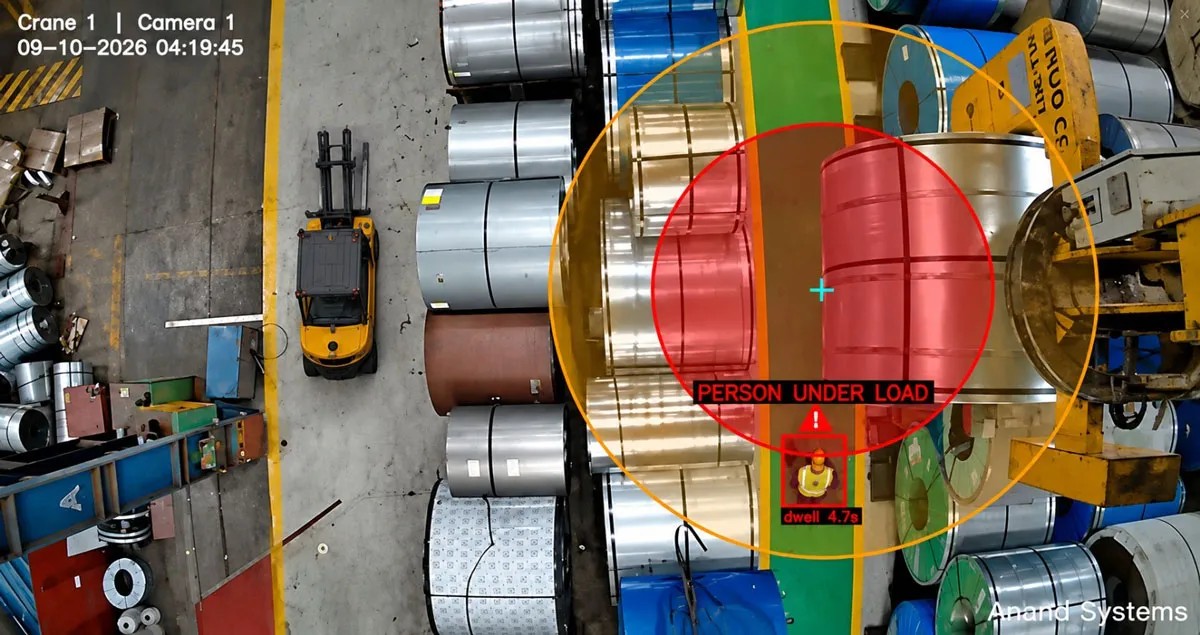
Anand Systems Unveils AI Safety System for EOT Cranes

Mumbai-based Anand Systems Engineering has recently introduced an AI-powered Human Detection System designed to improve industrial safety by identifying workers standing or moving beneath suspended crane loads. The technology aims to reduce the risk of crane-related accidents through real-time monitoring, automated warnings and crane control functions.The system uses two industrial cameras mounted on an Electric Overhead Travelling (EOT) crane to monitor the floor beneath the load. An AI model trained on overhead images identifies people and tracks the crane hook, creating two circular danger ..

Advertisement

Subscribe to Our Newsletter

Get daily newsletters around different themes from Construction world.

STAY CONNECTED

Advertisement

SPECIAL OFFER
QR Code