Amit Shah launches deep-sea fishing vessels in Mumbai
ECONOMY & POLICY

Amit Shah launches deep-sea fishing vessels in Mumbai

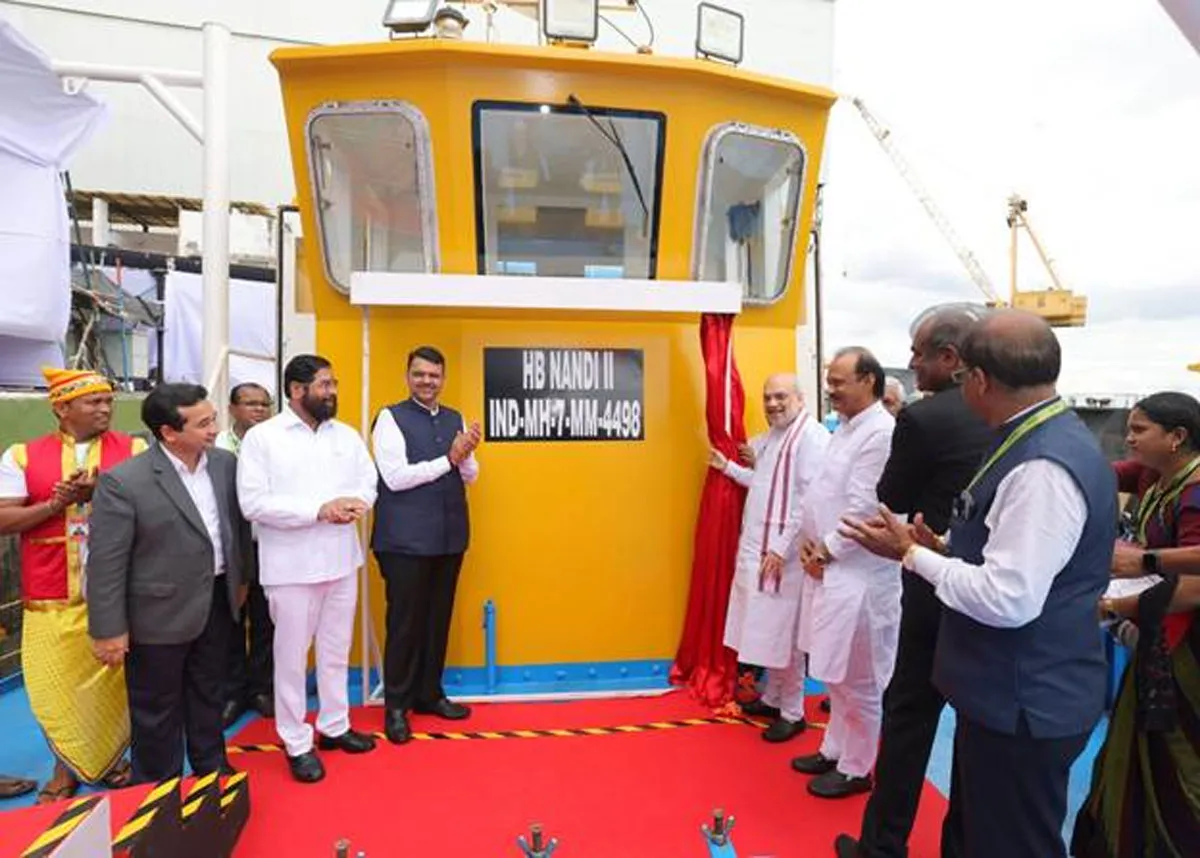
Union Home Minister and Minister of Cooperation Amit Shah inaugurated ‘Deep Sea Fishing Vessels’ under the Pradhan Mantri Matsya Sampada Yojana at Mazgaon Dock, Mumbai. The event was attended by Maharashtra Chief Minister Devendra Fadnavis, Deputy Chief Ministers Eknath Shinde and Ajit Pawar, and Union Minister of State for Cooperation Murlidhar Mohol.

In his address, Amit Shah said that under Prime Minister Narendra Modi’s leadership, this marks a major milestone in modernising India’s marine fisheries sector and promoting cooperative-led development in coastal regions. The government, he said, is committed to realising the vision of Aatmanirbhar Bharat and expanding the blue economy through the cooperative model.

Empowering fishermen through cooperatives

Shah explained that, until now, workers on trawlers were employed on a salary basis, but cooperative-based fishing will ensure that the profits reach fishermen’s homes. While 14 trawlers will be provided in the first phase, more will follow under the combined efforts of the Central Government, the Ministry of Cooperation, and the Fisheries Department.

Each vessel can stay at sea for up to 25 days, carry up to 20 tonnes of fish, and is equipped with onboard living and dining facilities. Larger ships will also coordinate operations and transport fish from deep sea to shore.

Major plan for coastal livelihoods

The Union Minister said a comprehensive scheme is being planned for those who depend on fishing along India’s 11,000-kilometre coastline. He highlighted that the true spirit of cooperation lies in ensuring that the profits of production—whether in dairy, agriculture, or fisheries—benefit the hardworking individuals at the grassroots.

He added that economic growth must go hand in hand with social empowerment, noting that national prosperity cannot be measured by GDP alone, but by whether every household can access education, nutrition, and healthcare.

Rising fisheries production under Modi government

Amit Shah pointed out that India’s total fisheries production has nearly doubled in a decade, increasing from 10.2 million tonnes in 2014–15 to 19.5 million tonnes today. Domestic production rose from 6.7 million tonnes to 14.7 million tonnes, while marine production increased from 3.5 million tonnes to 4.8 million tonnes.

Freshwater fisheries have seen a 119 per cent surge, with significant growth driven by government schemes under the Ministry of Fisheries and Cooperation. Shah said India’s coastline holds immense untapped potential, and the cooperative model ensures that the profits of this growth flow directly to fishing communities.

Cooperatives driving inclusive growth

Shah emphasised that cooperatives are key to achieving human-centric economic growth. He cited Maharashtra’s sugar cooperatives as an example, where profits are credited directly to farmers’ accounts, and Amul in Gujarat, where millions of women earn livelihoods from dairy cooperatives generating over Rs 800 billion in annual turnover.

He concluded that India’s cooperative philosophy—rooted in collective prosperity and self-reliance—remains central to building a strong, equitable, and prosperous nation.

Union Home Minister and Minister of Cooperation Amit Shah inaugurated ‘Deep Sea Fishing Vessels’ under the Pradhan Mantri Matsya Sampada Yojana at Mazgaon Dock, Mumbai. The event was attended by Maharashtra Chief Minister Devendra Fadnavis, Deputy Chief Ministers Eknath Shinde and Ajit Pawar, and Union Minister of State for Cooperation Murlidhar Mohol. In his address, Amit Shah said that under Prime Minister Narendra Modi’s leadership, this marks a major milestone in modernising India’s marine fisheries sector and promoting cooperative-led development in coastal regions. The government, he said, is committed to realising the vision of Aatmanirbhar Bharat and expanding the blue economy through the cooperative model. Empowering fishermen through cooperatives Shah explained that, until now, workers on trawlers were employed on a salary basis, but cooperative-based fishing will ensure that the profits reach fishermen’s homes. While 14 trawlers will be provided in the first phase, more will follow under the combined efforts of the Central Government, the Ministry of Cooperation, and the Fisheries Department. Each vessel can stay at sea for up to 25 days, carry up to 20 tonnes of fish, and is equipped with onboard living and dining facilities. Larger ships will also coordinate operations and transport fish from deep sea to shore. Major plan for coastal livelihoods The Union Minister said a comprehensive scheme is being planned for those who depend on fishing along India’s 11,000-kilometre coastline. He highlighted that the true spirit of cooperation lies in ensuring that the profits of production—whether in dairy, agriculture, or fisheries—benefit the hardworking individuals at the grassroots. He added that economic growth must go hand in hand with social empowerment, noting that national prosperity cannot be measured by GDP alone, but by whether every household can access education, nutrition, and healthcare. Rising fisheries production under Modi government Amit Shah pointed out that India’s total fisheries production has nearly doubled in a decade, increasing from 10.2 million tonnes in 2014–15 to 19.5 million tonnes today. Domestic production rose from 6.7 million tonnes to 14.7 million tonnes, while marine production increased from 3.5 million tonnes to 4.8 million tonnes. Freshwater fisheries have seen a 119 per cent surge, with significant growth driven by government schemes under the Ministry of Fisheries and Cooperation. Shah said India’s coastline holds immense untapped potential, and the cooperative model ensures that the profits of this growth flow directly to fishing communities. Cooperatives driving inclusive growth Shah emphasised that cooperatives are key to achieving human-centric economic growth. He cited Maharashtra’s sugar cooperatives as an example, where profits are credited directly to farmers’ accounts, and Amul in Gujarat, where millions of women earn livelihoods from dairy cooperatives generating over Rs 800 billion in annual turnover. He concluded that India’s cooperative philosophy—rooted in collective prosperity and self-reliance—remains central to building a strong, equitable, and prosperous nation.

Next Story
Infrastructure Urban

Lemon Tree Opens Sixth Hotel in Kerala

Lemon Tree Hotels, India’s fastest-growing mid-scale and premium hotel chain, has announced the opening of its latest managed property — Lemon Tree Premier, Thiruvananthapuram.This marks the brand’s sixth property in Kerala and further strengthens its growing footprint across southern India.Strategically located in the heart of the state capital, Lemon Tree Premier, Thiruvananthapuram offers easy access to major business districts, government offices, and cultural landmarks. The city — known for its rich heritage, iconic Padmanabhaswamy Temple, scenic beaches such as Kovalam, and growi..

Next Story
Infrastructure Urban

NALCO Reports Record Q2 & H1 FY26 Performance

National Aluminium Company (NALCO), a Navratna CPSE under the Ministry of Mines, Government of India, has reported its best-ever quarterly and half-yearly physical and financial performance in FY 2025–26.For the quarter ended September 2025 (Q2 FY26), NALCO’s net profit surged 35 per cent year-on-year to Rs 14.33 billion, compared to Rs 10.62 billion in the same period last year. The company’s total income from operations rose 7.2 per cent to Rs 42.92 billion, reflecting robust operational performance and supportive market conditions.For the first half of FY26, NALCO’s net profit jumpe..

Next Story
Infrastructure Urban

SDHI to Build Six Tankers for Norway’s Stenersen

Swan Defence and Heavy Industries (SDHI), India’s largest shipbuilding and heavy fabrication company, has signed a Letter of Intent (LoI) with Norwegian ship owner Rederiet Stenersen AS for the construction of six IMO Type II chemical tankers, each with a capacity of 18,000 DWT.Valued at approximately $220 million, the LoI represents a landmark achievement for India’s shipbuilding exports, with an option to build an additional six vessels under the same class. The ships will be built at SDHI’s state-of-the-art shipyard in Pipavav, Gujarat, designed by Marinform AS, Norway, and classed by..

Advertisement

Subscribe to Our Newsletter

Get daily newsletters around different themes from Construction world.

STAY CONNECTED

Advertisement

Advertisement

Advertisement