+
Budget 2026-27: Capex and Services Drive Growth Strategy
ECONOMY & POLICY

Budget 2026-27: Capex and Services Drive Growth Strategy

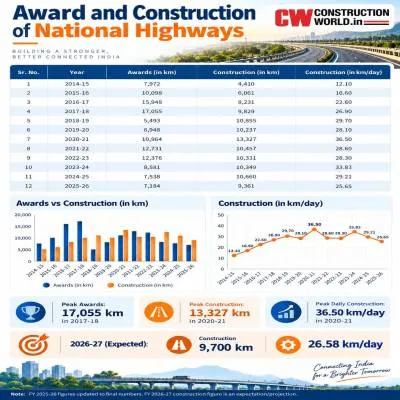
The Union Budget for 2026-27 emphasises consolidation and public investment as the basis for sustainable growth. Capital expenditure is set at Rs 12.2 trillion (Rs 12.2 tn), underscoring infrastructure priorities that will shape movement of goods and people. The government expects capex to rise by 11.5 per cent year on year while maintaining fiscal discipline.

The services sector receives a clear push with a target of 10 per cent of global services by 2047 and measures across IT, tourism, education and health. Tax and regulatory incentives include extended support for cloud services and a rationalised safe harbour regime, with thresholds rising from Rs 300 crore to Rs 2,000 crore, equivalent to Rs 3 billion (Rs 3 bn) and Rs 20 billion (Rs 20 bn). Skills and tourism interventions include a pilot to upskill 10,000 tourist guides and plans for university townships.

Manufacturing initiatives span semiconductors, electronics and chemical parks, and the electronics components scheme is being expanded from Rs 23,000 crore to Rs 40,000 crore, or about Rs 230 billion (Rs 230 bn) to Rs 400 billion (Rs 400 bn). An SME Growth Fund of Rs 10,000 crore, representing Rs 100 billion (Rs 100 bn), and linked liquidity measures aim to bolster smaller enterprises. Proposals for textile clusters, container manufacturing and legacy cluster revival signal an inclusive industrial approach.

Financial sector measures include a high level committee on banking, reforms for corporate bond markets and a review of foreign exchange rules to attract capital. Fiscal consolidation remains central, with the fiscal deficit targeted at four point three per cent of GDP and the Centre’s debt to GDP projected to fall to 55.6 per cent. Elevated dividend and monetisation targets accompany a projected tax buoyancy of zero point eight.

Transport, energy and urbanisation plans envisage new freight corridors, operationalisation of 20 national waterways and schemes for carbon capture and long term energy security. The Budget balances revenue expenditure rationalisation with capex momentum to improve spending quality. Implementation will determine whether these policy signals translate into durable private sector response.

The Union Budget for 2026-27 emphasises consolidation and public investment as the basis for sustainable growth. Capital expenditure is set at Rs 12.2 trillion (Rs 12.2 tn), underscoring infrastructure priorities that will shape movement of goods and people. The government expects capex to rise by 11.5 per cent year on year while maintaining fiscal discipline. The services sector receives a clear push with a target of 10 per cent of global services by 2047 and measures across IT, tourism, education and health. Tax and regulatory incentives include extended support for cloud services and a rationalised safe harbour regime, with thresholds rising from Rs 300 crore to Rs 2,000 crore, equivalent to Rs 3 billion (Rs 3 bn) and Rs 20 billion (Rs 20 bn). Skills and tourism interventions include a pilot to upskill 10,000 tourist guides and plans for university townships. Manufacturing initiatives span semiconductors, electronics and chemical parks, and the electronics components scheme is being expanded from Rs 23,000 crore to Rs 40,000 crore, or about Rs 230 billion (Rs 230 bn) to Rs 400 billion (Rs 400 bn). An SME Growth Fund of Rs 10,000 crore, representing Rs 100 billion (Rs 100 bn), and linked liquidity measures aim to bolster smaller enterprises. Proposals for textile clusters, container manufacturing and legacy cluster revival signal an inclusive industrial approach. Financial sector measures include a high level committee on banking, reforms for corporate bond markets and a review of foreign exchange rules to attract capital. Fiscal consolidation remains central, with the fiscal deficit targeted at four point three per cent of GDP and the Centre’s debt to GDP projected to fall to 55.6 per cent. Elevated dividend and monetisation targets accompany a projected tax buoyancy of zero point eight. Transport, energy and urbanisation plans envisage new freight corridors, operationalisation of 20 national waterways and schemes for carbon capture and long term energy security. The Budget balances revenue expenditure rationalisation with capex momentum to improve spending quality. Implementation will determine whether these policy signals translate into durable private sector response.

Next Story
Infrastructure Transport

Lucknow Metro East-West Corridor Consultancy Contract Awarded

The Uttar Pradesh Metro Rail Corporation has awarded the first construction-related consultancy contract for the Lucknow Metro East West Corridor to a joint venture of AYESA Ingenieria Arquitectura SAU and AYESA India Pvt Ltd. The firm was declared the lowest bidder for the Detailed Design Consultant contract for Lucknow Metro Line-2 under Phase 1B and the contract was recommended following the financial bid. The contract is valued at Rs 159.0 million (mn), covering design services for the corridor. Lucknow Metro Line-2 envisages the construction of an 11.165 kilometre corridor connecting Cha..

Next Story
Infrastructure Urban

Div Com Kashmir Urges Fast Tracking Of Jhelum Water Transport Project

The Divisional Commissioner of Kashmir has called for the fast-tracking of the Jhelum water transport project, urging district administrations and relevant agencies to accelerate planning and clearances. In a meeting convened at the divisional headquarters, the commissioner instructed officials from irrigation, public health engineering and municipal departments to prioritise the project and coordinate survey and design work. The directive emphasised removal of administrative bottlenecks and close monitoring to ensure timely mobilisation of resources and contractors. Officials were told to in..

Next Story
Infrastructure Urban

Interarch Reports Strong Q3 And Nine Month Results

Interarch Building Solutions Limited reported unaudited results for the third quarter and nine months ended 31 December 2025, recording strong revenue growth driven by execution and a robust order book. Net revenue for the third quarter rose by 43.7 per cent to Rs 5.225 billion (bn), compared with Rs 3.636 bn a year earlier, reflecting heightened demand in pre-engineered building projects. The company’s total order book as at 31 January 2026 stood at Rs 16.85 bn, supporting near-term visibility. EBITDA excluding other income for the quarter increased by 43.2 per cent to Rs 503 million (mn),..

Advertisement

Subscribe to Our Newsletter

Get daily newsletters around different themes from Construction world.

STAY CONNECTED

Advertisement

Advertisement

Advertisement

Open In App