Amit Shah Opens Bio-CNG Plant, Hails Banas Dairy’s Growth
ECONOMY & POLICY

Amit Shah Opens Bio-CNG Plant, Hails Banas Dairy’s Growth

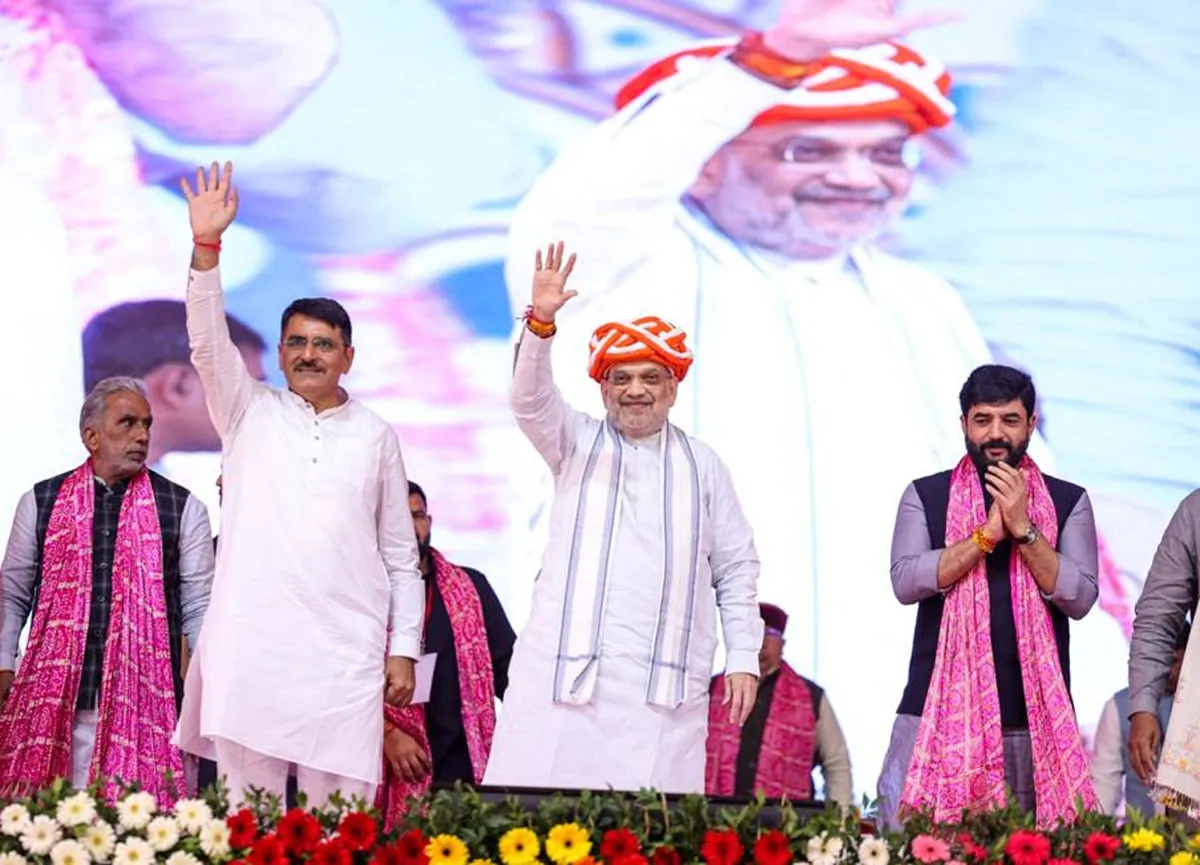
Union Home Minister and Minister of Cooperation Amit Shah today inaugurated Banas Dairy’s newly constructed Bio-CNG and fertiliser plant in Vav-Tharad, Gujarat, and laid the foundation stone for a 150-tonne powder plant. Gujarat Assembly Speaker Shankar Chaudhary, Union Ministers of State for Cooperation Krishan Pal Gurjar and Murlidhar Mohol, and senior officials including Cooperation Secretary Dr Ashish Kumar Bhutani were also present.

Addressing the gathering, Shri Shah said that the cooperative journey begun by Galbabhai Nanjibhai Patel has transformed Banas Dairy into an enterprise with a turnover of Rs 240 billion. He praised the women and farmers of Banaskantha, noting that they have built a company of a scale that would challenge even large corporate houses. He added that around 250 chairpersons and managing directors of dairies from across India will visit Banaskantha in January to witness the region’s cooperative success.

Recalling his visits after the drought of 1985–87, Shri Shah noted that farmers then managed only one crop a year; today, Banaskantha farmers cultivate groundnut, potato, pearl millet and kharif crops, largely due to water-availability reforms. He credited Prime Minister Narendra Modi’s efforts, particularly the Sujalam-Sufalam scheme, which diverted surplus Narmada and Mahi waters to water-scarce regions.

Shri Shah said that the transformative role of water in Banaskantha and Mehsana will be documented by two universities as a model for rural development. He emphasised that women’s contribution has been central to Banas Dairy’s Rs 240-billion success, with transparent systems ensuring weekly payments directly into their bank accounts.

He noted that Banas Dairy is now Asia’s largest milk-producing cooperative, growing from eight villages in 1960 to its current scale. The cooperative philosophy established by Galbabhai Patel — “We may have little money, but we have many people” — has grown into a nationwide and global inspiration.

Marking the death anniversary of Dr B.R. Ambedkar and the closing ceremony of the statewide padyatra celebrating Sardar Patel’s 150th birth anniversary, Shri Shah highlighted that the principles of cooperation and farmers’ upliftment stem from Sardar Patel’s vision. Gujarat adopted this model, which has since flourished into a robust cooperative ecosystem.

He announced several new initiatives, including the inauguration of a Bio-CNG plant, milk-powder plant, protein plant and an automated paneer plant. The Bio-CNG model pioneered by Banas Dairy, he said, will be adopted by cooperatives nationwide. The innovative circular-economy practices of Banas Dairy will also be showcased to Members of Parliament.

Shri Shah stressed that cow and buffalo dung must be fully utilised to produce organic manure, bio-gas and electricity, with profits returning directly to farmers. He also urged a shift towards manufacturing high-value dairy products, which command strong global demand, and handed over a list of such products to Amul’s Chairman.

He further announced that cooperative dairies will begin producing their own animal feed, ensuring that profits go to livestock-owning families. The Government has already put in place the required financial and technological ecosystem.

For farmers’ welfare, the Government has established three national-level cooperatives for seed production, organic-product marketing and agricultural exports, along with three multi-state cooperatives dedicated to the dairy sector. Together, these will cover cheese, protein, dairy whitener, khoya, ice cream, baby food, edible oils, flour, honey, cold storage, chips, seeds and animal feed — ensuring profits flow directly to livestock farmers.

Shri Shah assured Banaskantha’s dairy families that within five years, even without increasing milk production, their income will rise by at least 20 per cent through the circular-economy model, with Banas Dairy’s headquarters serving as the hub of this national transformation.

He also noted that micro-ATMs have been provided to all village milk cooperatives, simplifying operations such as frozen-semen handling. Financial services will soon be added. With strong support from the National Gokul Mission, Animal Husbandry Infrastructure Development Fund, restructured National Dairy Plan and National Animal Disease Control Programme, Shri Shah expressed confidence that White Revolution 2.0 will achieve Prime Minister Modi’s ambitious goals.

He concluded that the tradition set by Banas Dairy will soon benefit millions of livestock farmers across India.


Union Home Minister and Minister of Cooperation Amit Shah today inaugurated Banas Dairy’s newly constructed Bio-CNG and fertiliser plant in Vav-Tharad, Gujarat, and laid the foundation stone for a 150-tonne powder plant. Gujarat Assembly Speaker Shankar Chaudhary, Union Ministers of State for Cooperation Krishan Pal Gurjar and Murlidhar Mohol, and senior officials including Cooperation Secretary Dr Ashish Kumar Bhutani were also present. Addressing the gathering, Shri Shah said that the cooperative journey begun by Galbabhai Nanjibhai Patel has transformed Banas Dairy into an enterprise with a turnover of Rs 240 billion. He praised the women and farmers of Banaskantha, noting that they have built a company of a scale that would challenge even large corporate houses. He added that around 250 chairpersons and managing directors of dairies from across India will visit Banaskantha in January to witness the region’s cooperative success. Recalling his visits after the drought of 1985–87, Shri Shah noted that farmers then managed only one crop a year; today, Banaskantha farmers cultivate groundnut, potato, pearl millet and kharif crops, largely due to water-availability reforms. He credited Prime Minister Narendra Modi’s efforts, particularly the Sujalam-Sufalam scheme, which diverted surplus Narmada and Mahi waters to water-scarce regions. Shri Shah said that the transformative role of water in Banaskantha and Mehsana will be documented by two universities as a model for rural development. He emphasised that women’s contribution has been central to Banas Dairy’s Rs 240-billion success, with transparent systems ensuring weekly payments directly into their bank accounts. He noted that Banas Dairy is now Asia’s largest milk-producing cooperative, growing from eight villages in 1960 to its current scale. The cooperative philosophy established by Galbabhai Patel — “We may have little money, but we have many people” — has grown into a nationwide and global inspiration. Marking the death anniversary of Dr B.R. Ambedkar and the closing ceremony of the statewide padyatra celebrating Sardar Patel’s 150th birth anniversary, Shri Shah highlighted that the principles of cooperation and farmers’ upliftment stem from Sardar Patel’s vision. Gujarat adopted this model, which has since flourished into a robust cooperative ecosystem. He announced several new initiatives, including the inauguration of a Bio-CNG plant, milk-powder plant, protein plant and an automated paneer plant. The Bio-CNG model pioneered by Banas Dairy, he said, will be adopted by cooperatives nationwide. The innovative circular-economy practices of Banas Dairy will also be showcased to Members of Parliament. Shri Shah stressed that cow and buffalo dung must be fully utilised to produce organic manure, bio-gas and electricity, with profits returning directly to farmers. He also urged a shift towards manufacturing high-value dairy products, which command strong global demand, and handed over a list of such products to Amul’s Chairman. He further announced that cooperative dairies will begin producing their own animal feed, ensuring that profits go to livestock-owning families. The Government has already put in place the required financial and technological ecosystem. For farmers’ welfare, the Government has established three national-level cooperatives for seed production, organic-product marketing and agricultural exports, along with three multi-state cooperatives dedicated to the dairy sector. Together, these will cover cheese, protein, dairy whitener, khoya, ice cream, baby food, edible oils, flour, honey, cold storage, chips, seeds and animal feed — ensuring profits flow directly to livestock farmers. Shri Shah assured Banaskantha’s dairy families that within five years, even without increasing milk production, their income will rise by at least 20 per cent through the circular-economy model, with Banas Dairy’s headquarters serving as the hub of this national transformation. He also noted that micro-ATMs have been provided to all village milk cooperatives, simplifying operations such as frozen-semen handling. Financial services will soon be added. With strong support from the National Gokul Mission, Animal Husbandry Infrastructure Development Fund, restructured National Dairy Plan and National Animal Disease Control Programme, Shri Shah expressed confidence that White Revolution 2.0 will achieve Prime Minister Modi’s ambitious goals. He concluded that the tradition set by Banas Dairy will soon benefit millions of livestock farmers across India.
Next Story
Infrastructure Urban

Centre Boosts FPO Growth With New Credit And Market Support

The Government is implementing the Central Sector Scheme on the formation and promotion of 10,000 Farmer Producer Organisations (FPOs), under which all 10,000 FPOs have now been registered. The scheme provides Rs 1.8 million per FPO for three years as management support, a matching equity grant of up to Rs 1.5 million, and a credit guarantee of up to Rs 0.02 billion through eligible lending institutions. It also offers assistance for training, market linkages and alignment with other schemes. FPOs receive support to obtain input licences for seed, fertiliser and pesticide supplies, as well as..

Next Story
Infrastructure Urban

PM-KISAN Drives Farm Income Gains And Rural Stability

The PM-KISAN scheme, a central sector initiative launched in February 2019, aims to support the financial needs of farmers holding cultivable land. Under the scheme, Rs 6,000 per year is transferred in three equal instalments to Aadhaar-seeded bank accounts through Direct Benefit Transfer. Eligibility is based primarily on cultivable landholding, with certain exclusions for individuals of higher economic status. A farmer-centric digital infrastructure ensures scheme benefits reach farmers across India without intermediaries. With full transparency in registration and verification, the Governm..

Next Story
Infrastructure Urban

Govt Extends Pro Tem Security Certificate To Two Years

In a further push to improve ease of doing business and ensure continuity for the telecom industry, the National Centre for Communication Security (NCCS) under the Department of Telecommunications has extended the validity of the Pro Tem Security Certification from six months to two years. The Pro Tem Certification, initially launched in October 2024 with a six-month validity, was designed to prevent business disruption for IP Router and Wi-Fi CPE products, which became subject to mandatory security certification from 1 October 2024. Under this certification, OEMs submit a declaration confirm..

Advertisement

Subscribe to Our Newsletter

Get daily newsletters around different themes from Construction world.

STAY CONNECTED

Advertisement

Advertisement

Advertisement

Advertisement

Open In App