Andhra Pradesh Proposes MSME-Led Space Supply Chain Strategy
ECONOMY & POLICY

Andhra Pradesh Proposes MSME-Led Space Supply Chain Strategy

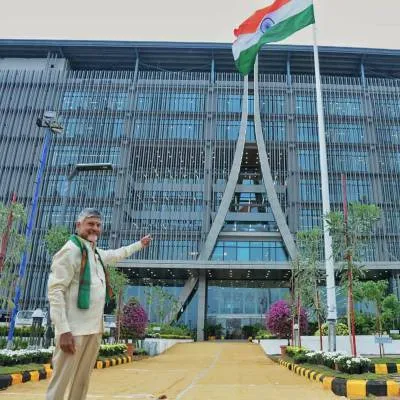
Andhra Pradesh is seeking to attract investments in the space sector by developing supply chains led by Micro, Small and Medium Enterprises (MSMEs), strengthening links with academic institutions and improving research infrastructure. State IT and HRD Minister Nara Lokesh outlined the approach at a session on India’s new space economy during the 31st CII Partnership Summit 2026 in Visakhapatnam.

Lokesh said state governments could support the sector by connecting major space companies with MSMEs and educational institutions. He described a strategy based on vertical and horizontal integration, with the state first mapping the industrial value chain and then attracting manufacturers of sub-components, suppliers and vendors for private launch companies such as Skyroot.

The minister highlighted the role of smaller businesses in building domestic supply capabilities. He referred to an MSME exhibitor that had manufactured a protective shield for a rocket, presenting it as an example of the specialised products that local enterprises can supply to the space industry.

The horizontal integration plan involves aligning academic curricula with emerging industry requirements and expanding research, testing and certification facilities. Lokesh said Centres of Excellence could provide the institutional support needed to develop skills, technology and product validation for aerospace and space applications.

Andhra Pradesh is already working with IIT Tirupati to establish a Centre of Excellence in the energy sector. Lokesh said a similar model could be applied to aerospace and space technologies, building on the regional cluster of ingot, solar wafer and solar cell manufacturers.

He also called for a dedicated national policy to create an integrated space ecosystem. The proposed approach would place component vendors alongside major space companies and bring MSMEs, research institutions and universities into a common network, supporting entrepreneurship and employment opportunities for young professionals.

Andhra Pradesh is seeking to attract investments in the space sector by developing supply chains led by Micro, Small and Medium Enterprises (MSMEs), strengthening links with academic institutions and improving research infrastructure. State IT and HRD Minister Nara Lokesh outlined the approach at a session on India’s new space economy during the 31st CII Partnership Summit 2026 in Visakhapatnam. Lokesh said state governments could support the sector by connecting major space companies with MSMEs and educational institutions. He described a strategy based on vertical and horizontal integration, with the state first mapping the industrial value chain and then attracting manufacturers of sub-components, suppliers and vendors for private launch companies such as Skyroot. The minister highlighted the role of smaller businesses in building domestic supply capabilities. He referred to an MSME exhibitor that had manufactured a protective shield for a rocket, presenting it as an example of the specialised products that local enterprises can supply to the space industry. The horizontal integration plan involves aligning academic curricula with emerging industry requirements and expanding research, testing and certification facilities. Lokesh said Centres of Excellence could provide the institutional support needed to develop skills, technology and product validation for aerospace and space applications. Andhra Pradesh is already working with IIT Tirupati to establish a Centre of Excellence in the energy sector. Lokesh said a similar model could be applied to aerospace and space technologies, building on the regional cluster of ingot, solar wafer and solar cell manufacturers. He also called for a dedicated national policy to create an integrated space ecosystem. The proposed approach would place component vendors alongside major space companies and bring MSMEs, research institutions and universities into a common network, supporting entrepreneurship and employment opportunities for young professionals.

Related Stories

Gold Stories
Next Story
Technology

Motherson to Bring Global Technologies to India to Drive Growth

Samvardhana Motherson International (SAMIL) plans to use technologies acquired through its global expansion to pursue opportunities in India’s automotive market, where improving product standards and stricter emission norms are increasing demand for advanced solutions. The company’s strategy forms part of its Vision 2030 ambition to achieve USD 108 bn in topline gross revenue by 2029-30. Pankaj Mital, whole-time director and president, and Gandharv Tongia, group chief financial officer, said the company intended to bring technologies from its international portfolio to India. They said ris..

Next Story
Infrastructure Transport

GMR Group to Develop 500-Acre Aviation Hub in Andhra Pradesh

GMR Group is developing an aviation city and a 500-acre aviation and aerospace ecosystem in Andhra Pradesh, Chairman G M Rao said at the Confederation of Indian Industry Partnership Summit. The project will be developed alongside airport infrastructure and is intended to create a broader aviation-focused economic hub in the state. Rao said airports had become new engines of economic growth as commercial activity evolved from ports and railway stations towards urban centres and, increasingly, airports. He described the airport as a platform around which new businesses, services and supporting i..

Next Story
Building Material

Cement Companies May See Earnings Recovery in Q3 FY27

Cement companies may record an earnings recovery in the third quarter of FY27 as recent price increases and a seasonal revival in demand support operating performance, although cost inflation and new capacity could restrict the improvement, according to a research report by Dolat Capital. The brokerage estimates that earnings before interest, tax, depreciation and amortisation (EBITDA) per tonne will rise by Rs. 135, or 16.2 per cent, sequentially in Q3 FY27. The improvement is expected to be supported by a 2.1 per cent increase in blended realisations and a 0.3 per cent decline in operating e..

Advertisement

Subscribe to Our Newsletter

Get daily newsletters around different themes from Construction world.

STAY CONNECTED

Advertisement

SPECIAL OFFER
QR Code