Andhra Pradesh to Set Up 17 New Fire Stations with Centre's Aid
ECONOMY & POLICY

Andhra Pradesh to Set Up 17 New Fire Stations with Centre's Aid

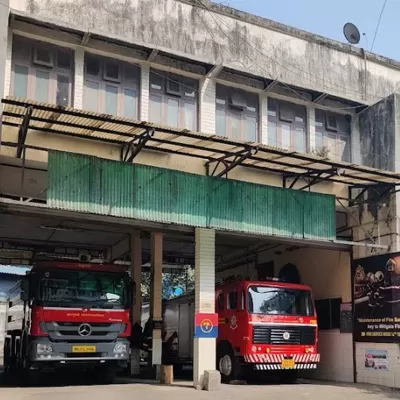
In Visakhapatnam, there are only four fire stations and eight engines—insufficient to meet the needs of the rapidly growing city.
Andhra Pradesh, emergency response infrastructure, Yendada, Simhachalam, IT SEZ, Nathavalasa, ASR, Fire Stations

Andhra Pradesh is set to establish 17 new fire stations in an effort to enhance its emergency response infrastructure. Of these, six stations—each equipped with one fire engine—have been planned for North Andhra. The central government has allocated Rs 2.50 billion towards this initiative, with Rs 40 million specifically designated for the North Andhra region.

The proposed locations for these new stations include Yendada, Simhachalam, the IT SEZ, Nathavalasa in Bhogapuram, Araku, and Chintur in the Alluri Sitarama Raju (ASR) district. The state government is responsible for appointing the required personnel, with each station expected to need more than 15 staff members. Proposals have also been submitted to ensure each of the six North Andhra stations receives a fire engine.

Currently, Andhra Pradesh has 190 fire stations, but their distribution across the 175 constituencies is uneven, leaving several areas under-served. North Andhra, in particular, suffers from a shortage of fire stations, falling short of the standard set by the Standing Fire Advisory Council, which recommends one station per 50,000 residents.

Certain districts reflect this disparity starkly. Krishna district has the highest number of fire stations, while Araku has none. Anakapalle district is served by only one fire engine, and Yelamanchali has another. Key industrial zones such as Paravada and Achuthapuram lack any fire stations altogether, despite housing major special economic zones (SEZs).

Anakapalle, with its six fire stations and six fire engines, serves over 300 pharmaceutical companies, yet the fire department frequently relies on around 10 privately operated fire engines maintained by these companies. Concerns have been raised regarding the substandard quality of these private engines.

In Visakhapatnam, there are only four fire stations and eight engines—insufficient to meet the needs of the rapidly growing city. The ASR district, characterised by its forested terrain, has only two stations and two engines, rendering many areas vulnerable to fire emergencies.

Vizianagaram and Srikakulam districts are relatively better equipped, with eight stations and nine engines, and 10 stations and 11 engines, respectively. However, the pace of urbanisation continues to drive demand for a more robust fire safety infrastructure.

While the central government is funding the development of new stations and provision of fire engines, the responsibility for recruiting staff and covering their salaries and allowances lies with the state. Without prompt action on personnel appointments, there is concern that the new fire stations may not become operational. 

News source: Deccan Chronicle

In Visakhapatnam, there are only four fire stations and eight engines—insufficient to meet the needs of the rapidly growing city.Andhra Pradesh, emergency response infrastructure, Yendada, Simhachalam, IT SEZ, Nathavalasa, ASR, Fire StationsAndhra Pradesh is set to establish 17 new fire stations in an effort to enhance its emergency response infrastructure. Of these, six stations—each equipped with one fire engine—have been planned for North Andhra. The central government has allocated Rs 2.50 billion towards this initiative, with Rs 40 million specifically designated for the North Andhra region.The proposed locations for these new stations include Yendada, Simhachalam, the IT SEZ, Nathavalasa in Bhogapuram, Araku, and Chintur in the Alluri Sitarama Raju (ASR) district. The state government is responsible for appointing the required personnel, with each station expected to need more than 15 staff members. Proposals have also been submitted to ensure each of the six North Andhra stations receives a fire engine.Currently, Andhra Pradesh has 190 fire stations, but their distribution across the 175 constituencies is uneven, leaving several areas under-served. North Andhra, in particular, suffers from a shortage of fire stations, falling short of the standard set by the Standing Fire Advisory Council, which recommends one station per 50,000 residents.Certain districts reflect this disparity starkly. Krishna district has the highest number of fire stations, while Araku has none. Anakapalle district is served by only one fire engine, and Yelamanchali has another. Key industrial zones such as Paravada and Achuthapuram lack any fire stations altogether, despite housing major special economic zones (SEZs).Anakapalle, with its six fire stations and six fire engines, serves over 300 pharmaceutical companies, yet the fire department frequently relies on around 10 privately operated fire engines maintained by these companies. Concerns have been raised regarding the substandard quality of these private engines.In Visakhapatnam, there are only four fire stations and eight engines—insufficient to meet the needs of the rapidly growing city. The ASR district, characterised by its forested terrain, has only two stations and two engines, rendering many areas vulnerable to fire emergencies.Vizianagaram and Srikakulam districts are relatively better equipped, with eight stations and nine engines, and 10 stations and 11 engines, respectively. However, the pace of urbanisation continues to drive demand for a more robust fire safety infrastructure.While the central government is funding the development of new stations and provision of fire engines, the responsibility for recruiting staff and covering their salaries and allowances lies with the state. Without prompt action on personnel appointments, there is concern that the new fire stations may not become operational. News source: Deccan Chronicle

Next Story
Technology

AI-Enabled Workflows Lift Profitability and Productivity

Organisations modernising frontline workflows with artificial intelligence, automation and real-time data are reporting stronger financial performance, higher productivity and improved employee engagement, according to a global study by Zebra Technologies and Oxford Economics.The research covered 1,000 senior leaders across retail, manufacturing, transportation and logistics in the US, Mexico, the UK, Germany, India, Japan, Australia and New Zealand.In transportation and logistics, 54 per cent of companies that improved picking and packing operations reported faster operational performance, wh..

Next Story
Real Estate

India Leads Global AI Readiness but Implementation Lags

Indian companies lead global averages across all eight artificial intelligence readiness indicators tracked by JLL, but only 19 per cent have started making changes to their workplaces, according to the JLL 2026 Future of Work Survey.The study found that 77 per cent of Indian business leaders expect AI to change their office requirements, creating a 58-percentage-point gap between awareness and implementation. The survey covered more than 2,200 CEOs, CFOs and real estate leaders across 21 countries during the first quarter of 2026.Despite concerns over automation, 58 per cent of Indian leaders..

Next Story
Equipment

Three WOLFF Cranes Build Riyadh Cable-Stayed Bridges

Three WOLFF 180 B luffing jib cranes are supporting the construction of two cable-stayed bridges alongside the existing Wadi Laban Bridge in Riyadh, Saudi Arabia. The project is being developed for the Royal Commission for Riyadh City and executed by the ICRC joint venture comprising IC Ictas and Al Rashid Trading & Contracting Company.The cranes are handling lifting operations including formwork, reinforcement, concrete placement, work platforms, surveying equipment and other construction materials. Each crane is fitted with a 40 m jib, reaches a hook height of 157 m and offers a maximum ..

Advertisement

Subscribe to Our Newsletter

Get daily newsletters around different themes from Construction world.

STAY CONNECTED

Advertisement

Advertisement

Advertisement