+
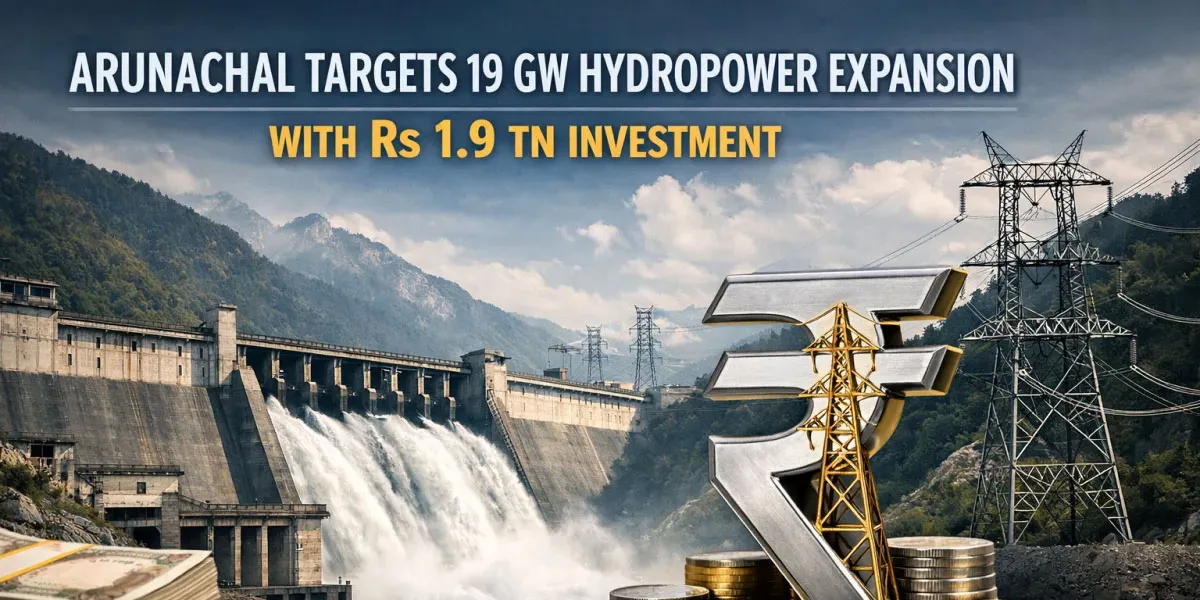
Arunachal Targets 19 GW Hydropower Expansion With Rs 1.9 tn Investment
ECONOMY & POLICY

Arunachal Targets 19 GW Hydropower Expansion With Rs 1.9 tn Investment

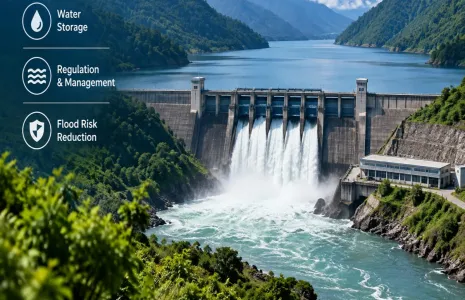
Arunachal Pradesh has announced plans to expand hydropower capacity by 19 GW as part of a broader push to develop renewable energy infrastructure. The deputy chief minister outlined that the state expects the expansion to attract substantial capital, identifying a proposed corpus of Rs one point nine trillion (tn) for project development and associated works. Officials indicated the plan aims to leverage the state’s river systems while seeking central support and private sector participation.

The programme is intended to address growing electricity demand in the North East and to deliver socio economic benefits through local employment and infrastructure upgrades. Administrators said detailed feasibility studies will precede project approvals and that environmental assessments will be prioritised to balance development with ecological sensitivity. The state plans to phase construction to manage transmission upgrades and to integrate generation with national grids.

Investment proposals are expected from public sector units and private developers, with financing to include debt, equity and potential public private partnerships. Officials anticipate that careful project selection will be necessary to ensure financial viability and to control costs across the planned capacity additions. The government has indicated that support mechanisms and incentives will be considered to attract long term investors.

Local authorities expect ancillary improvements in roads and communication to accompany hydropower development, which they consider essential for construction and operations. Community engagement and compensation measures are planned to address land use concerns and to provide livelihoods for affected populations. The timeline for realisation was described as contingent on approvals, financing and the outcomes of environmental clearances.

Stakeholders noted that regional transmission strengthening will be crucial to evacuate output and to ensure grid stability. The projects are expected to complement existing renewable initiatives and to contribute to energy security for industrial and household consumers. Monitoring frameworks and periodic reviews were said to be part of the governance arrangements.

Arunachal Pradesh has announced plans to expand hydropower capacity by 19 GW as part of a broader push to develop renewable energy infrastructure. The deputy chief minister outlined that the state expects the expansion to attract substantial capital, identifying a proposed corpus of Rs one point nine trillion (tn) for project development and associated works. Officials indicated the plan aims to leverage the state’s river systems while seeking central support and private sector participation. The programme is intended to address growing electricity demand in the North East and to deliver socio economic benefits through local employment and infrastructure upgrades. Administrators said detailed feasibility studies will precede project approvals and that environmental assessments will be prioritised to balance development with ecological sensitivity. The state plans to phase construction to manage transmission upgrades and to integrate generation with national grids. Investment proposals are expected from public sector units and private developers, with financing to include debt, equity and potential public private partnerships. Officials anticipate that careful project selection will be necessary to ensure financial viability and to control costs across the planned capacity additions. The government has indicated that support mechanisms and incentives will be considered to attract long term investors. Local authorities expect ancillary improvements in roads and communication to accompany hydropower development, which they consider essential for construction and operations. Community engagement and compensation measures are planned to address land use concerns and to provide livelihoods for affected populations. The timeline for realisation was described as contingent on approvals, financing and the outcomes of environmental clearances. Stakeholders noted that regional transmission strengthening will be crucial to evacuate output and to ensure grid stability. The projects are expected to complement existing renewable initiatives and to contribute to energy security for industrial and household consumers. Monitoring frameworks and periodic reviews were said to be part of the governance arrangements.

Next Story
Infrastructure Energy

Jyoti Structures expands manufacturing capacity in Nashik

The announcement Jyoti Structures (JSL) reported steady operational performance in 2025, supported by stable project execution across its power transmission portfolio. The company commissioned galvanisation operations at its second Nashik manufacturing unit, adding 33,000 MT of annual capacity. This increased aggregate tower manufacturing capability at Nashik to approximately 69,000 MT per annum, aimed at improving fabrication accuracy, scheduling control and delivery predictability. JSL also expanded its workforce to over 750 employees, onboarding more than 70 engineers during the year. C..

Next Story
Infrastructure Energy

TSPL Mega Health Camp Reaches 338 Residents in Mansa

Talwandi Sabo Power (TSPL), Punjab’s largest and North India’s largest private thermal power plant, organised a Mega Health Camp at Village Raipur, Mansa, under its flagship healthcare initiative Project SEHAT. The camp benefitted 338 community members through free consultations and diagnostic services.A team comprising a General Physician, Gynaecologist, Dermatologist and Dentist provided medical advice and treatment. Beneficiaries received free diagnostic tests including BP, HB, blood sugar, malaria, dengue and blood group tests, along with free medicines.The camp was inaugurated by Vill..

Next Story
Infrastructure Transport

Mumbai Coastal Road Musical Path Plays Jai Ho

Mumbai inaugurated India’s first musical path on the Coastal Road that plays the song Jai Ho for motorists. The civic administration said the installation used Hungarian technology and that the intention was to implement the concept of Sangeet Marg in future projects. A senior official suggested implementing a pilot on the Samruddhi Expressway, which connects Mumbai and Nagpur. City officials described the inauguration as a symbolic demonstration of collaboration between municipal authorities and foreign partners. The inauguration was attended by the Consul General of Hungary Ferenc Jari, f..

Advertisement

Subscribe to Our Newsletter

Get daily newsletters around different themes from Construction world.

STAY CONNECTED

Advertisement

Advertisement

Advertisement

Open In App