

Ashok Leyland Ventures into Vehicle Scrappage
ECONOMY & POLICY

Ashok Leyland Ventures into Vehicle Scrappage

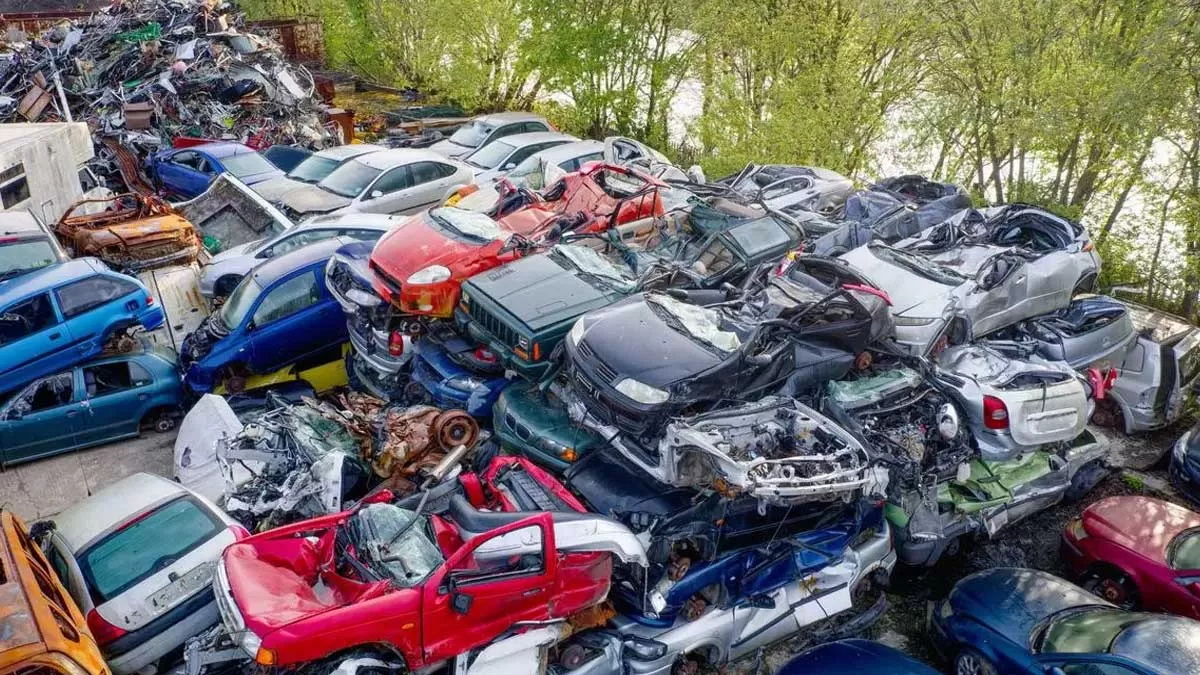
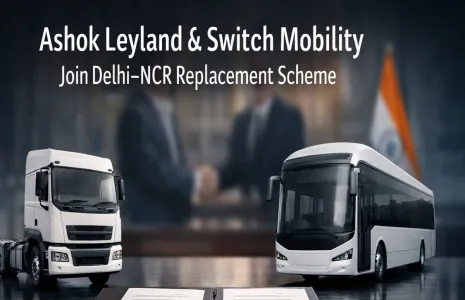
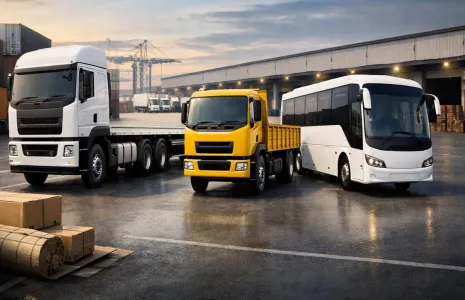
Ashok Leyland, a leading truck and bus manufacturer, is set to launch its first-ever vehicle scrappage facility under a franchise model. The company has finalized an agreement with a Registered Vehicle Scrapping Facility (RVSF), placing it in a strategic position to advance its circular economy goals and reduce environmental impact, as highlighted in its FY24 annual report.

In addition to this milestone, Ashok Leyland is developing a digital platform named Re.AL, aimed at facilitating the resale of used vehicles in compliance with the government-mandated vehicle scrappage policy. This initiative is expected to drive growth in the commercial vehicle industry, fueled by replacement demand, mandatory scrapping of older government vehicles, and steady macro-economic growth.

Dheeraj Hinduja, Chairman of Ashok Leyland, emphasized the company's commitment to alternative fuel technologies, including battery electric, hydrogen ICE, fuel cell, LNG, and CNG. With products already operational in CNG and LNG segments, and prototypes of green hydrogen trucks in actual conditions, Ashok Leyland is well-positioned to offer a comprehensive range of clean energy vehicles.

Ashok Leyland's subsidiary, Switch Mobility, is making significant strides in the green mobility space, focusing on electric buses and light commercial vehicles. With over 950 electric buses deployed globally and a growing order pipeline, the company plans to expand its sales into the European market later this year. Recently, the launch of the Boss electric truck and the upcoming fully electric 55-tonne tractor-trailer further signify its commitment to the EV sector.

In FY24, the company's R&D spend increased to 1.30% of turnover, reflecting its dedication to innovation. Investments included ?15.25 billion in mobility arms, with substantial stakes in OHM Global Mobility Pvt Ltd and Optare Plc., UK.

Ashok Leyland is also broadening its traditional ICE segment portfolio, with plans to introduce at least six new light commercial vehicle products this fiscal year. The company reported that over 30% of its FY24 sales came from newly launched products.

Despite these advancements, Ashok Leyland?s share closed at ?234.25 per share, down 1.91% on BSE

Ashok Leyland, a leading truck and bus manufacturer, is set to launch its first-ever vehicle scrappage facility under a franchise model. The company has finalized an agreement with a Registered Vehicle Scrapping Facility (RVSF), placing it in a strategic position to advance its circular economy goals and reduce environmental impact, as highlighted in its FY24 annual report. In addition to this milestone, Ashok Leyland is developing a digital platform named Re.AL, aimed at facilitating the resale of used vehicles in compliance with the government-mandated vehicle scrappage policy. This initiative is expected to drive growth in the commercial vehicle industry, fueled by replacement demand, mandatory scrapping of older government vehicles, and steady macro-economic growth. Dheeraj Hinduja, Chairman of Ashok Leyland, emphasized the company's commitment to alternative fuel technologies, including battery electric, hydrogen ICE, fuel cell, LNG, and CNG. With products already operational in CNG and LNG segments, and prototypes of green hydrogen trucks in actual conditions, Ashok Leyland is well-positioned to offer a comprehensive range of clean energy vehicles. Ashok Leyland's subsidiary, Switch Mobility, is making significant strides in the green mobility space, focusing on electric buses and light commercial vehicles. With over 950 electric buses deployed globally and a growing order pipeline, the company plans to expand its sales into the European market later this year. Recently, the launch of the Boss electric truck and the upcoming fully electric 55-tonne tractor-trailer further signify its commitment to the EV sector. In FY24, the company's R&D spend increased to 1.30% of turnover, reflecting its dedication to innovation. Investments included ?15.25 billion in mobility arms, with substantial stakes in OHM Global Mobility Pvt Ltd and Optare Plc., UK. Ashok Leyland is also broadening its traditional ICE segment portfolio, with plans to introduce at least six new light commercial vehicle products this fiscal year. The company reported that over 30% of its FY24 sales came from newly launched products. Despite these advancements, Ashok Leyland?s share closed at ?234.25 per share, down 1.91% on BSE

Next Story
Infrastructure Transport

Pune To Build Nine Km Link Road Between Highways

The Pune Municipal Corporation (PMC) has decided to appoint an expert to plan the development of a nine km long, 60 metre wide road from Khadi Machine chowk to Wadki chowk as an extension to the Katraj-Kondhwa road to link the Mumbai-Satara and Pune-Solapur national highways. The scheme is intended to divert heavy vehicle traffic away from the city and improve access between the two arterial routes. The project has been prioritised by the PMC and forms part of a larger set of schemes in which 19 roads have been identified for development at a combined cost of Rs 9.82 billion (bn) to address c..

Next Story
Infrastructure Transport

Barabanki Bahraich Six Lane Highway Approved in Uttar Pradesh

The Uttar Pradesh government has approved construction of a new six-lane highway linking Barabanki and Bahraich as part of National Highway 927, and the cabinet has cleared the project. The alignment will pass through Mustafabad and Kaiserganj and extend for about 101.5 km, creating a key corridor for local and long-distance movement. The National Highways Authority of India will oversee the work and has signalled the scheme is intended to strengthen regional connectivity and cross-border access to Nepal. The project carries an estimated total cost of Rs 69,690 million, equivalent to Rs 69.69..

Next Story
Infrastructure Transport

Toll At Kharegaon Likely As Highway Upgrade Nears Completion

A section of the highway at Kharegaon has undergone an upgrade and is approaching completion, and authorities have indicated plans for a toll to be introduced once works finish. The project has focused on strengthening the carriageway, improving drainage and upgrading intersections to enhance safety and capacity. Officials have said the toll will be used to recover construction costs and fund ongoing maintenance. The upgrade included resurfacing of the pavement, widening of certain stretches and installation of modern signage and lighting to reduce accident risk. Contractors completed most ma..

Advertisement

Subscribe to Our Newsletter

Get daily newsletters around different themes from Construction world.

STAY CONNECTED

Advertisement

Advertisement

Advertisement