Australia bans Indian bulk carrier for 180 days over safety violations
ECONOMY & POLICY

Australia bans Indian bulk carrier for 180 days over safety violations

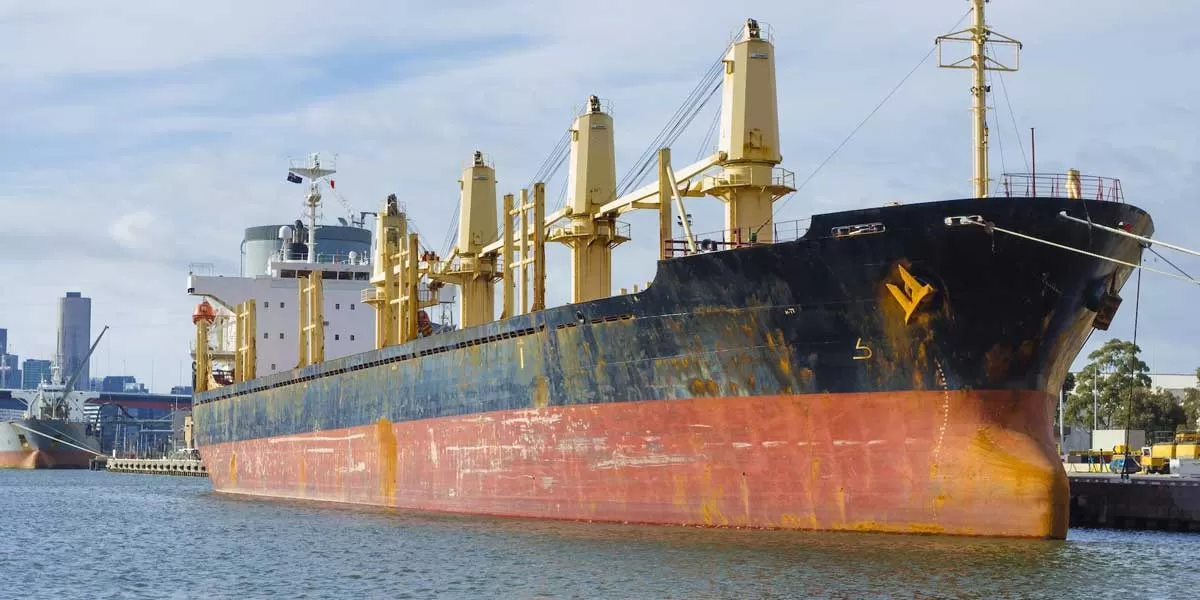
The Australian Maritime Safety Authority (AMSA) reportedly issued a 180-day prohibition on the Indian bulk carrier Darya Shaan due to safety risks.

According to the AMSA, the operator, Anglo-Eastern Ship Management (India), repeatedly failed to report defects to the primary engine and machinery as the vessel entered Australian ports.

AMSA inspectors boarded the Indian-flagged vessel on 26 April at the Port of Melbourne.

They discovered multiple maintenance issues, including impaired engine control and monitoring systems, faulty alarm monitoring systems, impaired generator starting arrangements, and a safety management mechanism that failed to ensure adequate maintenance and defect reporting.

AMSA was informed that the operator had been notified of severe safety concerns before reaching Australia.

Michael Drake, the Executive Director of Operations associated with AMSA, warned that disregarding vessel engine maintenance could harm the marine environment and crew safety.

Negligence could cause a vessel to lose power during crucial navigation, resulting in possible groundings or collisions.

Drake mentioned that the operator had been aware of the defects but did not report them to the AMSA, which was appalling and much deserving of a 180-day ban.

This was considered an obvious attempt to conceal the severe defects from the Australian authorities and displayed a disregard for the safety of the vessel, its crew members, and the marine environment.

The Australian Maritime Safety Authority (AMSA) reportedly issued a 180-day prohibition on the Indian bulk carrier Darya Shaan due to safety risks. According to the AMSA, the operator, Anglo-Eastern Ship Management (India), repeatedly failed to report defects to the primary engine and machinery as the vessel entered Australian ports. AMSA inspectors boarded the Indian-flagged vessel on 26 April at the Port of Melbourne. They discovered multiple maintenance issues, including impaired engine control and monitoring systems, faulty alarm monitoring systems, impaired generator starting arrangements, and a safety management mechanism that failed to ensure adequate maintenance and defect reporting. AMSA was informed that the operator had been notified of severe safety concerns before reaching Australia. Michael Drake, the Executive Director of Operations associated with AMSA, warned that disregarding vessel engine maintenance could harm the marine environment and crew safety. Negligence could cause a vessel to lose power during crucial navigation, resulting in possible groundings or collisions. Drake mentioned that the operator had been aware of the defects but did not report them to the AMSA, which was appalling and much deserving of a 180-day ban. This was considered an obvious attempt to conceal the severe defects from the Australian authorities and displayed a disregard for the safety of the vessel, its crew members, and the marine environment.

Next Story
Infrastructure Urban

Implementation Status of Jal Jeevan Mission

Since August 2019 the Government has implemented Jal Jeevan Mission to provide assured potable water through household tap connections in rural India. At the start of the mission only 32.3 million (mn) rural households, representing 16.7 per cent, were reported to have tap water connections. States and union territories have reported that 125.8 mn additional rural households have since been provided with tap connections. As a result, of about 193.6 mn rural households roughly 158.2 mn, or 81.71 per cent, are reported to have tap water supply at home.\n\nThe State, district and village level st..

Next Story
Infrastructure Urban

Jal Jeevan Mission Reaches Eighty One Per Cent Rural Coverage

The Government reported substantial progress under the Jal Jeevan Mission, launched in August 2019 to provide tap water to every rural household. At launch only 32.3 million (mn) rural households had tap connections and states and Union territories reported provision of 125.8 mn additional households by March 2026. Consequently, out of about 193.6 mn rural households around 158.2 mn, or 81.71 per cent, are reported to have tap water at home. The Finance Minister announced extension of the mission until 2028 in the 2025-26 budget speech. The Swachh Bharat Mission Grameen, launched in October 20..

Next Story
Infrastructure Urban

Empowering Local Governance for Sustainable Rural Water Supply

The Ministry of Jal Shakti has aligned the Jal Jeevan Mission (JJM) with the 73rd Amendment to strengthen village level planning and community ownership of water supply. Gram Panchayats, village water and sanitation committees and Pani Samitis are to plan, implement, manage and maintain piped water systems, with gram sabha processes formalising handover and oversight. Implementation support agencies including non government organisations, community based organisations and self help groups have been empanelled to train local committees and promote women participation. Under JJM, the department ..

Advertisement

Subscribe to Our Newsletter

Get daily newsletters around different themes from Construction world.

STAY CONNECTED

Advertisement

Advertisement

Advertisement