Bandra-Versova Sea Link Redesign Approved As Cost Rises 60 Per Cent
ECONOMY & POLICY

Bandra-Versova Sea Link Redesign Approved As Cost Rises 60 Per Cent

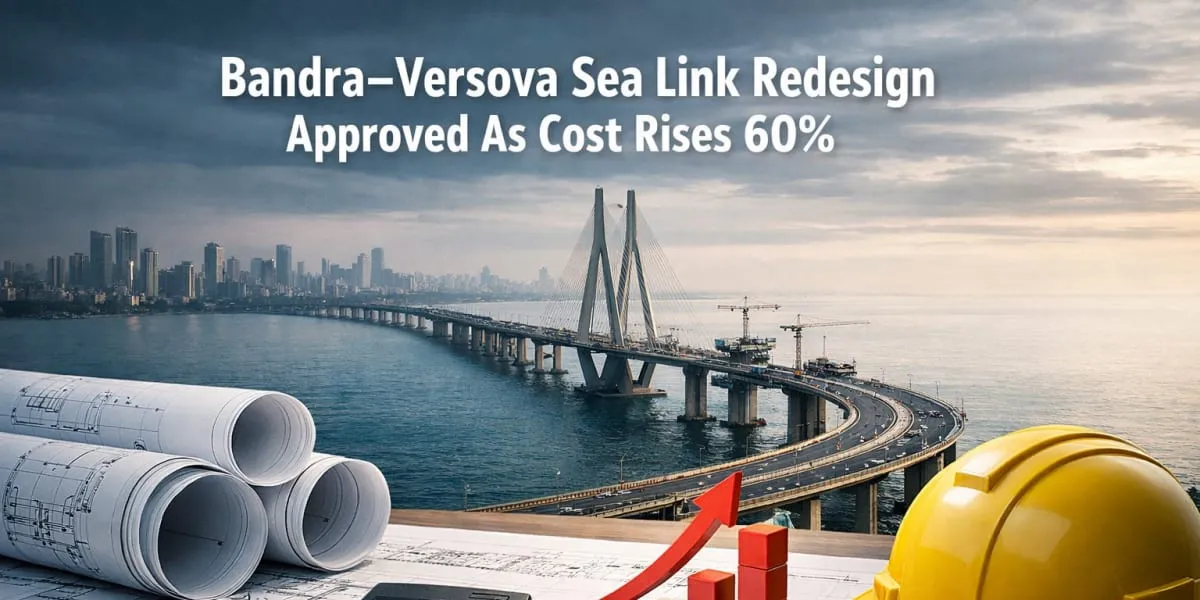
The Bandra-Versova Sea Link (BVSL) redesign has been approved by project authorities, and the estimated cost has risen by 60 per cent. The decision follows technical reviews and design revisions intended to address engineering and environmental considerations. Officials indicated the changes will affect timelines and budgets for the scheme. The approval encompasses alterations to alignment, structural elements and support systems.

The increase will require additional funding from municipal and state sources and may prompt renegotiation of contractor agreements. Planners said the escalation reflects higher material costs, greater construction complexity and measures to enhance resilience. Project managers will present revised estimates to funding agencies for sanction. The approval does not release extra funds until budgetary clearances are secured.

The redesign is expected to alter construction schedules, delaying the delivery of intended traffic relief on congested routes. Commuter groups and civic stakeholders will be engaged on traffic management and mitigation during extended works. Authorities intend to phase construction to minimise disruption while maintaining alternative routes. A revised timeline for completion will be published after contracts and funding are finalised.

Next steps include revision of tender documents and securing statutory clearances, including environmental and coastal permissions where required. Authorities will publish updated project reports and hold consultations as part of the regulatory process. The final cost and completion date will be confirmed after regulatory sign off and contractor commitments are secured. Residents and road users will be kept informed of milestones and traffic plans.

Financial oversight will be strengthened and independent reviews may be sought to monitor expenditure and risk. Authorities expect that clearer cost estimates and contract terms will reduce future escalations and improve accountability. Stakeholders will monitor progress and timelines to ensure that public interest and urban mobility objectives are met. Public agencies will publish regular, detailed updates on key milestones.

The Bandra-Versova Sea Link (BVSL) redesign has been approved by project authorities, and the estimated cost has risen by 60 per cent. The decision follows technical reviews and design revisions intended to address engineering and environmental considerations. Officials indicated the changes will affect timelines and budgets for the scheme. The approval encompasses alterations to alignment, structural elements and support systems. The increase will require additional funding from municipal and state sources and may prompt renegotiation of contractor agreements. Planners said the escalation reflects higher material costs, greater construction complexity and measures to enhance resilience. Project managers will present revised estimates to funding agencies for sanction. The approval does not release extra funds until budgetary clearances are secured. The redesign is expected to alter construction schedules, delaying the delivery of intended traffic relief on congested routes. Commuter groups and civic stakeholders will be engaged on traffic management and mitigation during extended works. Authorities intend to phase construction to minimise disruption while maintaining alternative routes. A revised timeline for completion will be published after contracts and funding are finalised. Next steps include revision of tender documents and securing statutory clearances, including environmental and coastal permissions where required. Authorities will publish updated project reports and hold consultations as part of the regulatory process. The final cost and completion date will be confirmed after regulatory sign off and contractor commitments are secured. Residents and road users will be kept informed of milestones and traffic plans. Financial oversight will be strengthened and independent reviews may be sought to monitor expenditure and risk. Authorities expect that clearer cost estimates and contract terms will reduce future escalations and improve accountability. Stakeholders will monitor progress and timelines to ensure that public interest and urban mobility objectives are met. Public agencies will publish regular, detailed updates on key milestones.

Next Story
Building Material

Dalmia Cement to Acquire 5.2 MnTPA Capacity

Dalmia Cement (Bharat), a wholly owned subsidiary of Dalmia Bharat, has executed a Business Transfer Agreement with Jaiprakash Associates and Adani Infra (India) to acquire cement assets with 5.2 MnTPA capacity in the Central region.The acquisition covers cement plants located at Rewa in Madhya Pradesh, and Churk, Chunar and Sadwa in Uttar Pradesh. The assets include 5.2 MnTPA cement capacity, 3.3 MnTPA clinker capacity, 99 MW thermal power capacity, railway sidings at Rewa and Chunar, and a common railway siding at Churk. The enterprise value of the transaction is Rs 28.5 billion.Following co..

Next Story
Infrastructure Urban

Rampura Agucha Becomes Zinc Mark Certified Mine

Hindustan Zinc’s Rampura Agucha Mine has become India’s first Zinc Mark certified mine, marking a major milestone in responsible zinc production. The mine is the world’s largest underground zinc-lead mine and is operated by Hindustan Zinc, the world’s largest integrated zinc producer.Zinc Mark is a globally recognised assurance framework that validates responsible zinc production against international Environmental, Social and Governance standards, responsible sourcing practices and value chain transparency. The certification strengthens Hindustan Zinc’s ability to offer responsibly ..

Next Story
Infrastructure Urban

Headsup B2B Targets Rs 4 bn Revenue This Fiscal

Headsup B2B, a pan-India procurement and supply chain platform serving the infrastructure, industrial and renewable energy sectors, is targeting Rs 4 billion in revenue for the current fiscal year. The company executed over 2,200 transactions worth Rs 2.5 billion in the previous financial year.Allied infrastructure services contributed nearly 80 per cent of revenue during the period, while renewable energy, industrial automation and road safety solutions emerged as the fastest-growing categories. The company is now expanding its role beyond procurement to support installation, deployment and p..

Advertisement

Subscribe to Our Newsletter

Get daily newsletters around different themes from Construction world.

STAY CONNECTED

Advertisement

Advertisement

Advertisement

-->