

BEL Secures Rs 5.72 Bn in New Defence Orders
ECONOMY & POLICY

BEL Secures Rs 5.72 Bn in New Defence Orders

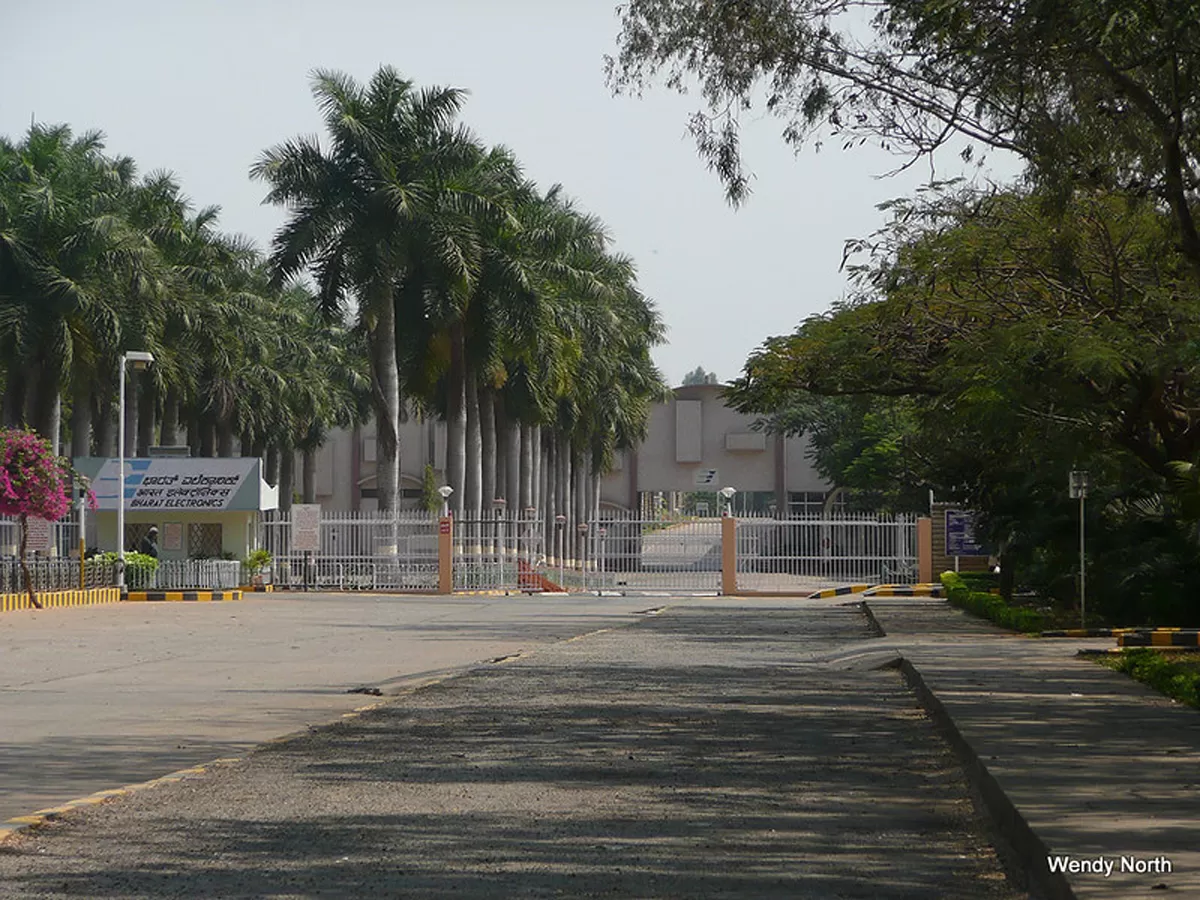
Bharat Electronics Limited (BEL), a Navratna public sector company under the Ministry of Defence, has received fresh orders worth Rs 5.72 billion. The new contracts span a range of advanced defence systems, including Integrated Drone Detection and Interdiction Systems (IDDIS), Software Defined Radios (SDRs), and Data Communication Units (DCUs) for attack platforms.

Additional orders cover artificial intelligence-based systems for naval platforms, simulators, communication equipment, electronic jamming devices, spare parts, and related services. These procurements strengthen BEL’s strategic role in supporting India’s defence capabilities and its vision of technological self-reliance.

This follows a larger Rs 22.1 billion contract awarded in April 2025 by the Ministry of Defence for Electronic Warfare (EW) suites for the Indian Air Force’s Mi-17V5 helicopters. These suites—developed by the Defence Research and Development Organisation (DRDO) and manufactured by BEL—include Radar Warning Receivers (RWR), Missile Approach Warning Systems (MAWS), and Countermeasure Dispensing Systems (CMDS), designed to enhance survivability in high-threat combat environments.

Recent regional security concerns, including the successful deployment of loitering munitions to neutralise enemy air defence systems, have underscored the importance of indigenous technology solutions.

The latest round of contracts, along with BEL’s ongoing defence manufacturing programmes, has triggered a positive response in domestic equity markets. Shares of Indian defence companies, including BEL, saw gains, while stocks of firms supplying defence equipment to rival nations declined. Investor confidence was further buoyed by Prime Minister Narendra Modi’s 12 May address reaffirming the government’s commitment to domestic defence production and technological autonomy.

Founded in 1954, BEL is one of India’s foremost defence and aerospace firms. It designs and manufactures high-tech systems including radars, electronic warfare devices, communication platforms, and electro-optic equipment for the armed forces. Beyond defence, BEL also operates in homeland security, healthcare, and renewable energy. With sustained investment in research and development, BEL continues to play a pivotal role in India’s journey toward self-reliance in critical technologies.

Bharat Electronics Limited (BEL), a Navratna public sector company under the Ministry of Defence, has received fresh orders worth Rs 5.72 billion. The new contracts span a range of advanced defence systems, including Integrated Drone Detection and Interdiction Systems (IDDIS), Software Defined Radios (SDRs), and Data Communication Units (DCUs) for attack platforms.Additional orders cover artificial intelligence-based systems for naval platforms, simulators, communication equipment, electronic jamming devices, spare parts, and related services. These procurements strengthen BEL’s strategic role in supporting India’s defence capabilities and its vision of technological self-reliance.This follows a larger Rs 22.1 billion contract awarded in April 2025 by the Ministry of Defence for Electronic Warfare (EW) suites for the Indian Air Force’s Mi-17V5 helicopters. These suites—developed by the Defence Research and Development Organisation (DRDO) and manufactured by BEL—include Radar Warning Receivers (RWR), Missile Approach Warning Systems (MAWS), and Countermeasure Dispensing Systems (CMDS), designed to enhance survivability in high-threat combat environments.Recent regional security concerns, including the successful deployment of loitering munitions to neutralise enemy air defence systems, have underscored the importance of indigenous technology solutions.The latest round of contracts, along with BEL’s ongoing defence manufacturing programmes, has triggered a positive response in domestic equity markets. Shares of Indian defence companies, including BEL, saw gains, while stocks of firms supplying defence equipment to rival nations declined. Investor confidence was further buoyed by Prime Minister Narendra Modi’s 12 May address reaffirming the government’s commitment to domestic defence production and technological autonomy.Founded in 1954, BEL is one of India’s foremost defence and aerospace firms. It designs and manufactures high-tech systems including radars, electronic warfare devices, communication platforms, and electro-optic equipment for the armed forces. Beyond defence, BEL also operates in homeland security, healthcare, and renewable energy. With sustained investment in research and development, BEL continues to play a pivotal role in India’s journey toward self-reliance in critical technologies.

Next Story
Technology

AI-Enabled Workflows Lift Profitability and Productivity

Organisations modernising frontline workflows with artificial intelligence, automation and real-time data are reporting stronger financial performance, higher productivity and improved employee engagement, according to a global study by Zebra Technologies and Oxford Economics.The research covered 1,000 senior leaders across retail, manufacturing, transportation and logistics in the US, Mexico, the UK, Germany, India, Japan, Australia and New Zealand.In transportation and logistics, 54 per cent of companies that improved picking and packing operations reported faster operational performance, wh..

Next Story
Real Estate

India Leads Global AI Readiness but Implementation Lags

Indian companies lead global averages across all eight artificial intelligence readiness indicators tracked by JLL, but only 19 per cent have started making changes to their workplaces, according to the JLL 2026 Future of Work Survey.The study found that 77 per cent of Indian business leaders expect AI to change their office requirements, creating a 58-percentage-point gap between awareness and implementation. The survey covered more than 2,200 CEOs, CFOs and real estate leaders across 21 countries during the first quarter of 2026.Despite concerns over automation, 58 per cent of Indian leaders..

Next Story
Equipment

Three WOLFF Cranes Build Riyadh Cable-Stayed Bridges

Three WOLFF 180 B luffing jib cranes are supporting the construction of two cable-stayed bridges alongside the existing Wadi Laban Bridge in Riyadh, Saudi Arabia. The project is being developed for the Royal Commission for Riyadh City and executed by the ICRC joint venture comprising IC Ictas and Al Rashid Trading & Contracting Company.The cranes are handling lifting operations including formwork, reinforcement, concrete placement, work platforms, surveying equipment and other construction materials. Each crane is fitted with a 40 m jib, reaches a hook height of 157 m and offers a maximum ..

Advertisement

Subscribe to Our Newsletter

Get daily newsletters around different themes from Construction world.

STAY CONNECTED

Advertisement

Advertisement

Advertisement