+
Belagavi Faces Loss Of Rs 750 mn CITIIS Project Over Delays
ECONOMY & POLICY

Belagavi Faces Loss Of Rs 750 mn CITIIS Project Over Delays

Belagavi risks losing the CITIIS 2.0 urban development project after organisational delays and a funding dispute between the State Government and the Belagavi City Corporation (BCC).

The City Investments to Innovate, Integrate and Sustain programme, launched by the Union Ministry of Housing and Urban Affairs in November 2023, selected 18 cities nationwide with Belagavi the sole Karnataka city.

The project, won in March 2024 with the VIISWAS proposal, was estimated at Rs 1,653 mn including a central grant of Rs 750 mn.

A quadrilateral agreement in March 2025 committed the Centre and the State Government to contribute 40 per cent each while BCC would provide the remaining 20 per cent in instalments, and the Centre released Rs 75 mn as first instalment.

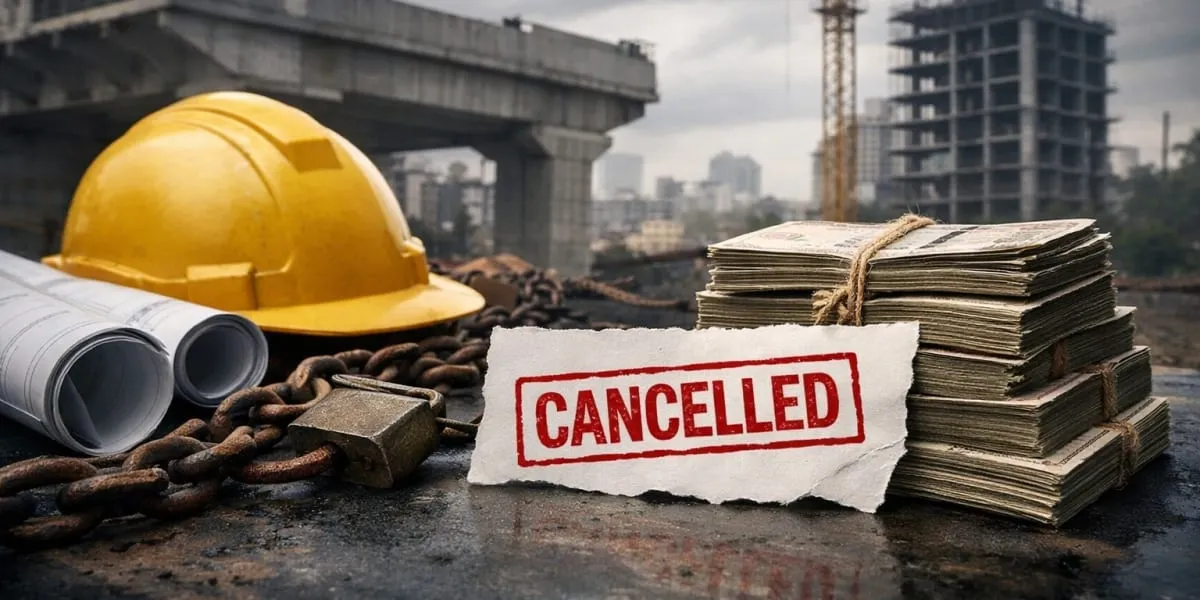
Implementation stalled as the required Environmental and Social Impact Assessment (ESIA) and Environmental Clearance were not secured, with repeated re-tendering and cancellation of bids delaying the process.

Litigation by the lowest bidder has reached the Supreme Court and could further disrupt timelines if a stay is granted.

Delays in appointing a consultancy for the ESIA have been compounded by environmental clearance that can take nine months, and the late start threatens to push the project beyond permissible timelines.

The State Government has reportedly declined to release its 40 per cent share and suggested using State Finance Commission grants, a proposal opposed by the BJP-led majority in BCC and questioned by local legislators.

Belagavi Smart City Limited (BSCL) has been criticised for inadequate preparation, repeated rejections by senior urban development officials and failure to secure land.

BSCL is considering scaling down the project to about Rs 750 mn relying on the Centre grant and BCC contribution, while the City Corporation prepares for a special general body session to decide on releasing its instalment.

Civic leaders warn that funds alone will not suffice and that timely coordination and resolution of legal and financial hurdles are essential to modernise waste management.

Failure to resolve these issues could result in loss of major Rs 750 mn opportunity to strengthen sustainable urban infrastructure.

Belagavi risks losing the CITIIS 2.0 urban development project after organisational delays and a funding dispute between the State Government and the Belagavi City Corporation (BCC). The City Investments to Innovate, Integrate and Sustain programme, launched by the Union Ministry of Housing and Urban Affairs in November 2023, selected 18 cities nationwide with Belagavi the sole Karnataka city. The project, won in March 2024 with the VIISWAS proposal, was estimated at Rs 1,653 mn including a central grant of Rs 750 mn. A quadrilateral agreement in March 2025 committed the Centre and the State Government to contribute 40 per cent each while BCC would provide the remaining 20 per cent in instalments, and the Centre released Rs 75 mn as first instalment. Implementation stalled as the required Environmental and Social Impact Assessment (ESIA) and Environmental Clearance were not secured, with repeated re-tendering and cancellation of bids delaying the process. Litigation by the lowest bidder has reached the Supreme Court and could further disrupt timelines if a stay is granted. Delays in appointing a consultancy for the ESIA have been compounded by environmental clearance that can take nine months, and the late start threatens to push the project beyond permissible timelines. The State Government has reportedly declined to release its 40 per cent share and suggested using State Finance Commission grants, a proposal opposed by the BJP-led majority in BCC and questioned by local legislators. Belagavi Smart City Limited (BSCL) has been criticised for inadequate preparation, repeated rejections by senior urban development officials and failure to secure land. BSCL is considering scaling down the project to about Rs 750 mn relying on the Centre grant and BCC contribution, while the City Corporation prepares for a special general body session to decide on releasing its instalment. Civic leaders warn that funds alone will not suffice and that timely coordination and resolution of legal and financial hurdles are essential to modernise waste management. Failure to resolve these issues could result in loss of major Rs 750 mn opportunity to strengthen sustainable urban infrastructure.

Next Story
Infrastructure Urban

Implementation Status of Jal Jeevan Mission

Since August 2019 the Government has implemented Jal Jeevan Mission to provide assured potable water through household tap connections in rural India. At the start of the mission only 32.3 million (mn) rural households, representing 16.7 per cent, were reported to have tap water connections. States and union territories have reported that 125.8 mn additional rural households have since been provided with tap connections. As a result, of about 193.6 mn rural households roughly 158.2 mn, or 81.71 per cent, are reported to have tap water supply at home.\n\nThe State, district and village level st..

Next Story
Infrastructure Urban

Jal Jeevan Mission Reaches Eighty One Per Cent Rural Coverage

The Government reported substantial progress under the Jal Jeevan Mission, launched in August 2019 to provide tap water to every rural household. At launch only 32.3 million (mn) rural households had tap connections and states and Union territories reported provision of 125.8 mn additional households by March 2026. Consequently, out of about 193.6 mn rural households around 158.2 mn, or 81.71 per cent, are reported to have tap water at home. The Finance Minister announced extension of the mission until 2028 in the 2025-26 budget speech. The Swachh Bharat Mission Grameen, launched in October 20..

Next Story
Infrastructure Urban

Empowering Local Governance for Sustainable Rural Water Supply

The Ministry of Jal Shakti has aligned the Jal Jeevan Mission (JJM) with the 73rd Amendment to strengthen village level planning and community ownership of water supply. Gram Panchayats, village water and sanitation committees and Pani Samitis are to plan, implement, manage and maintain piped water systems, with gram sabha processes formalising handover and oversight. Implementation support agencies including non government organisations, community based organisations and self help groups have been empanelled to train local committees and promote women participation. Under JJM, the department ..

Advertisement

Subscribe to Our Newsletter

Get daily newsletters around different themes from Construction world.

STAY CONNECTED

Advertisement

Advertisement

Advertisement