BEST Fare Hike Adds Rs. 5 bn to Revenue, Trims Losses
ECONOMY & POLICY

BEST Fare Hike Adds Rs. 5 bn to Revenue, Trims Losses

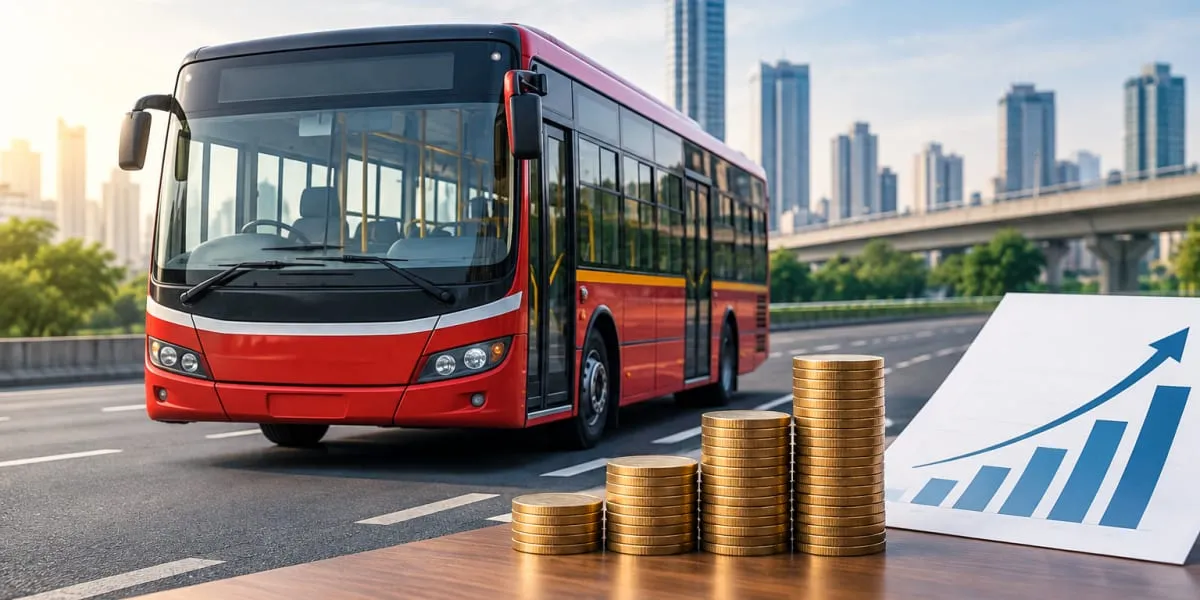
The Brihanmumbai Electric Supply and Transport (BEST) Undertaking earned an additional Rs. 5 bn in 2025-26 after raising bus fares in May 2025, according to figures presented at a BEST committee meeting. Revenue from its transport wing increased from Rs. 16.4 bn in 2024-25 to Rs. 21.37 bn in 2025-26, a rise of Rs. 4.97 bn.

The increase helped reduce losses in the transport wing by Rs. 5.4 bn and the undertaking’s overall losses by Rs. 6.22 bn during the financial year. However, daily ridership declined from approximately 2.5 mn passengers to 2.1 mn after the fares for air-conditioned and non-air-conditioned buses were increased.

BEST doubled the minimum fare for non-air-conditioned buses to Rs. 10 and raised the minimum air-conditioned bus fare to Rs. 12 in May 2025. It also increased the rates for daily, weekly and monthly passes. The undertaking currently operates 2,834 buses, including 249 owned by BEST, while the remainder are operated under wet-lease arrangements.

Revenue from wet-lease bus ticket sales rose by Rs. 2.35 bn in 2025-26 compared with the previous year. BEST-operated bus ticket revenue declined by Rs. 63.1 mn, while reserved bus services generated an additional Rs. 26.5 mn. Monthly bus-pass income also increased by Rs. 4.2 mn.

BEST officials attributed the higher earnings to the fare revision, increased wet-lease operations, greater financial support from the Brihanmumbai Municipal Corporation and growth in other income. The undertaking had estimated that the fare revision would generate about Rs. 5.9 bn in additional annual ticket revenue, although the change took effect halfway through the financial year.

The municipal corporation’s grant to BEST rose to Rs. 10 bn in 2025-26 from Rs. 7.95 bn in 2024-25. Excluding that grant, transport division losses declined from Rs. 25.18 bn to Rs. 21.83 bn, indicating an improvement in the division’s financial position.

The Brihanmumbai Electric Supply and Transport (BEST) Undertaking earned an additional Rs. 5 bn in 2025-26 after raising bus fares in May 2025, according to figures presented at a BEST committee meeting. Revenue from its transport wing increased from Rs. 16.4 bn in 2024-25 to Rs. 21.37 bn in 2025-26, a rise of Rs. 4.97 bn. The increase helped reduce losses in the transport wing by Rs. 5.4 bn and the undertaking’s overall losses by Rs. 6.22 bn during the financial year. However, daily ridership declined from approximately 2.5 mn passengers to 2.1 mn after the fares for air-conditioned and non-air-conditioned buses were increased. BEST doubled the minimum fare for non-air-conditioned buses to Rs. 10 and raised the minimum air-conditioned bus fare to Rs. 12 in May 2025. It also increased the rates for daily, weekly and monthly passes. The undertaking currently operates 2,834 buses, including 249 owned by BEST, while the remainder are operated under wet-lease arrangements. Revenue from wet-lease bus ticket sales rose by Rs. 2.35 bn in 2025-26 compared with the previous year. BEST-operated bus ticket revenue declined by Rs. 63.1 mn, while reserved bus services generated an additional Rs. 26.5 mn. Monthly bus-pass income also increased by Rs. 4.2 mn. BEST officials attributed the higher earnings to the fare revision, increased wet-lease operations, greater financial support from the Brihanmumbai Municipal Corporation and growth in other income. The undertaking had estimated that the fare revision would generate about Rs. 5.9 bn in additional annual ticket revenue, although the change took effect halfway through the financial year. The municipal corporation’s grant to BEST rose to Rs. 10 bn in 2025-26 from Rs. 7.95 bn in 2024-25. Excluding that grant, transport division losses declined from Rs. 25.18 bn to Rs. 21.83 bn, indicating an improvement in the division’s financial position.

Related Stories

Gold Stories

Next Story
Real Estate

Japanese companies expand GCC operations in India

More than 100 Japanese companies have established or are expanding Global Capability Centres (GCCs) in India, with a growing focus on artificial intelligence (AI), engineering, digital innovation, product development, cybersecurity and advanced analytics. The shift marks an expansion beyond traditional back-office and operational support functions towards higher-value technology and innovation activities.Japanese companies are increasingly using their Indian GCCs to support digital transformation, address talent shortages and contribute to global business strategies. These centres are taking o..
Next Story
Real Estate

India’s flexible office stock projected to reach 160 million sq ft by 2030

India retained its position as the world's most mature flexible office market, scoring 100 per cent on Cushman & Wakefield's Flexible Office Market Maturity Index, according to the firm's Global Trends in Flexible Office 2026 report.India's flexible office inventory reached 88.7 million sq ft (MSF) in H1 2026, accounting for 10.5 per cent of the country's total office stock. The report projects this to exceed 100 MSF in 2026 and reach approximately 160 MSF by 2030.Flexible office operators leased 8.5 MSF across India's top eight cities in H1 2026, their strongest first-half performance to ..
Next Story
Infrastructure Urban

K2 Infragen appoints Abhishek Sharma as DGM, supply chain

K2 Infragen has appointed Abhishek Sharma as Deputy General Manager, Supply Chain Management. He will oversee procurement planning, vendor partnerships and coordination with project teams.Sharma brings nearly two decades of experience in infrastructure procurement across railways, highways, expressways and hydropower. His experience includes procurement responsibilities associated with the Delhi–Meerut Expressway and the Delhi–Vadodara greenfield corridor. ..

Advertisement

Subscribe to Our Newsletter

Get daily newsletters around different themes from Construction world.

STAY CONNECTED

Advertisement

SPECIAL OFFER
QR Code