Birla Corp Q4 Profit Rises 33%, Eyes Expansion by 2029
ECONOMY & POLICY

Birla Corp Q4 Profit Rises 33%, Eyes Expansion by 2029

Birla Corporation Limited ended FY2024–25 on a strong note, posting a consolidated net profit of Rs 2.57 billion in the March quarter—up 33 per cent year-on-year—after three difficult quarters for the cement sector. Supported by a rise in demand and prices, capacity utilisation reached 105 per cent during the quarter.

Quarterly revenue rose 7 per cent year-on-year to Rs 28.63 billion, while EBITDA per tonne increased to Rs 1,014. The operating margin for the cement division improved to 20 per cent, from 18.6 per cent a year ago.

The company has now approved a capital investment of Rs 43.35 billion to expand capacity from 20 million tonnes to 27.6 million tonnes by FY2029. This includes Rs 23 billion to scale up the Maihar clinker unit in Madhya Pradesh, and Rs 20.35 billion for three new grinding units in Prayagraj, Gaya, and Aligarh.

Despite industry-wide pricing pressure—with FY25 cement prices 4–5 per cent lower than the previous year—Birla Corp maintained strong performance through cost control and operational efficiency. Power and fuel costs dropped 14 per cent year-on-year to Rs 1,035 per tonne, and the share of renewable energy usage rose to 24.8 per cent.

Premium products saw 11 per cent volume growth, with flagship brand Perfect Plus expanding 15 per cent. Premium products now account for 60 per cent of trade channel sales, up from 54 per cent the previous year.

Full-year cement sales volume grew 2.5 per cent to 18.1 million tonnes, though full-year net profit declined 30 per cent to Rs 2.95 billion due to weak pricing in the first eight months. FY25 consolidated revenue stood at Rs 93.12 billion, down 4 per cent year-on-year.

The company also entered the ready-mix concrete segment, showing promising initial results in Uttar Pradesh.

The Board reappointed Sandip Ghose as Managing Director and CEO for a further three-year term from January 2026, recognising his role in product premiumisation and scaling up the Mukutban plant.

The jute division, after three loss-making quarters, posted a Rs 44.3 million cash profit in Q4, thanks to reduced conversion costs, better order execution, and higher daily production. The division aims to become the most cost-efficient and profitable jute manufacturer in the country, with renewed R&D partnerships and improved operational metrics.

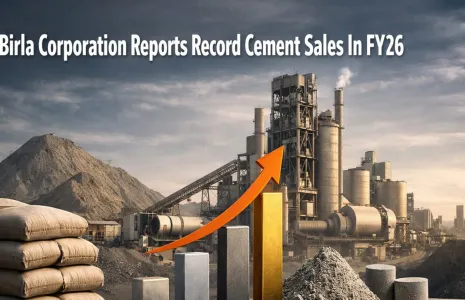
Image Generated by ChatGPT

Birla Corporation Limited ended FY2024–25 on a strong note, posting a consolidated net profit of Rs 2.57 billion in the March quarter—up 33 per cent year-on-year—after three difficult quarters for the cement sector. Supported by a rise in demand and prices, capacity utilisation reached 105 per cent during the quarter.Quarterly revenue rose 7 per cent year-on-year to Rs 28.63 billion, while EBITDA per tonne increased to Rs 1,014. The operating margin for the cement division improved to 20 per cent, from 18.6 per cent a year ago.The company has now approved a capital investment of Rs 43.35 billion to expand capacity from 20 million tonnes to 27.6 million tonnes by FY2029. This includes Rs 23 billion to scale up the Maihar clinker unit in Madhya Pradesh, and Rs 20.35 billion for three new grinding units in Prayagraj, Gaya, and Aligarh.Despite industry-wide pricing pressure—with FY25 cement prices 4–5 per cent lower than the previous year—Birla Corp maintained strong performance through cost control and operational efficiency. Power and fuel costs dropped 14 per cent year-on-year to Rs 1,035 per tonne, and the share of renewable energy usage rose to 24.8 per cent.Premium products saw 11 per cent volume growth, with flagship brand Perfect Plus expanding 15 per cent. Premium products now account for 60 per cent of trade channel sales, up from 54 per cent the previous year.Full-year cement sales volume grew 2.5 per cent to 18.1 million tonnes, though full-year net profit declined 30 per cent to Rs 2.95 billion due to weak pricing in the first eight months. FY25 consolidated revenue stood at Rs 93.12 billion, down 4 per cent year-on-year.The company also entered the ready-mix concrete segment, showing promising initial results in Uttar Pradesh.The Board reappointed Sandip Ghose as Managing Director and CEO for a further three-year term from January 2026, recognising his role in product premiumisation and scaling up the Mukutban plant.The jute division, after three loss-making quarters, posted a Rs 44.3 million cash profit in Q4, thanks to reduced conversion costs, better order execution, and higher daily production. The division aims to become the most cost-efficient and profitable jute manufacturer in the country, with renewed R&D partnerships and improved operational metrics.Image Generated by ChatGPT

Next Story
Infrastructure Transport

India Becomes First to Produce Bio-Bitumen for Roads

India has become the first country in the world to commercially produce bio-bitumen for use in road construction, according to Road, Transport and Highways Minister Nitin Gadkari. Bitumen, a black and viscous hydrocarbon derived from crude oil, is a key binding material in road building, and the bio-based alternative is expected to significantly improve the sector’s environmental footprint.Addressing the CSIR Technology Transfer Ceremony in New Delhi, Mr Gadkari congratulated Council of Scientific and Industrial Research on achieving the milestone, noting that the initiative would help curb ..

Next Story
Infrastructure Urban

HILT Policy Seen Boosting Telangana Revenue Sharply

The Hyderabad Industrial Land Transformation (HILT) Policy is expected to generate around Rs 1.08 billion in revenue for the Telangana state exchequer, according to Deputy Chief Minister Bhatti Vikramarka Mallu. Speaking in the Telangana Legislative Assembly, he said the policy would be implemented within a six-month timeframe in a transparent manner, with uniform rules applicable to all stakeholders. Mr Vikramarka noted that without the HILT Policy, the state would have earned only about Rs 1.2 million per acre. Under the new framework, however, revenue is projected to rise sharply to Rs 70 ..

Next Story
Infrastructure Urban

India Post, MoRD Tie Up to Boost Rural Inclusion

The Department of Posts and the Ministry of Rural Development have signed a Memorandum of Understanding to accelerate rural transformation and expand financial, digital and logistics services for Self-Help Groups (SHGs) and rural households across India. The agreement was signed in the presence of Union Minister of Communications and Development of North Eastern Region Jyotiraditya M. Scindia and Union Minister of Rural Development and Agriculture and Farmers’ Welfare Shivraj Singh Chouhan. The collaboration aligns with the government’s “Dak Sewa, Jan Sewa” vision and seeks to repositi..

Advertisement

Subscribe to Our Newsletter

Get daily newsletters around different themes from Construction world.

STAY CONNECTED

Advertisement

Advertisement

Advertisement

Advertisement

Open In App