Bridgestone Empowers Rural Women through Sustainable Orchard Project
ECONOMY & POLICY

Bridgestone Empowers Rural Women through Sustainable Orchard Project

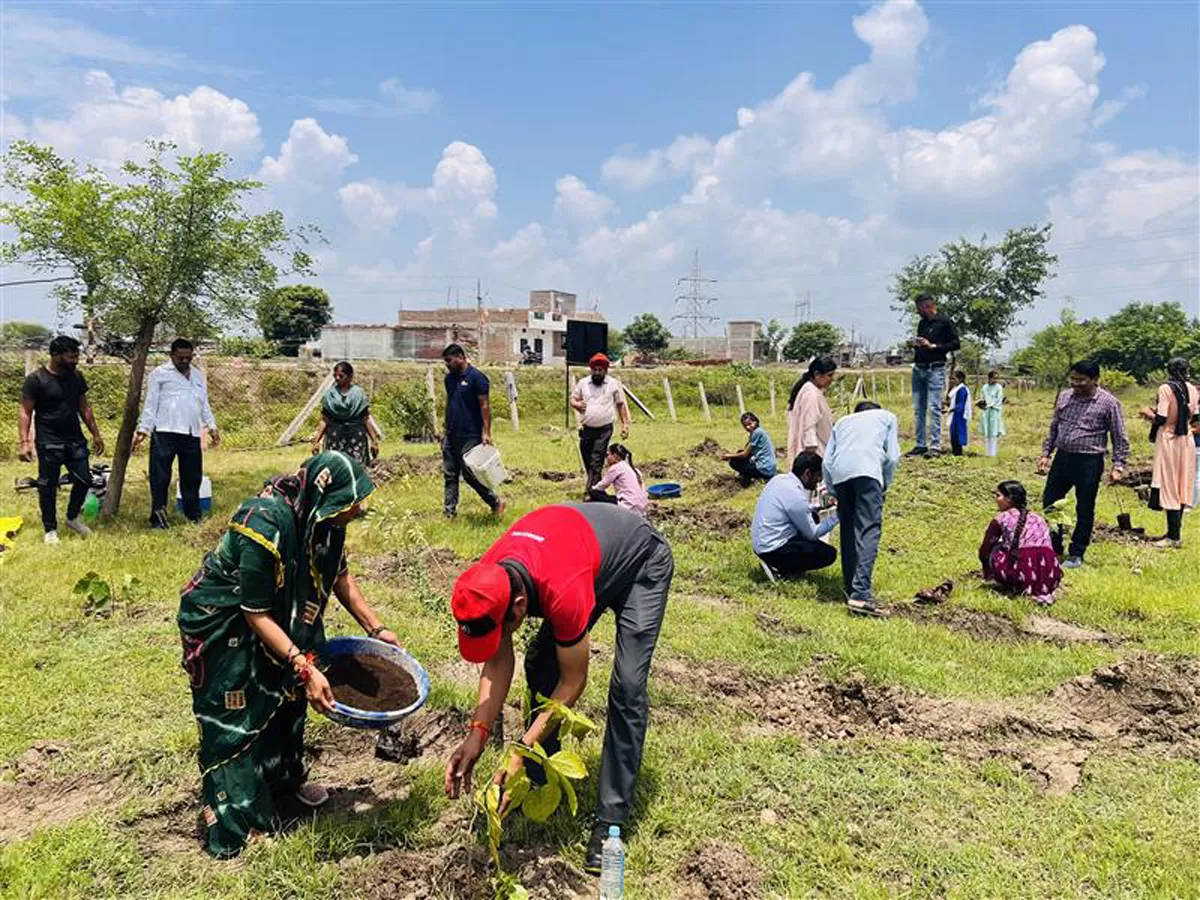
Bridgestone India, in partnership with Sagest (Society for Environment and Agricultural Sustainability), has launched the Bridgestone Nutritional Fruit Orchard Project in Sulawad Village, Dhar District, Madhya Pradesh. This women-led initiative aims to drive environmental sustainability, improve nutrition, and generate livelihoods.

Spread over 4 acres, the orchard features 1,300+ fruit-bearing trees across 15+ varieties, planted using sustainable techniques with strong support from Bridgestone volunteers and the local community. In its first year, the project boasts a 96 per cent survival rate and has enabled women to manage a nursery of 1,000 saplings, and produce compost and organic pesticide from garden waste—encouraging organic farming and income generation. After maturity, the sale of fruits harvested will be a year-round source of income for the group of women who are managing the orchard.

In addition to strengthening livelihoods, the initiative is improving nutritional security in Sulawad village through the development of 251 household kitchen gardens, which provide families with fresh, home-grown vegetables and a more nutritious diet. Regular training and awareness programmes have fostered a sense of ownership, responsibility, and environmental consciousness among the villagers.

“True sustainability goes beyond business—it’s about empowering communities and protecting the planet. This project shows how women-led, community-driven action can create long-term impact on nutrition, livelihoods, and the environment. It’s not just about planting trees; it’s about planting hope, resilience, and a better future. This initiative beautifully demonstrates how community-driven, women-led environmental action can improve nutrition, generate income, and protect the planet — all at the same time.” said Hiroshi Yoshizane, Managing Director, Bridgestone India.

This is a unique initiative that showcases multi stakeholder involvement where apart from Bridgestone and its partner Sagest implementing the program, the local panchayat has given the land, local women are maintaining and managing it, adjacent residential government school staff and students supporting it. With its holistic approach to environmental sustainability, rural development, and women’s empowerment, Bridgestone India’s Nutritional Fruit Orchard Project stands as a model for how corporate responsibility can create lasting, community-led transformation.

Bridgestone India, in partnership with Sagest (Society for Environment and Agricultural Sustainability), has launched the Bridgestone Nutritional Fruit Orchard Project in Sulawad Village, Dhar District, Madhya Pradesh. This women-led initiative aims to drive environmental sustainability, improve nutrition, and generate livelihoods.Spread over 4 acres, the orchard features 1,300+ fruit-bearing trees across 15+ varieties, planted using sustainable techniques with strong support from Bridgestone volunteers and the local community. In its first year, the project boasts a 96 per cent survival rate and has enabled women to manage a nursery of 1,000 saplings, and produce compost and organic pesticide from garden waste—encouraging organic farming and income generation. After maturity, the sale of fruits harvested will be a year-round source of income for the group of women who are managing the orchard.In addition to strengthening livelihoods, the initiative is improving nutritional security in Sulawad village through the development of 251 household kitchen gardens, which provide families with fresh, home-grown vegetables and a more nutritious diet. Regular training and awareness programmes have fostered a sense of ownership, responsibility, and environmental consciousness among the villagers.“True sustainability goes beyond business—it’s about empowering communities and protecting the planet. This project shows how women-led, community-driven action can create long-term impact on nutrition, livelihoods, and the environment. It’s not just about planting trees; it’s about planting hope, resilience, and a better future. This initiative beautifully demonstrates how community-driven, women-led environmental action can improve nutrition, generate income, and protect the planet — all at the same time.” said Hiroshi Yoshizane, Managing Director, Bridgestone India.This is a unique initiative that showcases multi stakeholder involvement where apart from Bridgestone and its partner Sagest implementing the program, the local panchayat has given the land, local women are maintaining and managing it, adjacent residential government school staff and students supporting it. With its holistic approach to environmental sustainability, rural development, and women’s empowerment, Bridgestone India’s Nutritional Fruit Orchard Project stands as a model for how corporate responsibility can create lasting, community-led transformation.

Next Story
Real Estate

AI: The New Recruit

From getting ideas to evaluating designs, presenting concepts to clients and tracking projects, artificial intelligence (AI) is helping architects work better and faster.“AI allows architects to spend more time doing what only they can do: think critically, synthesise complexity and design with intent,” says Dikshu C Kukreja, Managing Principal, CP Kukreja Architects. “Every minute reclaimed from repetitive processes can be invested in creativity, contextual understanding, interdisciplinary collaboration and innovation – the qualities that define meaningful architecture.”To read the ..

Next Story
Real Estate

Redevelopment 2.0

In 2017, Mumbai identified 160,000 ageing buildings due for structural audit. Close to half of these were in the Western Suburbs. Redeveloping the oldest and structurally weakest of these would help unlock new housing, much needed given the city’s growing population density and constant developed area of 437.7 sq km. At 30,600 people per sq km in 2024, Mumbai’s density was almost thrice that of Gurugram, and 60 per cent higher than Bengaluru’s.Essentially, Mumbai’s realty market has demand. It has capital. It has realty development potential.Fast forward to 2026. Mumbai has 1,094 regis..

Next Story
Technology

Cost intelligence will become a strategic contributor to project success

As India's construction industry accelerates its digital transformation, integrated platforms, AI and connected data are becoming essential to improving cost certainty, project efficiency and sustainability. Ravi Kumar, Sales Director – India, RIB Software India, shares how digital workflows are reshaping project planning, commercial management and decision-making across the construction value chain.India's construction sector is embracing digital technologies at an unprecedented pace. From your perspective, what are the biggest shifts driving this transformation and how is RIB Software enab..

Advertisement

Subscribe to Our Newsletter

Get daily newsletters around different themes from Construction world.

STAY CONNECTED

Advertisement

Advertisement

Advertisement