+
BSNL Proposes Rs 770 Billion Capex Plan, Targets Two Lakh 4G Sites
ECONOMY & POLICY

BSNL Proposes Rs 770 Billion Capex Plan, Targets Two Lakh 4G Sites

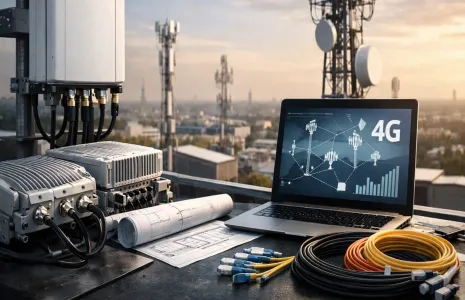
The Department of Telecommunications told the Parliamentary Committee that state-run Bharat Sanchar Nigam Limited has proposed a capital investment plan of around Rs 770 billion (Rs 770 bn) over the next five years, including two lakh (0.2 million; 0.2 mn) additional 4G sites, network strengthening and targeted 5G rollout in high-traffic and strategic areas. The department said the plan would fund an integrated customer-support system and that with the proposed infusion BSNL is projected to achieve operational breakeven by FY2028-29 and nearly 98 per cent nationwide coverage.

DoT has placed a demand under the approved BSNL revival package for an additional capital infusion of Rs 215.88 bn for FY2026-27, separate from the five-year proposal. The department noted the company recorded Rs 260.22 bn of capital expenditure in FY2024-25, which it described as the largest capex in the firm's history focused on 4G rollout, power modernisation and fibre expansion for BharatNet.

Government capital infusion into BSNL rose to Rs 719.40 bn in FY2024-25 from Rs 567.85 bn in FY2023-24. DoT told the committee that the heavy capex increased depreciation and widened losses in FY2025-26 but created the infrastructure base for future revenue growth.

Operational revenue increased from Rs 191.31 bn in FY2022-23 to Rs 232.59 bn in FY2025-26 and is projected to reach Rs 264.07 bn in FY2026-27, while losses were projected to widen to Rs 59.46 bn and total expenditure was estimated at Rs 348.53 bn. The committee urged expenditure rationalisation, greater infrastructure sharing and prioritisation of higher-revenue segments such as 4G, 5G, enterprise services and fibre.

DoT said BSNL is pursuing infrastructure sharing and asset monetisation, reporting that 11,398 towers leased to other providers generated Rs 10.19 bn in FY2025-26 and around 300,000 route-km of dark fibre earned Rs 4.10 bn. The department added that consolidated operational costs were reduced from Rs 94.60 bn to Rs 89.70 bn and that 105,290 indigenous 4G sites (0.105 million; 0.105 mn) had been installed with future upgrade capability to 5G.

The Department of Telecommunications told the Parliamentary Committee that state-run Bharat Sanchar Nigam Limited has proposed a capital investment plan of around Rs 770 billion (Rs 770 bn) over the next five years, including two lakh (0.2 million; 0.2 mn) additional 4G sites, network strengthening and targeted 5G rollout in high-traffic and strategic areas. The department said the plan would fund an integrated customer-support system and that with the proposed infusion BSNL is projected to achieve operational breakeven by FY2028-29 and nearly 98 per cent nationwide coverage. DoT has placed a demand under the approved BSNL revival package for an additional capital infusion of Rs 215.88 bn for FY2026-27, separate from the five-year proposal. The department noted the company recorded Rs 260.22 bn of capital expenditure in FY2024-25, which it described as the largest capex in the firm's history focused on 4G rollout, power modernisation and fibre expansion for BharatNet. Government capital infusion into BSNL rose to Rs 719.40 bn in FY2024-25 from Rs 567.85 bn in FY2023-24. DoT told the committee that the heavy capex increased depreciation and widened losses in FY2025-26 but created the infrastructure base for future revenue growth. Operational revenue increased from Rs 191.31 bn in FY2022-23 to Rs 232.59 bn in FY2025-26 and is projected to reach Rs 264.07 bn in FY2026-27, while losses were projected to widen to Rs 59.46 bn and total expenditure was estimated at Rs 348.53 bn. The committee urged expenditure rationalisation, greater infrastructure sharing and prioritisation of higher-revenue segments such as 4G, 5G, enterprise services and fibre. DoT said BSNL is pursuing infrastructure sharing and asset monetisation, reporting that 11,398 towers leased to other providers generated Rs 10.19 bn in FY2025-26 and around 300,000 route-km of dark fibre earned Rs 4.10 bn. The department added that consolidated operational costs were reduced from Rs 94.60 bn to Rs 89.70 bn and that 105,290 indigenous 4G sites (0.105 million; 0.105 mn) had been installed with future upgrade capability to 5G.

Related Stories

Gold Stories

Next Story
Infrastructure Transport

MMRDA Targets Completion of Projects by December 2028

The Mumbai Metropolitan Region Development Authority (MMRDA) is targeting the completion of all its ongoing infrastructure projects by December 2028, a year ahead of its December 2029 deadline, Metropolitan Commissioner Dr Sanjay Mukherjee has said.Speaking at the sixth edition of the Real Estate & Infrastructure Investors' Summit (REIIS) 2026 in Mumbai, Mukherjee said the authority was developing an integrated network of roads, tunnels, sea links and Metro corridors under its broader vision of “Mumbai in 59 Minutes”.The objective is to improve east-west and north-south connectivity an..

Next Story
Building Material

High-Performance Façades Gain Ground in Indian Buildings

High-performance façades are gaining greater importance in Indian architecture as developers and architects increasingly focus on energy efficiency, thermal comfort and building performance, according to Shankar Fenestrations & Glasses.The company said modern façade systems are increasingly being considered as part of a building's overall performance strategy rather than being used primarily as aesthetic elements.High-performance glass, curtain wall systems and structural glazing can contribute to thermal regulation, solar control, daylight management and indoor comfort. Their growing ad..

Next Story
Technology

SPML Infra's 104.4 kWh BESS Battery Pack Clears Global Tests

SPML Infra has announced that its proprietary 104.4 kWh Battery Energy Storage System (BESS) battery pack has completed key international safety, performance and transportation testing and certification requirements, marking a step towards its commercial deployment.Developed under the company's own intellectual property, the battery pack has completed requirements under UL9540A, IEC 62619, IEC 63056, IEC 60730, IEC 61000-6-2, IEC 61000-6-4 and UN38.3 standards.The testing covers areas including thermal runaway safety, battery performance, system functional safety, electromagnetic compatibility..

Advertisement

Subscribe to Our Newsletter

Get daily newsletters around different themes from Construction world.

STAY CONNECTED

Advertisement

SPECIAL OFFER
QR Code