+
Govt Pushes Rare-Earth Magnet Capacity to Secure Manufacturing Supply
ECONOMY & POLICY

Govt Pushes Rare-Earth Magnet Capacity to Secure Manufacturing Supply

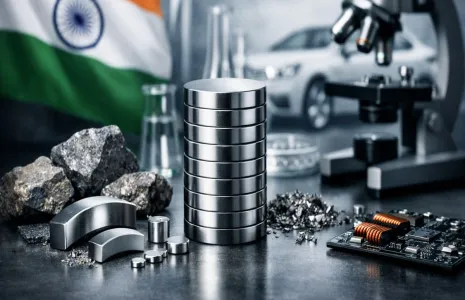
The government is working to build domestic capacity for rare-earth permanent magnets, which are used in automobiles, electronic hardware and other manufacturing sectors, Principal Secretary-2 to the Prime Minister Shaktikanta Das said at the Kautilya Economic Conclave 2026. The initiative is intended to reduce vulnerabilities in a strategically important section of the global supply chain.

Das said the government had responded to disruptions and restrictions affecting rare-earth-related exports by launching measures to develop domestic capabilities. He described rare-earth permanent magnets as a critical manufacturing component, with applications spanning automobile production, electronic hardware and several other industrial activities.

The move follows concerns over the concentration of global supply and processing capacity in China. Das said Chinese supplies accounted for about 80 to 90 per cent of the rare-earth magnet supply and the wider ecosystem, making restrictions imposed by Beijing a concern for countries and industries worldwide.

China’s Ministry of Commerce announced expanded rare-earth export controls in October 2025, according to a Reuters report. The measures covered additional rare-earth elements and related materials, while introducing greater scrutiny for certain foreign companies using Chinese rare-earth materials or equipment. The rules included controls on specified samarium-cobalt permanent magnets, as well as neodymium permanent magnets containing terbium or dysprosium.

The notification also covered parts, components and modules containing the specified materials. It further stated that export applications involving certain advanced semiconductor-related items and artificial intelligence research with potential military applications would be assessed on a case-by-case basis. Against this backdrop, developing domestic rare-earth magnet capacity is being treated as an important step towards strengthening India’s manufacturing ecosystem and reducing exposure to external supply disruptions.

The government is working to build domestic capacity for rare-earth permanent magnets, which are used in automobiles, electronic hardware and other manufacturing sectors, Principal Secretary-2 to the Prime Minister Shaktikanta Das said at the Kautilya Economic Conclave 2026. The initiative is intended to reduce vulnerabilities in a strategically important section of the global supply chain. Das said the government had responded to disruptions and restrictions affecting rare-earth-related exports by launching measures to develop domestic capabilities. He described rare-earth permanent magnets as a critical manufacturing component, with applications spanning automobile production, electronic hardware and several other industrial activities. The move follows concerns over the concentration of global supply and processing capacity in China. Das said Chinese supplies accounted for about 80 to 90 per cent of the rare-earth magnet supply and the wider ecosystem, making restrictions imposed by Beijing a concern for countries and industries worldwide. China’s Ministry of Commerce announced expanded rare-earth export controls in October 2025, according to a Reuters report. The measures covered additional rare-earth elements and related materials, while introducing greater scrutiny for certain foreign companies using Chinese rare-earth materials or equipment. The rules included controls on specified samarium-cobalt permanent magnets, as well as neodymium permanent magnets containing terbium or dysprosium. The notification also covered parts, components and modules containing the specified materials. It further stated that export applications involving certain advanced semiconductor-related items and artificial intelligence research with potential military applications would be assessed on a case-by-case basis. Against this backdrop, developing domestic rare-earth magnet capacity is being treated as an important step towards strengthening India’s manufacturing ecosystem and reducing exposure to external supply disruptions.

Related Stories

Gold Stories

Next Story
Infrastructure Transport

Madhya Pradesh Plans Airport Every 150 Km, Airstrip Every 75 Km

The Madhya Pradesh government plans to establish an airport every 150 km, an airstrip every 75 km and a helipad every 45 km, according to the state aviation department. Airports being developed in Ujjain and Shivpuri are expected to take the state’s airport count to 10. The government stated that Madhya Pradesh currently has eight airports in eight cities. The locations named by the department include Indore, Bhopal, Jabalpur, Gwalior, Khajuraho, Rewa and Satna. The state also has more than 20 airstrips and 220 helipads, while permanent helipads are planned in all 230 Assembly constituencies..

Next Story
Infrastructure Transport

West Bengal Plans Four Airports for 2028 Completion Under UDAN

West Bengal will develop four new airports under an agreement signed between the Union Civil Aviation Ministry and the state government, with all facilities targeted for completion by 2028. Union Civil Aviation Minister K Rammohan Naidu said the airports would be located at Charra in Purulia, Kalaikunda in Paschim Medinipur, Balurghat in Dakshin Dinajpur and Hasimara in Alipurduar. The project is part of the Centre’s regional connectivity UDAN programme. The Union government has committed Rs. 290 bn for West Bengal’s aviation sector over the next decade, while the state government will pro..

Next Story
Infrastructure Transport

Mumbai Airport Bars Russian Airlines as Agent Seeks Ministry Intervention

Mumbai airport has stopped accepting cargo booked on Russian flag carrier Aeroflot, disrupting shipments and prompting the airline’s cargo sales agent, Delmos Aviation, to seek intervention from the Ministry of Civil Aviation. The restrictions also affect cargo booked on Volga-Dnepr Airlines, according to a letter submitted by Delmos Aviation to the ministry on September 30. Aeroflot operates daily flights between Moscow and Delhi and runs a winter seasonal service to Goa. Bonded cargo from Mumbai and other cities is transported by road to Delhi before being flown to Russia. The agent said t..

Advertisement

Subscribe to Our Newsletter

Get daily newsletters around different themes from Construction world.

STAY CONNECTED

Advertisement

SPECIAL OFFER
QR Code