Cabinet Clears Rs 72.8 Billion Plan For Rare-Earth Magnet Production
ECONOMY & POLICY

Cabinet Clears Rs 72.8 Billion Plan For Rare-Earth Magnet Production

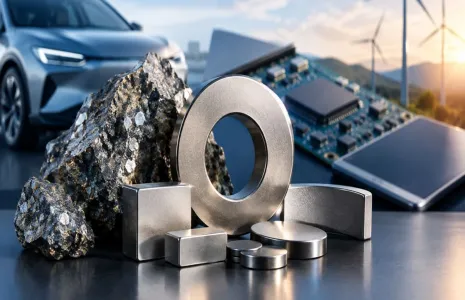
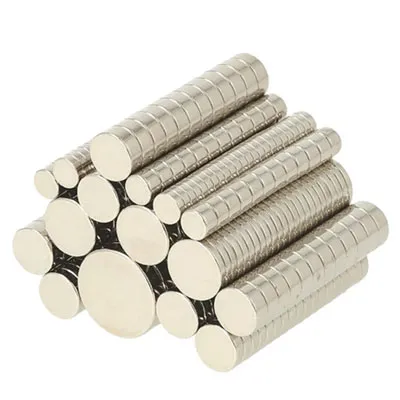
The Union Cabinet, chaired by Prime Minister Narendra Modi, has approved a Rs 72.8 billion scheme to promote the manufacturing of sintered rare-earth permanent magnets (REPM) — India’s first major initiative to build an integrated domestic supply chain for this strategically critical material.

The “Scheme to Promote Manufacturing of Sintered Rare Earth Permanent Magnets” aims to establish a production capacity of 6,000 tonnes per year to meet rising demand from electric vehicles, renewable energy, electronics, aerospace and defence. The initiative is also expected to bolster local manufacturing competitiveness and support India’s broader energy transition.

Under the scheme, five beneficiaries will be selected through a global competitive bidding process, each eligible to build up to 1,200 tonnes per annum of capacity. The programme includes Rs 64.5 billion in sales-linked incentives over five years and Rs 7.5 billion as capital subsidy for setting up manufacturing units.

The scheme will run for seven years, including a two-year gestation period for establishing manufacturing facilities and five years of incentive disbursal.

India currently relies heavily on imports for REPMs — among the strongest types of permanent magnets used in high-technology applications. The country imports nearly all of the 900 tonnes it consumes annually, despite possessing the fifth-largest rare earth reserves globally. Domestic consumption is expected to double between 2025 and 2030, fuelled by rapid growth in EVs, renewable energy systems, industrial equipment and consumer electronics.

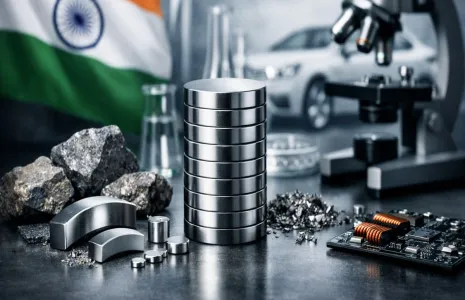
“With this initiative, India will establish its first-ever integrated REPM manufacturing facilities, generating employment, strengthening self-reliance and advancing the nation’s commitment to achieve net zero by 2070,” an official statement said. The scheme aims to position India as a key global player by supporting facilities that convert rare-earth oxides into metals, metals into alloys, and alloys into finished magnets.

The automobile industry welcomed the move. SIAM President Shailesh Chandra said the scheme would help build a resilient supply chain for crucial EV components, accelerate clean mobility adoption and strengthen energy security by reducing crude-oil dependence.

ACMA President Vikrampati Singhania called the initiative a “strategic, forward-looking intervention” that addresses a major gap in the EV and advanced-mobility ecosystem. Rare-earth magnets, he said, are foundational to electric motors and high-efficiency systems, and domestic production will enhance India’s technological competitiveness.

Experts noted that incentives for rare-earth magnet manufacturing — combined with allocations under the National Critical Minerals Mission — demonstrate a broader national commitment to strengthening India’s critical-minerals ecosystem.

Raju Kumar, partner and energy tax leader at EY India, said the initiative could unlock opportunities across mining, processing, alloying and advanced materials but stressed that its success would depend on disciplined implementation, access to technology, high-quality processing capability and strong ESG safeguards.

The Union Cabinet, chaired by Prime Minister Narendra Modi, has approved a Rs 72.8 billion scheme to promote the manufacturing of sintered rare-earth permanent magnets (REPM) — India’s first major initiative to build an integrated domestic supply chain for this strategically critical material. The “Scheme to Promote Manufacturing of Sintered Rare Earth Permanent Magnets” aims to establish a production capacity of 6,000 tonnes per year to meet rising demand from electric vehicles, renewable energy, electronics, aerospace and defence. The initiative is also expected to bolster local manufacturing competitiveness and support India’s broader energy transition. Under the scheme, five beneficiaries will be selected through a global competitive bidding process, each eligible to build up to 1,200 tonnes per annum of capacity. The programme includes Rs 64.5 billion in sales-linked incentives over five years and Rs 7.5 billion as capital subsidy for setting up manufacturing units. The scheme will run for seven years, including a two-year gestation period for establishing manufacturing facilities and five years of incentive disbursal. India currently relies heavily on imports for REPMs — among the strongest types of permanent magnets used in high-technology applications. The country imports nearly all of the 900 tonnes it consumes annually, despite possessing the fifth-largest rare earth reserves globally. Domestic consumption is expected to double between 2025 and 2030, fuelled by rapid growth in EVs, renewable energy systems, industrial equipment and consumer electronics. “With this initiative, India will establish its first-ever integrated REPM manufacturing facilities, generating employment, strengthening self-reliance and advancing the nation’s commitment to achieve net zero by 2070,” an official statement said. The scheme aims to position India as a key global player by supporting facilities that convert rare-earth oxides into metals, metals into alloys, and alloys into finished magnets. The automobile industry welcomed the move. SIAM President Shailesh Chandra said the scheme would help build a resilient supply chain for crucial EV components, accelerate clean mobility adoption and strengthen energy security by reducing crude-oil dependence. ACMA President Vikrampati Singhania called the initiative a “strategic, forward-looking intervention” that addresses a major gap in the EV and advanced-mobility ecosystem. Rare-earth magnets, he said, are foundational to electric motors and high-efficiency systems, and domestic production will enhance India’s technological competitiveness. Experts noted that incentives for rare-earth magnet manufacturing — combined with allocations under the National Critical Minerals Mission — demonstrate a broader national commitment to strengthening India’s critical-minerals ecosystem. Raju Kumar, partner and energy tax leader at EY India, said the initiative could unlock opportunities across mining, processing, alloying and advanced materials but stressed that its success would depend on disciplined implementation, access to technology, high-quality processing capability and strong ESG safeguards.

Next Story
Infrastructure Urban

BMC Begins Rs 660-Mn Project to Revive Powai Lake Ecosystem

The Brihanmumbai Municipal Corporation (BMC) has launched a Rs 660-million restoration initiative aimed at improving the ecological health of Powai Lake. The project focuses on diverting sewage inflow, establishing a modern sewage treatment plant (STP), and expanding the removal of water hyacinth, which has increasingly overwhelmed the lake’s surface in recent months. The civic body has set an 18-month deadline for completing the works.According to officials, the rapid spread of hyacinth is directly linked to untreated sewage entering the lake, providing a nutrient-rich environment for the i..

Next Story
Infrastructure Transport

Foundation Laid for Rs 500 Mn Four-lane Road Project in Nalgonda

Roads & Buildings Minister Komatireddy Venkat Reddy inaugurated a major infrastructure initiative in Nalgonda by laying the foundation stone for a Rs 500 million four-lane road project within the town’s municipal limits. The project aims to enhance mobility and ease congestion along a key stretch of the Mahbubnagar–Nalgonda corridor.The new four-lane road will run from the Nagarjunasagar ‘X’ Roads to the Darveshipuram Yellamma Temple, featuring a central median and integrated central lighting to improve road safety and night-time visibility. According to the minister, construction ..

Next Story
Infrastructure Transport

Maharashtra Clears DPR for 55 Km Uttan–Virar Sea Link Project

The Maharashtra government has approved the Detailed Project Report (DPR) for the Uttan–Virar Sea Link (UVSL), a major infrastructure project that will extend Mumbai’s coastal mobility network and complete the city’s envisioned ring road. Designed as an eight-lane, high-speed corridor, the project will span a total length of 55.12 km, including a 24.35 km sea bridge between Uttan and Virar and close to 31 km of approach roads.According to the DPR, the approach road network will include a 9.32 km connecting stretch at Uttan, a 2.5 km link at Vasai, and an 18.95 km road at Virar. The proje..

Advertisement

Subscribe to Our Newsletter

Get daily newsletters around different themes from Construction world.

STAY CONNECTED

Advertisement

Advertisement

Advertisement

Get CW App