Cabinet Set To Clear Rs 73 Billion Rare Earth Magnet Scheme
ECONOMY & POLICY

Cabinet Set To Clear Rs 73 Billion Rare Earth Magnet Scheme

The Union Cabinet is expected to approve a rare earth permanent magnets (REPM) manufacturing incentive scheme worth Rs 73 billion on Wednesday. The initiative is India’s strategic response to China’s dominance over the global REPM supply chain and is designed to establish a fully indigenous ecosystem capable of producing up to 6,000 tonnes annually over a seven-year period.

Sources said the finance ministry’s Expenditure Finance Committee has already cleared the Rs 73 billion production-linked incentive (PLI) scheme, paving the way for final Cabinet approval. Several global and domestic players—including Lynas, Iluka, Rainbow, Bharat Forge, Sona Comstar and JSW—have expressed interest in participating.

“The Cabinet approval is expected tomorrow, and the scheme guidelines will be released soon after,” a senior official said. The programme will be implemented by the Ministry of Heavy Industries.

The initiative aims to develop a robust domestic value chain for REPMs, which are essential components in electric vehicles, defence platforms and renewable energy systems. China currently controls about 60 per cent of global rare earth mining and nearly 90 per cent of refining and processing. Its April 2025 restrictions on REPM exports tightened supply for India’s automobile and electronics sectors.

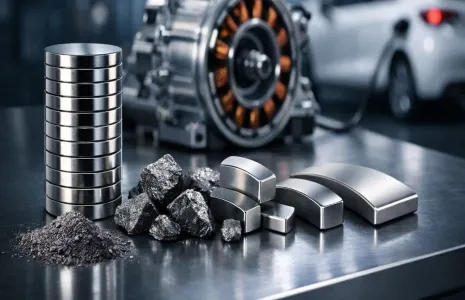
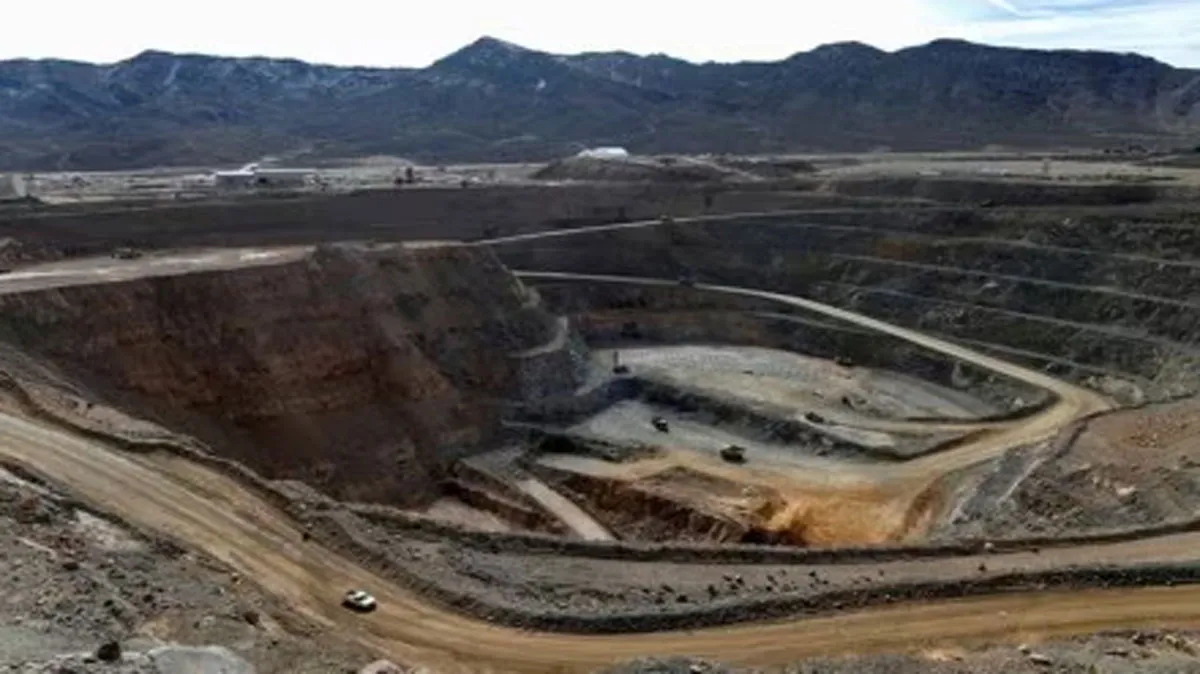
Under the scheme, the government intends to build an end-to-end value chain, beginning with the conversion of NdPr (neodymium–praseodymium) oxide and extending through to the production of sintered NdFeB (neodymium–iron–boron) magnets. REPM production requires multiple stages—mining, beneficiation, processing, extraction, refining to oxides, conversion to metals and alloys, and final magnet manufacturing.

Of the total Rs 73 billion outlay, Rs 65 billion has been earmarked for capital expenditure and Rs 8 billion for operational costs. Support will be extended to both public and private manufacturers with capabilities across the value chain, particularly for the advanced stages—rare earth oxide to metal, metal to alloy and alloy to magnet. India currently lacks large-scale capability in these final processes.

India imports almost its entire REPM requirement. Domestic demand stands at roughly 4,010 tonnes a year, projected to rise to 8,220 tonnes by 2030. While NdPr oxide prices in India broadly track global rates, finished magnets are around 43 per cent more expensive than international benchmarks.

Speaking on the decision, Vinod Aggarwal, MD & CEO, VE Commercial Vehicles, said: “VECV welcomes the Cabinet’s approval of the Rs 7,280 crore Rare Earth Permanent Magnet (REPM) manufacturing scheme. Rare earth magnets are vital for electric drivetrains, power electronics, and high-efficiency systems that will increasingly support the commercial vehicle industry’s shift towards cleaner and more energy-efficient technologies. We appreciate the government’s vision of this forward-looking policy in creating an integrated domestic value chain, from rare earth oxides to metals, alloys, and finished magnets. By addressing a critical supply-side vulnerability in future mobility, this initiative will significantly strengthen India’s self-reliance in advanced materials. As the country moves towards its Net Zero 2070 target, the availability of locally manufactured REPMs will accelerate the adoption of next-generation electric and energy-efficient commercial vehicles. This forward-looking policy is a major boost to Make in India and will enhance the long-term competitiveness of the automotive and commercial vehicle ecosystem.”

India holds an estimated 6.9 million tonnes of rare earth reserves but produced only about 2,900 tonnes in 2024. Imports of rare earth magnets reached 53,000 tonnes in FY25, highlighting the widening gap between domestic supply and demand. State-run IREL remains the only public-sector enterprise active in rare earth mining and refining.

The Union Cabinet is expected to approve a rare earth permanent magnets (REPM) manufacturing incentive scheme worth Rs 73 billion on Wednesday. The initiative is India’s strategic response to China’s dominance over the global REPM supply chain and is designed to establish a fully indigenous ecosystem capable of producing up to 6,000 tonnes annually over a seven-year period. Sources said the finance ministry’s Expenditure Finance Committee has already cleared the Rs 73 billion production-linked incentive (PLI) scheme, paving the way for final Cabinet approval. Several global and domestic players—including Lynas, Iluka, Rainbow, Bharat Forge, Sona Comstar and JSW—have expressed interest in participating. “The Cabinet approval is expected tomorrow, and the scheme guidelines will be released soon after,” a senior official said. The programme will be implemented by the Ministry of Heavy Industries. The initiative aims to develop a robust domestic value chain for REPMs, which are essential components in electric vehicles, defence platforms and renewable energy systems. China currently controls about 60 per cent of global rare earth mining and nearly 90 per cent of refining and processing. Its April 2025 restrictions on REPM exports tightened supply for India’s automobile and electronics sectors. Under the scheme, the government intends to build an end-to-end value chain, beginning with the conversion of NdPr (neodymium–praseodymium) oxide and extending through to the production of sintered NdFeB (neodymium–iron–boron) magnets. REPM production requires multiple stages—mining, beneficiation, processing, extraction, refining to oxides, conversion to metals and alloys, and final magnet manufacturing. Of the total Rs 73 billion outlay, Rs 65 billion has been earmarked for capital expenditure and Rs 8 billion for operational costs. Support will be extended to both public and private manufacturers with capabilities across the value chain, particularly for the advanced stages—rare earth oxide to metal, metal to alloy and alloy to magnet. India currently lacks large-scale capability in these final processes. India imports almost its entire REPM requirement. Domestic demand stands at roughly 4,010 tonnes a year, projected to rise to 8,220 tonnes by 2030. While NdPr oxide prices in India broadly track global rates, finished magnets are around 43 per cent more expensive than international benchmarks.Speaking on the decision, Vinod Aggarwal, MD & CEO, VE Commercial Vehicles, said: “VECV welcomes the Cabinet’s approval of the Rs 7,280 crore Rare Earth Permanent Magnet (REPM) manufacturing scheme. Rare earth magnets are vital for electric drivetrains, power electronics, and high-efficiency systems that will increasingly support the commercial vehicle industry’s shift towards cleaner and more energy-efficient technologies. We appreciate the government’s vision of this forward-looking policy in creating an integrated domestic value chain, from rare earth oxides to metals, alloys, and finished magnets. By addressing a critical supply-side vulnerability in future mobility, this initiative will significantly strengthen India’s self-reliance in advanced materials. As the country moves towards its Net Zero 2070 target, the availability of locally manufactured REPMs will accelerate the adoption of next-generation electric and energy-efficient commercial vehicles. This forward-looking policy is a major boost to Make in India and will enhance the long-term competitiveness of the automotive and commercial vehicle ecosystem.” India holds an estimated 6.9 million tonnes of rare earth reserves but produced only about 2,900 tonnes in 2024. Imports of rare earth magnets reached 53,000 tonnes in FY25, highlighting the widening gap between domestic supply and demand. State-run IREL remains the only public-sector enterprise active in rare earth mining and refining.

Next Story
Infrastructure Energy

Delhi HC Stays PGCIL Order against KEC International

KEC International has informed stock exchanges of a significant legal development concerning its eligibility to participate in tenders floated by Power Grid Corporation of India (PGCIL), in a disclosure made under Regulation 30 of the SEBI (Listing Obligations and Disclosure Requirements) Regulations.The update follows the company’s earlier intimation dated November 18, 2025, regarding an order issued by PGCIL that excluded KEC International from participating in its tenders for a period of nine months. Challenging the said order, the company filed a writ petition before the Hon’ble High C..

Next Story
Building Material

LANXESS Advances Pigment Solutions for New-Age Concrete Technologies

LANXESS is deepening its engagement with next-generation concrete technologies by advancing research into the performance of iron oxide pigments across emerging construction applications, including self-compacting concrete (SCC), geopolymers and 3D-printed concrete. Through extensive investigations and long-term weathering tests, iron oxide pigments have proven their suitability for a wide range of concrete construction materials, though their use in new formulations requires a thorough understanding of construction chemistry and material interactions.According to Oliver Fleschentraeger, Techn..

Next Story
Infrastructure Urban

JHS Svendgaard to Invest Rs 250 Million in Kala Amb Expansion

JHS Svendgaard Laboratories (JHS), a leading Indian manufacturer of oral care products, has announced an investment of Rs 250 million to expand its manufacturing footprint in Kala Amb, Himachal Pradesh. The investment is aimed at strengthening production capacity, introducing advanced technologies and supporting the company’s next phase of growth in response to rising domestic and global demand.As part of the expansion plan, JHS will construct a new 100,000 sq ft manufacturing facility on its existing five-acre land parcel at Kala Amb. The project is expected to be executed over a two-year p..

Advertisement

Subscribe to Our Newsletter

Get daily newsletters around different themes from Construction world.

STAY CONNECTED

Advertisement

Advertisement

Advertisement

Advertisement

Open In App