Centre Drops Greenfield Cities Plan, Redirects Rs 80 Bn
ECONOMY & POLICY

Centre Drops Greenfield Cities Plan, Redirects Rs 80 Bn

The Union government has quietly shelved the Fifteenth Finance Commission’s proposal to incubate eight new greenfield cities, reallocating the Rs 80 billion set aside for the venture to a forthcoming urban-development scheme. According to senior officials at the Ministry of Housing and Urban Affairs (MoHUA), the new initiative is being shaped in consultation with NITI Aayog and the Asian Development Bank to bolster infrastructure in towns with populations below one lakh.

The decision, taken at the behest of the Prime Minister’s Office, follows presentations for the government’s 100-day agenda that urged channeling investment into existing urban centres rather than creating cities from scratch. As a result, 26 state proposals—including plans for Ayodhya, Jagiroad and an expanded GIFT City—have been put on ice despite preliminary state-level spending.

For the current fiscal year, the Centre is promoting planned townships through its Special Assistance to States for Capital Investment programme, which offers 50-year interest-free loans tied to sectoral reforms. Meanwhile, MoHUA is drafting the contours of an “urban challenge” fund announced in the Budget, likely to target towns of 50,000–100,000 inhabitants and carry an outlay of about Rs 1,000 billion.

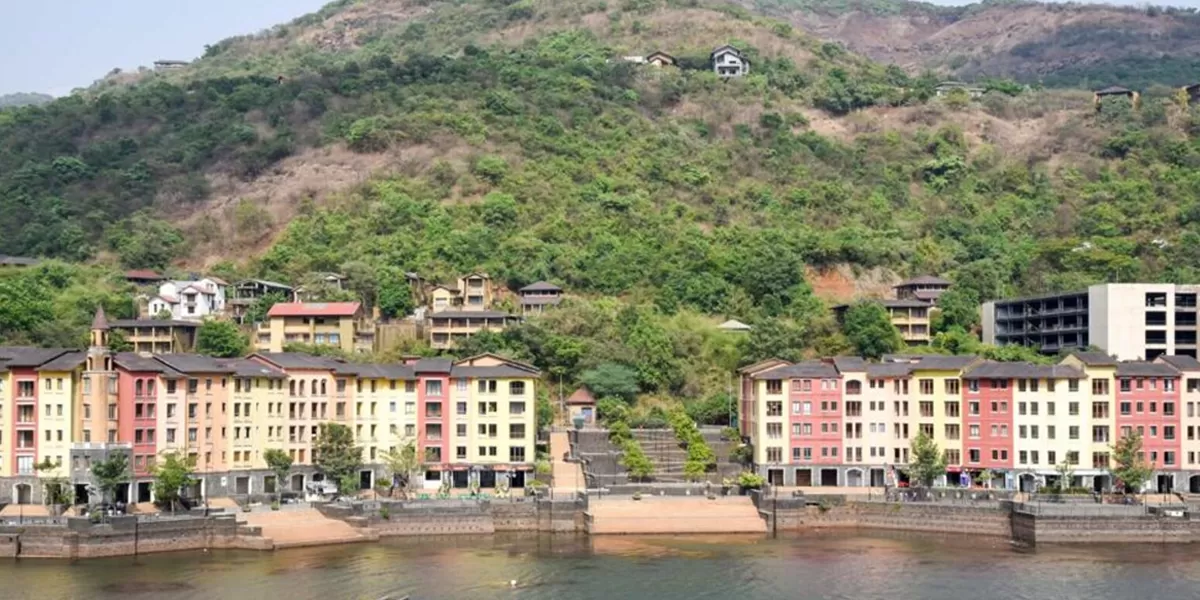
Urban experts welcome the pivot. They argue that densifying city cores and upgrading peri-urban areas will yield stronger economic returns than creating “artificial” cities such as Lavasa or Naya Raipur, which have struggled to attract residents.
 
Success, they add, hinges on clear legal frameworks that let states tailor priorities while the Centre sets common standards.

The Union government has quietly shelved the Fifteenth Finance Commission’s proposal to incubate eight new greenfield cities, reallocating the Rs 80 billion set aside for the venture to a forthcoming urban-development scheme. According to senior officials at the Ministry of Housing and Urban Affairs (MoHUA), the new initiative is being shaped in consultation with NITI Aayog and the Asian Development Bank to bolster infrastructure in towns with populations below one lakh.The decision, taken at the behest of the Prime Minister’s Office, follows presentations for the government’s 100-day agenda that urged channeling investment into existing urban centres rather than creating cities from scratch. As a result, 26 state proposals—including plans for Ayodhya, Jagiroad and an expanded GIFT City—have been put on ice despite preliminary state-level spending.For the current fiscal year, the Centre is promoting planned townships through its Special Assistance to States for Capital Investment programme, which offers 50-year interest-free loans tied to sectoral reforms. Meanwhile, MoHUA is drafting the contours of an “urban challenge” fund announced in the Budget, likely to target towns of 50,000–100,000 inhabitants and carry an outlay of about Rs 1,000 billion.Urban experts welcome the pivot. They argue that densifying city cores and upgrading peri-urban areas will yield stronger economic returns than creating “artificial” cities such as Lavasa or Naya Raipur, which have struggled to attract residents. Success, they add, hinges on clear legal frameworks that let states tailor priorities while the Centre sets common standards.

Next Story
Infrastructure Transport

MMRDA advances 250 m on Orange Gate–Marine Drive tunnel

The Mumbai Metropolitan Region Development Authority (MMRDA) has completed 250 m of underground tunnelling for the Orange Gate–Marine Drive Urban Road Tunnel using India’s largest slurry shield tunnel boring machine (TBM) deployed for an urban road project.The project involves twin tunnels extending over 7 km beneath critical transport corridors, including Central Railway, Western Railway and Metro Line 3. The work requires high-precision engineering to navigate densely developed urban infrastructure.Once completed, the tunnel is expected to reduce travel time between Orange Gate and Marin..

Next Story
Infrastructure Urban

Hindustan Zinc Pays Rs 188.46 Billion in FY26

Hindustan Zinc contributed Rs 188.46 billion to the public exchequer in FY 2025-26, according to its 9th Tax Transparency Report. The contribution, equivalent to 46 per cent of the company’s revenue, included direct and indirect taxes, government royalties, dividends to the Government of India, withholding taxes and other statutory levies.The company’s five-year cumulative contribution to the exchequer stood at Rs 915.72 billion. In FY26, Hindustan Zinc reported revenue of Rs 408.44 billion, EBITDA of Rs 221.62 billion and profit after tax of Rs 138.32 billion. It also achieved its highest..

Next Story
Infrastructure Urban

World of Concrete India 2026 Opens in Mumbai

Informa Markets in India will host the 12th edition of World of Concrete India 2026 from 3–5 June 2026 at the Bombay Exhibition Centre, Mumbai. The specialised B2B exhibition will bring together manufacturers, suppliers, contractors, developers, architects, consultants, infrastructure companies, project leaders and government stakeholders.The event is expected to feature over 350 brands and more than 18,000 trade professionals. It will cover concrete and cement, dry mortar, precast technologies, formwork, construction chemicals, industrial and commercial flooring, scaffolding, safety solutio..

Advertisement

Subscribe to Our Newsletter

Get daily newsletters around different themes from Construction world.

STAY CONNECTED

Advertisement

Advertisement

Advertisement