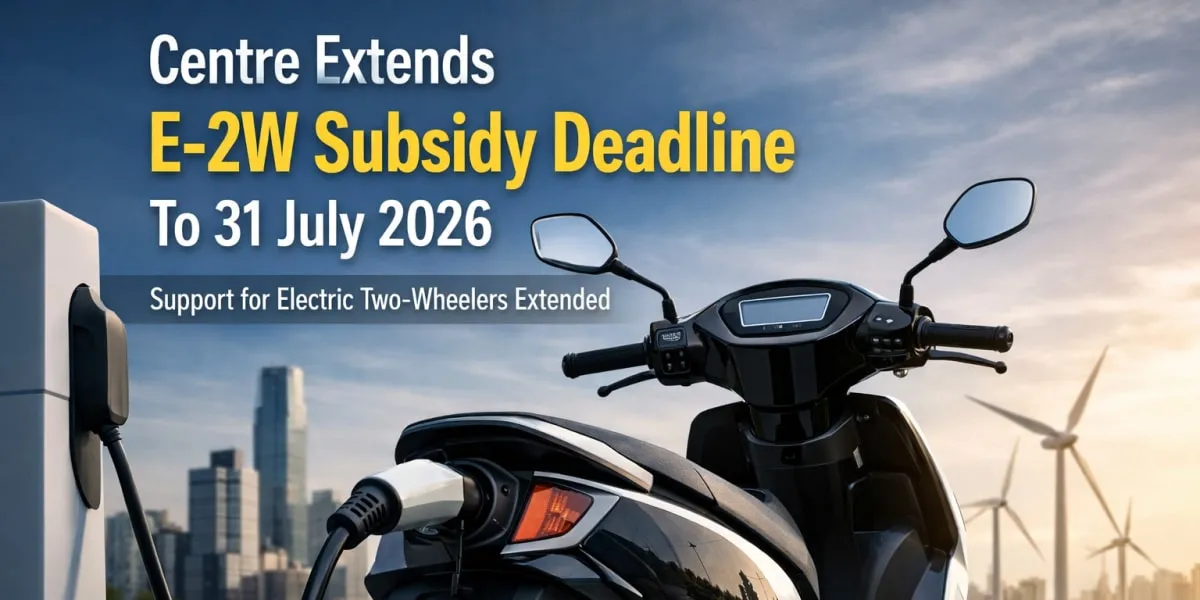
Centre Extends E-2W Subsidy Deadline To 31 July 2026
ECONOMY & POLICY

Centre Extends E-2W Subsidy Deadline To 31 July 2026

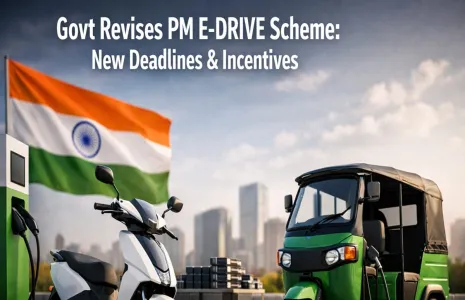
The central government has adjusted the Prime Minister E-Drive scheme (PM E-Drive) to extend the deadline for claiming subsidies for electric two-wheelers (e-2W) to 31 July 2026. The extension is intended to give buyers and manufacturers additional time to avail of incentives and to accelerate the shift towards cleaner mobility. Officials have framed the move as part of wider efforts to meet national electric mobility targets and to support the nascent domestic manufacturing base.

The tweak to the scheme maintains existing eligibility criteria while allowing continued subsidy claims through authorised distribution channels and state nodal agencies. Administrative processes are expected to be streamlined to reduce delays in disbursal and to ensure that benefits reach registered purchasers. The central policy will operate alongside state incentives and regulatory measures aimed at expanding charging infrastructure and aftersales support.

The extension is likely to influence production planning and inventory decisions among original equipment manufacturers, dealers and component suppliers, and may encourage new market entrants to scale up operations. Analysts said a longer horizon for subsidies often helps reduce market uncertainty and can support investment in supply chains and service networks. The policy adjustment is also considered a tool to advance environmental objectives by lowering tailpipe emissions from the two-wheeler fleet over time.

Looking ahead, the government will monitor uptake and may recalibrate provisions to align with demand and technological developments in batteries and vehicle design. Stakeholders have been advised to complete registrations and documentation to secure assistance under the scheme within the revised timeframe. The extension forms part of a broader policy trajectory aimed at mainstreaming electric mobility across urban and semi-urban areas. Periodic reviews of performance indicators and adoption metrics will be used to inform future policy choices and to ensure that support measures remain targeted and cost effective.

The central government has adjusted the Prime Minister E-Drive scheme (PM E-Drive) to extend the deadline for claiming subsidies for electric two-wheelers (e-2W) to 31 July 2026. The extension is intended to give buyers and manufacturers additional time to avail of incentives and to accelerate the shift towards cleaner mobility. Officials have framed the move as part of wider efforts to meet national electric mobility targets and to support the nascent domestic manufacturing base. The tweak to the scheme maintains existing eligibility criteria while allowing continued subsidy claims through authorised distribution channels and state nodal agencies. Administrative processes are expected to be streamlined to reduce delays in disbursal and to ensure that benefits reach registered purchasers. The central policy will operate alongside state incentives and regulatory measures aimed at expanding charging infrastructure and aftersales support. The extension is likely to influence production planning and inventory decisions among original equipment manufacturers, dealers and component suppliers, and may encourage new market entrants to scale up operations. Analysts said a longer horizon for subsidies often helps reduce market uncertainty and can support investment in supply chains and service networks. The policy adjustment is also considered a tool to advance environmental objectives by lowering tailpipe emissions from the two-wheeler fleet over time. Looking ahead, the government will monitor uptake and may recalibrate provisions to align with demand and technological developments in batteries and vehicle design. Stakeholders have been advised to complete registrations and documentation to secure assistance under the scheme within the revised timeframe. The extension forms part of a broader policy trajectory aimed at mainstreaming electric mobility across urban and semi-urban areas. Periodic reviews of performance indicators and adoption metrics will be used to inform future policy choices and to ensure that support measures remain targeted and cost effective.

Next Story
Infrastructure Urban

Centre Disburses Over Rs 24,610 mn in XV Finance Commission Grants

The Union Government has released XV Finance Commission tied grants during the financial year 2025–26 to rural local bodies in Chhattisgarh, Gujarat, Madhya Pradesh, Punjab and Sikkim and has released withheld portions of tied and untied grants to Himachal Pradesh, Odisha and Tripura. The total disbursal exceeded Rs 24,610 mn, with figures expressed in million (mn) thereafter. The releases cover allocations pertaining to different financial years and aim to strengthen rural local governance. State-wise disbursements included Rs 3,324.6 mn for Punjab, Rs 9,432.7 mn for Madhya Pradesh, Rs 3,47..

Next Story
Infrastructure Urban

Centre Releases Over Rs 15 bn as XV FC Grants to Rural Bodies

The Union Government has released over Rs 15 bn in grants recommended by the Fifteenth Finance Commission (XV FC) to strengthen Panchayati Raj Institutions (PRIs) and Rural Local Bodies (RLBs) in six states. The funds comprise tied and untied grants disbursed in FY 2025–26. Telangana received Rs 2.48 bn as the first instalment of untied grants for FY 2025–26, benefitting 12600 Gram Panchayats (GPs). Uttarakhand received Rs 913.1 mn as the second instalment and an additional Rs 18.4 mn of a withheld first instalment was released to a further 216 GPs. Mizoram is included among beneficiary st..

Next Story
Infrastructure Energy

Government Assures Fuel Supplies And Seafarer Safety Amid West Asia Developments

The Government of India has stepped up coordinated measures to maintain stability in critical sectors as developments in West Asia continue to unfold. It has prioritised uninterrupted energy supplies, safeguarded maritime operations and extended consular assistance to nationals. Central authorities are working with State and Union territory administrations to ensure timely information dissemination and operational continuity. Refineries are reported to be operating at high capacity with adequate inventories of petrol and diesel, and domestic LPG production has been increased to support consump..

Advertisement

Subscribe to Our Newsletter

Get daily newsletters around different themes from Construction world.

STAY CONNECTED

Advertisement

Advertisement

Advertisement