Centre Extends E-2W Subsidy Deadline Under Prime Minister E-Drive
ECONOMY & POLICY

Centre Extends E-2W Subsidy Deadline Under Prime Minister E-Drive

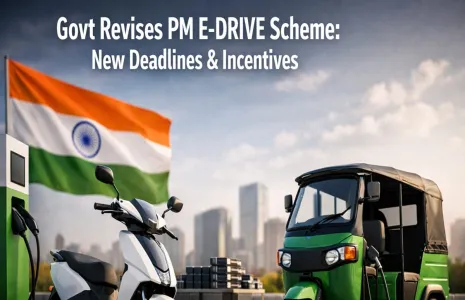
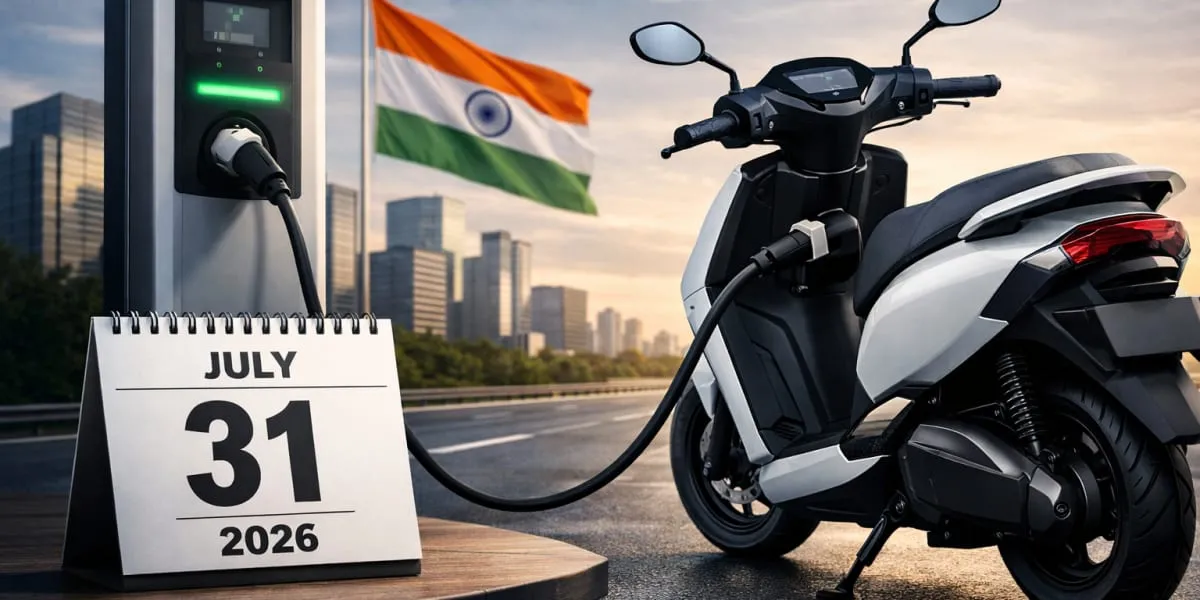
The central government has extended the deadline for the electric two-wheeler subsidy under the Prime Minister's E-Drive scheme to July 31, 2026. The move will allow buyers additional time to claim support intended to lower the upfront cost of electric two-wheelers and to bring continuity to a policy that aims to accelerate the shift away from fossil-fuel powered personal transport. The extension covers eligible purchases completed on or before the revised deadline.

The E-Drive scheme provides a targeted subsidy to reduce the purchase price of qualifying electric two-wheelers and to encourage manufacturers to scale production. The subsidy mechanism is intended to work with state incentives and industry programmes to improve affordability and market supply. By prolonging the window for claims, the central government expects smoother implementation and clearer signals for original equipment manufacturers and dealers planning production and sales.

Industry participants and market observers anticipate that the extension will sustain consumer demand and provide manufacturers with time to align product portfolios and factory output with evolving policy support. The additional period is likely to help firms manage inventory and to maintain momentum in retail sales that underpin investments in related services and charging infrastructure. The continuity of subsidy support may also bolster investor confidence in the emerging electric mobility ecosystem.

Officials indicated that the extension is part of a broader effort to ensure policy stability while the electric vehicle market matures and state schemes synchronise with central measures. Stakeholders will be able to plan purchases and business strategies with an assured timeline until July 31, 2026, after which the government will reassess scheme parameters based on uptake and market developments.

The central government has extended the deadline for the electric two-wheeler subsidy under the Prime Minister's E-Drive scheme to July 31, 2026. The move will allow buyers additional time to claim support intended to lower the upfront cost of electric two-wheelers and to bring continuity to a policy that aims to accelerate the shift away from fossil-fuel powered personal transport. The extension covers eligible purchases completed on or before the revised deadline. The E-Drive scheme provides a targeted subsidy to reduce the purchase price of qualifying electric two-wheelers and to encourage manufacturers to scale production. The subsidy mechanism is intended to work with state incentives and industry programmes to improve affordability and market supply. By prolonging the window for claims, the central government expects smoother implementation and clearer signals for original equipment manufacturers and dealers planning production and sales. Industry participants and market observers anticipate that the extension will sustain consumer demand and provide manufacturers with time to align product portfolios and factory output with evolving policy support. The additional period is likely to help firms manage inventory and to maintain momentum in retail sales that underpin investments in related services and charging infrastructure. The continuity of subsidy support may also bolster investor confidence in the emerging electric mobility ecosystem. Officials indicated that the extension is part of a broader effort to ensure policy stability while the electric vehicle market matures and state schemes synchronise with central measures. Stakeholders will be able to plan purchases and business strategies with an assured timeline until July 31, 2026, after which the government will reassess scheme parameters based on uptake and market developments.

Next Story
Infrastructure Transport

MMRDA advances 250 m on Orange Gate–Marine Drive tunnel

The Mumbai Metropolitan Region Development Authority (MMRDA) has completed 250 m of underground tunnelling for the Orange Gate–Marine Drive Urban Road Tunnel using India’s largest slurry shield tunnel boring machine (TBM) deployed for an urban road project.The project involves twin tunnels extending over 7 km beneath critical transport corridors, including Central Railway, Western Railway and Metro Line 3. The work requires high-precision engineering to navigate densely developed urban infrastructure.Once completed, the tunnel is expected to reduce travel time between Orange Gate and Marin..

Next Story
Infrastructure Urban

Hindustan Zinc Pays Rs 188.46 Billion in FY26

Hindustan Zinc contributed Rs 188.46 billion to the public exchequer in FY 2025-26, according to its 9th Tax Transparency Report. The contribution, equivalent to 46 per cent of the company’s revenue, included direct and indirect taxes, government royalties, dividends to the Government of India, withholding taxes and other statutory levies.The company’s five-year cumulative contribution to the exchequer stood at Rs 915.72 billion. In FY26, Hindustan Zinc reported revenue of Rs 408.44 billion, EBITDA of Rs 221.62 billion and profit after tax of Rs 138.32 billion. It also achieved its highest..

Next Story
Infrastructure Urban

World of Concrete India 2026 Opens in Mumbai

Informa Markets in India will host the 12th edition of World of Concrete India 2026 from 3–5 June 2026 at the Bombay Exhibition Centre, Mumbai. The specialised B2B exhibition will bring together manufacturers, suppliers, contractors, developers, architects, consultants, infrastructure companies, project leaders and government stakeholders.The event is expected to feature over 350 brands and more than 18,000 trade professionals. It will cover concrete and cement, dry mortar, precast technologies, formwork, construction chemicals, industrial and commercial flooring, scaffolding, safety solutio..

Advertisement

Subscribe to Our Newsletter

Get daily newsletters around different themes from Construction world.

STAY CONNECTED

Advertisement

Advertisement

Advertisement