Centre Pushes Faster PSP Development At Pinnapuram Meeting
ECONOMY & POLICY

Centre Pushes Faster PSP Development At Pinnapuram Meeting

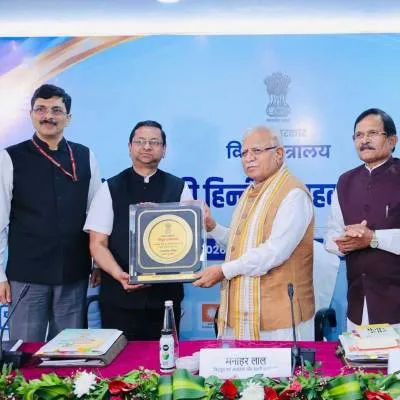
The Ministry of Power convened a meeting of its Consultative Committee of Members of Parliament at Pinnapuram in Kurnool district, Andhra Pradesh, focusing on the growing importance of Pumped Storage Projects (PSPs). The session was chaired by Union Minister of Power Shri Manohar Lal, and attended by Minister of State for Power Shri Shripad Yesso Naik, MPs from both Houses, and senior officials from the Ministry of Power, the Central Electricity Authority (CEA) and Central Public Sector Undertakings.

Shri Manohar Lal emphasised that PSPs are crucial for storing surplus green power and supplying electricity during non-solar hours. Addressing concerns regarding evaporation losses at PSP reservoirs, he suggested deploying floating solar projects as an effective mitigation measure. He also stressed the vital role of State Governments in PSP development—particularly in timely site and water allocation, and faster clearances. The Minister urged Members to work with States to consider removing charges such as green-energy cess, water tax and reservoir lease fees to accelerate PSP deployment.

Members were informed that India has identified a nationwide PSP potential of approximately 224 GW. Of this, ten PSPs totalling around 7 GW have already been commissioned; another ten projects with a combined capacity of roughly 12 GW are under construction; and fifty-six PSPs with around 78 GW capacity are at various stages of planning and development.

Officials highlighted several policy measures introduced to fast-track PSP development, including Guidelines for PSP development specifying modalities for site allotment and exemptions from free-power and Local Area Development Fund obligations. A full waiver of Inter-State Transmission System charges for 25 years has been granted for projects awarded on or before 30 June 2028. Further policy support includes budgetary allocations for enabling infrastructure, Renewable Consumption Obligations for energy-storage systems and Tariff-Based Competitive Bidding guidelines for procuring stored energy from PSPs. Off-stream closed-loop PSPs have been exempted from the requirement of CEA concurrence, and the capital-expenditure threshold for CEA approval has been revised to Rs 30 billion from earlier limits of Rs 25 billion and Rs 10 billion depending on the route of project award.

Members of the Committee welcomed the Ministry’s comprehensive push, noting that steps such as easing technical appraisal requirements for closed-loop PSPs, budgetary support for enabling infrastructure and waivers on ISTS charges have strengthened confidence among developers and States. They also discussed environmental aspects of PSPs and other renewable sources, observing that PSPs offer relatively lower ecological impact.

Minister of State Shri Shripad Yesso Naik highlighted that the commissioning of all eight units of the 1,680 MW Pinnapuram PSP, alongside the 500 MW Tehri PSP during 2025–26, marks a major achievement reflecting strong coordination between the Centre, State Governments, CPSUs and the private sector.

The Ministry of Power convened a meeting of its Consultative Committee of Members of Parliament at Pinnapuram in Kurnool district, Andhra Pradesh, focusing on the growing importance of Pumped Storage Projects (PSPs). The session was chaired by Union Minister of Power Shri Manohar Lal, and attended by Minister of State for Power Shri Shripad Yesso Naik, MPs from both Houses, and senior officials from the Ministry of Power, the Central Electricity Authority (CEA) and Central Public Sector Undertakings. Shri Manohar Lal emphasised that PSPs are crucial for storing surplus green power and supplying electricity during non-solar hours. Addressing concerns regarding evaporation losses at PSP reservoirs, he suggested deploying floating solar projects as an effective mitigation measure. He also stressed the vital role of State Governments in PSP development—particularly in timely site and water allocation, and faster clearances. The Minister urged Members to work with States to consider removing charges such as green-energy cess, water tax and reservoir lease fees to accelerate PSP deployment. Members were informed that India has identified a nationwide PSP potential of approximately 224 GW. Of this, ten PSPs totalling around 7 GW have already been commissioned; another ten projects with a combined capacity of roughly 12 GW are under construction; and fifty-six PSPs with around 78 GW capacity are at various stages of planning and development. Officials highlighted several policy measures introduced to fast-track PSP development, including Guidelines for PSP development specifying modalities for site allotment and exemptions from free-power and Local Area Development Fund obligations. A full waiver of Inter-State Transmission System charges for 25 years has been granted for projects awarded on or before 30 June 2028. Further policy support includes budgetary allocations for enabling infrastructure, Renewable Consumption Obligations for energy-storage systems and Tariff-Based Competitive Bidding guidelines for procuring stored energy from PSPs. Off-stream closed-loop PSPs have been exempted from the requirement of CEA concurrence, and the capital-expenditure threshold for CEA approval has been revised to Rs 30 billion from earlier limits of Rs 25 billion and Rs 10 billion depending on the route of project award. Members of the Committee welcomed the Ministry’s comprehensive push, noting that steps such as easing technical appraisal requirements for closed-loop PSPs, budgetary support for enabling infrastructure and waivers on ISTS charges have strengthened confidence among developers and States. They also discussed environmental aspects of PSPs and other renewable sources, observing that PSPs offer relatively lower ecological impact. Minister of State Shri Shripad Yesso Naik highlighted that the commissioning of all eight units of the 1,680 MW Pinnapuram PSP, alongside the 500 MW Tehri PSP during 2025–26, marks a major achievement reflecting strong coordination between the Centre, State Governments, CPSUs and the private sector.

Next Story
Resources

ULCCS Showcases Cooperative Model at UN Symposium

Uralungal Labour Contract Co-operative Society (ULCCS) showcased its community-led development model at the United Nations Headquarters in New York, where it participated as a panellist at the International Symposium on Cooperative Financial Institutions held on 28–29 May 2026.Jointly organised by the United Nations Department of Economic and Social Affairs (UN DESA), the International Cooperative Banking Association (ICBA), and the International Cooperative Alliance (ICA), the symposium was held under the theme ‘Fuelling Inclusive and Equitable Growth’ and brought together policymakers,..

Next Story
Infrastructure Transport

Delhi Airport to Finalise 20-Year Master Plan

Delhi International Airport Ltd (DIAL) is finalising a 20-year master plan to guide long term infrastructure and operational development at Indira Gandhi International Airport, an official said. The operator expects the plan to reflect changes in the airline industry, shifts in the competitive landscape and evolving infrastructure requirements across terminals, airside and support services. The official said the document is likely to be ready in the next two to two-and-a-half months as the operator moves through planning stages. The plan will be prepared after consultations with airport users ..

Next Story
Real Estate

Aadhar Housing Finance Targets Rs 500 bn AUM By FY29

Aadhar Housing Finance has set a target to raise its asset under management to Rs 500 billion (bn) by the end of FY29, aiming to achieve this over the next three financial years through an 18-20 per cent loan growth trajectory. The firm focuses on the low-income segment with a ticket size of less than Rs 1.5 million (mn) and has relied on that segment to drive expansion. The company closed FY26 with an AUM of Rs 305.71 bn, reflecting the expansion in recent years, and it reported a net profit rise of 22 per cent to Rs 11.08 bn. Management indicated that gross non-performing assets stood at 1.0..

Advertisement

Subscribe to Our Newsletter

Get daily newsletters around different themes from Construction world.

STAY CONNECTED

Advertisement

Advertisement

Advertisement