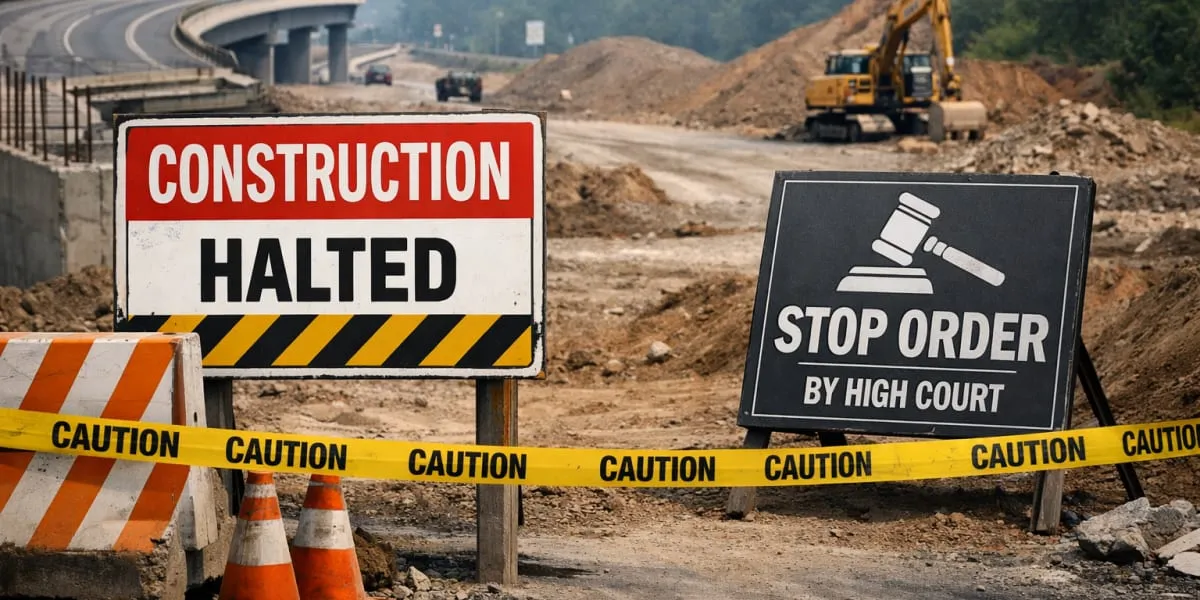
Chatra Bypass Construction Halted After High Court Stay
ECONOMY & POLICY

Chatra Bypass Construction Halted After High Court Stay

The construction of a bypass around Chatra town on NH-22 has been halted after the Jharkhand High Court issued a stay order on September 4, 2026, leaving the project in limbo.

The National Highway Division of the Road Construction Department had planned a four-lane road with a divided carriageway and a formation width of 27 metres to ease traffic congestion.

The proposal comprised two carriageways of seven metres each, two paved shoulders of two point five metres each and a five metre earthen shoulder.

The high court stayed the felling of 13,681 trees that were identified for removal for the bypass.

The order followed a writ petition by Suresh Sao, who said 300 trees on his land would be cut for the alignment.

The bench sought further details from state and central authorities on environmental impacts and project justification.

The court expressed concern about large-scale tree felling and described such clearances as developmental disasters, preferring protection of mature trees where feasible.

As an interim measure none of the identified trees may be felled until further orders.

The judge invited authorities to consider whether users might travel a few extra miles rather than permit indiscriminate clearance.

Agencies have been allowed to review the current alignment and to explore alternative routes that would minimise ecological damage.

Both the Union Ministry of Environment, Forest and Climate Change and the Ministry of Road Transport and Highways were given liberty to reassess the proposals and offer guidance on re-alignment.

Officials may revisit designs and submit revised plans for the court's consideration.

Until those reviews are completed and the court provides further direction the bypass scheme will remain on hold, prolonging congestion for commuters in the Chatra area.

The pause will permit a fuller assessment of environmental trade-offs and alignment options without any immediate tree felling.

The future of the project will depend on technical reviews and subsequent orders from the high court.

The construction of a bypass around Chatra town on NH-22 has been halted after the Jharkhand High Court issued a stay order on September 4, 2026, leaving the project in limbo. The National Highway Division of the Road Construction Department had planned a four-lane road with a divided carriageway and a formation width of 27 metres to ease traffic congestion. The proposal comprised two carriageways of seven metres each, two paved shoulders of two point five metres each and a five metre earthen shoulder. The high court stayed the felling of 13,681 trees that were identified for removal for the bypass. The order followed a writ petition by Suresh Sao, who said 300 trees on his land would be cut for the alignment. The bench sought further details from state and central authorities on environmental impacts and project justification. The court expressed concern about large-scale tree felling and described such clearances as developmental disasters, preferring protection of mature trees where feasible. As an interim measure none of the identified trees may be felled until further orders. The judge invited authorities to consider whether users might travel a few extra miles rather than permit indiscriminate clearance. Agencies have been allowed to review the current alignment and to explore alternative routes that would minimise ecological damage. Both the Union Ministry of Environment, Forest and Climate Change and the Ministry of Road Transport and Highways were given liberty to reassess the proposals and offer guidance on re-alignment. Officials may revisit designs and submit revised plans for the court's consideration. Until those reviews are completed and the court provides further direction the bypass scheme will remain on hold, prolonging congestion for commuters in the Chatra area. The pause will permit a fuller assessment of environmental trade-offs and alignment options without any immediate tree felling. The future of the project will depend on technical reviews and subsequent orders from the high court.

Related Stories

Gold Stories

Next Story
Infrastructure Energy

Vedanta Secures Two Offshore Blocks in KG Basin Under DSF IV

Vedanta Oil and Gas has secured two offshore blocks in the Krishna Godavari (KG) Basin under the Government of India's Discovered Small Field (DSF) IV bidding round, strengthening its exploration and production portfolio along India's east coast.The newly awarded assets include the shallow water block KG/OSDSF/G1/2025 and the deepwater block KG/DWDSF/GD10/2025. The acquisition forms part of Vedanta's strategy to expand its offshore operations and explore India's untapped hydrocarbon resources through advanced technologies and efficient project execution.The blocks were awarded at a contract si..

Next Story
Resources

Hindustan Zinc's Sakhi Enterprise Income Grows 43%

Hindustan Zinc's Sakhi Microenterprise initiative has recorded a 43 per cent year-on-year increase in collective income, rising from Rs 2.3 million in FY26 to Rs 3.28 million, according to the company. The initiative, operated through Sakhi Utpadan Samiti, currently engages 426 women in income-generating activities across multiple production units.The programme aims to promote financial independence by helping rural women develop entrepreneurial skills and establish sustainable livelihoods. One of its beneficiaries, Manju Devi, who previously depended on seasonal agricultural work, now operate..
Next Story
Technology

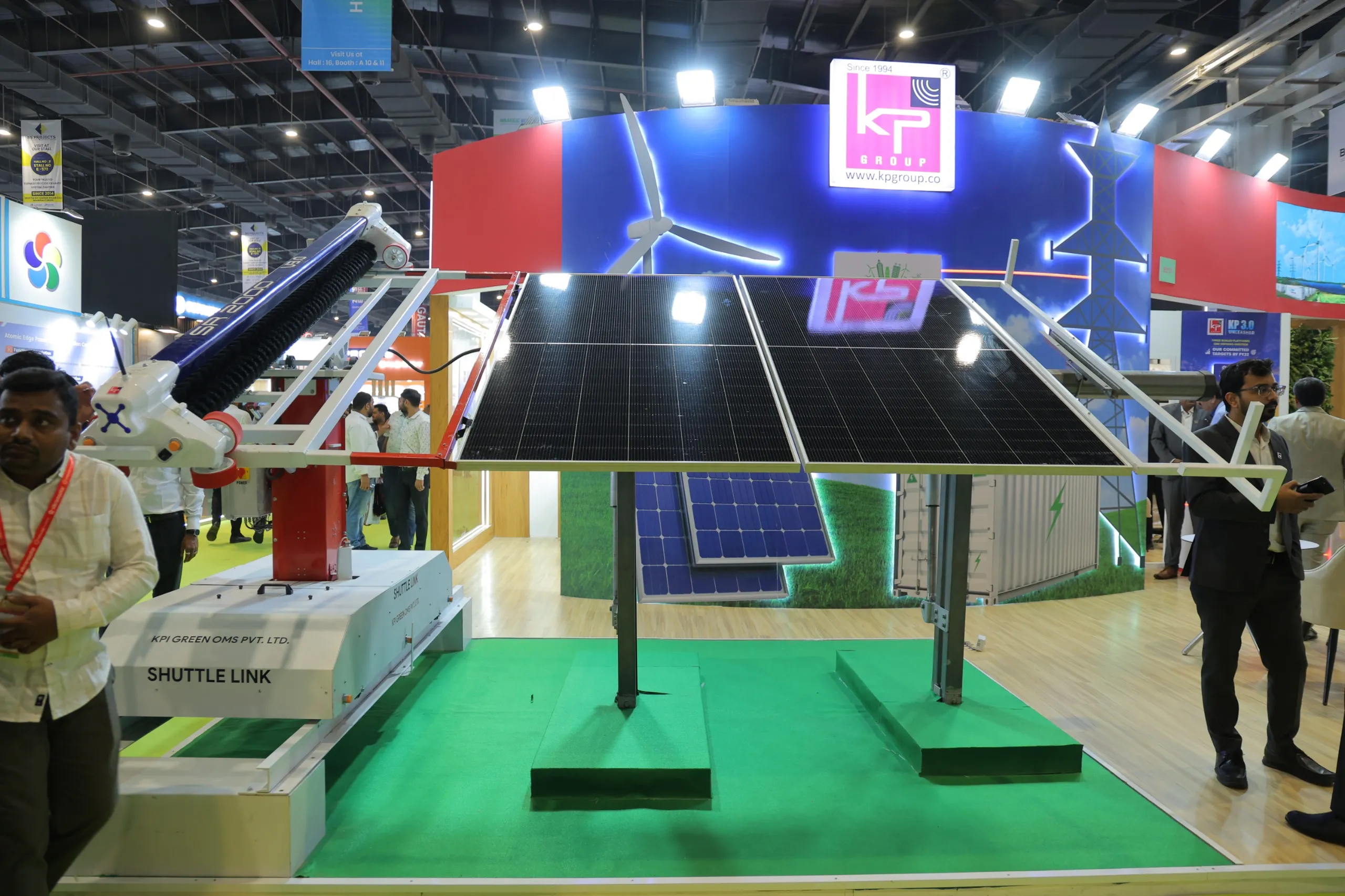
KP Group Launches Waterless Solar Cleaning Robot at REI Expo

KP Group's KPI Green OMS has launched the SR 2000 V3.0, a waterless robotic solar panel cleaning system designed for single-axis tracker and fixed-tilt solar power plants, at the Renewable Energy India (REI) Expo 2026 in Greater Noida. The robot aims to improve solar plant efficiency while reducing water consumption and maintenance requirements.Designed to address dust accumulation on solar modules, particularly in dry and remote locations, the SR 2000 V3.0 uses a UV-resistant polybutylene terephthalate (PBT) brush operating at 130 rpm. According to the company, the system achieves a cleaning ..

Advertisement

Subscribe to Our Newsletter

Get daily newsletters around different themes from Construction world.

STAY CONNECTED

Advertisement

SPECIAL OFFER
QR Code