Cyient DLM Posts Q4 And FY26 Results With Double-Digit EBITDA
ECONOMY & POLICY

Cyient DLM Posts Q4 And FY26 Results With Double-Digit EBITDA

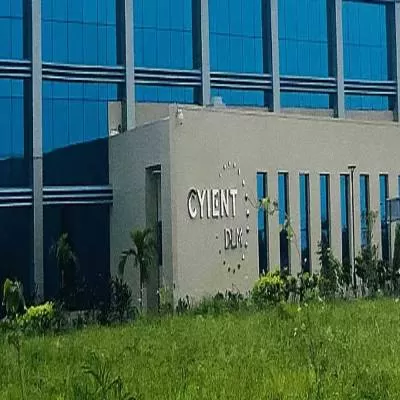
Hyderabad-based Cyient DLM announced results for the quarter and year ended 31 March 2026. All currency figures are converted to million (mn) and shown as Rs amounts. Revenue for the fourth quarter was Rs 3,691 mn, up 21.7 per cent quarter-on-quarter and down 13.8 per cent year-on-year.

EBITDA for the quarter was Rs 431 mn, with an 11.7 per cent margin, a quarter-on-quarter improvement of 148 basis points and a year-on-year decline of 173 basis points. Profit after tax for the quarter was Rs 224 mn, equal to 6.1 per cent of revenue, up 153 basis points quarter-on-quarter and down 116 basis points year-on-year.

For the full year revenue was Rs 12,615 mn, down 17 per cent. Normalised EBITDA was Rs 1,302 mn at a 10.3 per cent margin, up 78 basis points year-on-year, and normalised profit after tax was Rs 563 mn at a 4.5 per cent margin. Reported profit after tax was Rs 733 mn, or 5.8 per cent of revenue, reflecting one-off other income in the second quarter. Normalised free cash flow for the year was Rs 281 mn.

Order intake for FY26 exceeded Rs 18,430 mn, up by Rs 5,105 mn versus the prior year, and the company recorded a book-to-bill ratio greater than one in all four quarters. The order book was Rs 24,166 mn, the highest in the last eight quarters, and the company recorded a book-to-bill ratio of one point five for the year. The business added six new customer logos and industrial and medical segments accounted for about 46 per cent of fourth quarter order intake.

Management said disciplined execution and operational focus supported sustained double-digit EBITDA margins amid challenging demand, aided by lower finance costs. The firm strengthened capabilities through global quality and ESG audits and began series production across automotive lines after IATF clearance.

The company received multiple industry recognitions. It plans to prioritise margin improvement, deepen customer ties and invest in product and platform development alongside technology partnerships to broaden growth avenues beyond traditional electronic manufacturing services in FY27.

Hyderabad-based Cyient DLM announced results for the quarter and year ended 31 March 2026. All currency figures are converted to million (mn) and shown as Rs amounts. Revenue for the fourth quarter was Rs 3,691 mn, up 21.7 per cent quarter-on-quarter and down 13.8 per cent year-on-year. EBITDA for the quarter was Rs 431 mn, with an 11.7 per cent margin, a quarter-on-quarter improvement of 148 basis points and a year-on-year decline of 173 basis points. Profit after tax for the quarter was Rs 224 mn, equal to 6.1 per cent of revenue, up 153 basis points quarter-on-quarter and down 116 basis points year-on-year. For the full year revenue was Rs 12,615 mn, down 17 per cent. Normalised EBITDA was Rs 1,302 mn at a 10.3 per cent margin, up 78 basis points year-on-year, and normalised profit after tax was Rs 563 mn at a 4.5 per cent margin. Reported profit after tax was Rs 733 mn, or 5.8 per cent of revenue, reflecting one-off other income in the second quarter. Normalised free cash flow for the year was Rs 281 mn. Order intake for FY26 exceeded Rs 18,430 mn, up by Rs 5,105 mn versus the prior year, and the company recorded a book-to-bill ratio greater than one in all four quarters. The order book was Rs 24,166 mn, the highest in the last eight quarters, and the company recorded a book-to-bill ratio of one point five for the year. The business added six new customer logos and industrial and medical segments accounted for about 46 per cent of fourth quarter order intake. Management said disciplined execution and operational focus supported sustained double-digit EBITDA margins amid challenging demand, aided by lower finance costs. The firm strengthened capabilities through global quality and ESG audits and began series production across automotive lines after IATF clearance. The company received multiple industry recognitions. It plans to prioritise margin improvement, deepen customer ties and invest in product and platform development alongside technology partnerships to broaden growth avenues beyond traditional electronic manufacturing services in FY27.

Next Story
Technology

AI-Enabled Workflows Lift Profitability and Productivity

Organisations modernising frontline workflows with artificial intelligence, automation and real-time data are reporting stronger financial performance, higher productivity and improved employee engagement, according to a global study by Zebra Technologies and Oxford Economics.The research covered 1,000 senior leaders across retail, manufacturing, transportation and logistics in the US, Mexico, the UK, Germany, India, Japan, Australia and New Zealand.In transportation and logistics, 54 per cent of companies that improved picking and packing operations reported faster operational performance, wh..

Next Story
Real Estate

India Leads Global AI Readiness but Implementation Lags

Indian companies lead global averages across all eight artificial intelligence readiness indicators tracked by JLL, but only 19 per cent have started making changes to their workplaces, according to the JLL 2026 Future of Work Survey.The study found that 77 per cent of Indian business leaders expect AI to change their office requirements, creating a 58-percentage-point gap between awareness and implementation. The survey covered more than 2,200 CEOs, CFOs and real estate leaders across 21 countries during the first quarter of 2026.Despite concerns over automation, 58 per cent of Indian leaders..

Next Story
Equipment

Three WOLFF Cranes Build Riyadh Cable-Stayed Bridges

Three WOLFF 180 B luffing jib cranes are supporting the construction of two cable-stayed bridges alongside the existing Wadi Laban Bridge in Riyadh, Saudi Arabia. The project is being developed for the Royal Commission for Riyadh City and executed by the ICRC joint venture comprising IC Ictas and Al Rashid Trading & Contracting Company.The cranes are handling lifting operations including formwork, reinforcement, concrete placement, work platforms, surveying equipment and other construction materials. Each crane is fitted with a 40 m jib, reaches a hook height of 157 m and offers a maximum ..

Advertisement

Subscribe to Our Newsletter

Get daily newsletters around different themes from Construction world.

STAY CONNECTED

Advertisement

Advertisement

Advertisement