





Dam Rehabilitation And Improvement Project Phase II
ECONOMY & POLICY

Dam Rehabilitation And Improvement Project Phase II

The Union Government enacted the Dam Safety Act, 2021, which came into effect on 30 December 2021, and established the National Dam Safety Authority to oversee implementation and standards. The authority has issued regulations and provided technical oversight while States and Union Territories have institutionalised mandatory pre-monsoon and post-monsoon safety audits of specified dams. Independent panels of experts have been constituted in several States and Union Territories to undertake comprehensive safety evaluations and strengthen surveillance and maintenance.

According to reporting by dam owners, year-wise inspections show that in 2023 there were 6414 pre-monsoon inspections and 5881 post-monsoon inspections, in 2024 there were 6366 pre-monsoon inspections and 6456 post-monsoon inspections, and in 2025 there were 6524 pre-monsoon inspections and 6555 post-monsoon inspections. These figures reflect the institutionalisation of inspection cycles and improved monitoring under the Act. States have been encouraged to adopt early warning systems and instrumentation for health monitoring of dams.

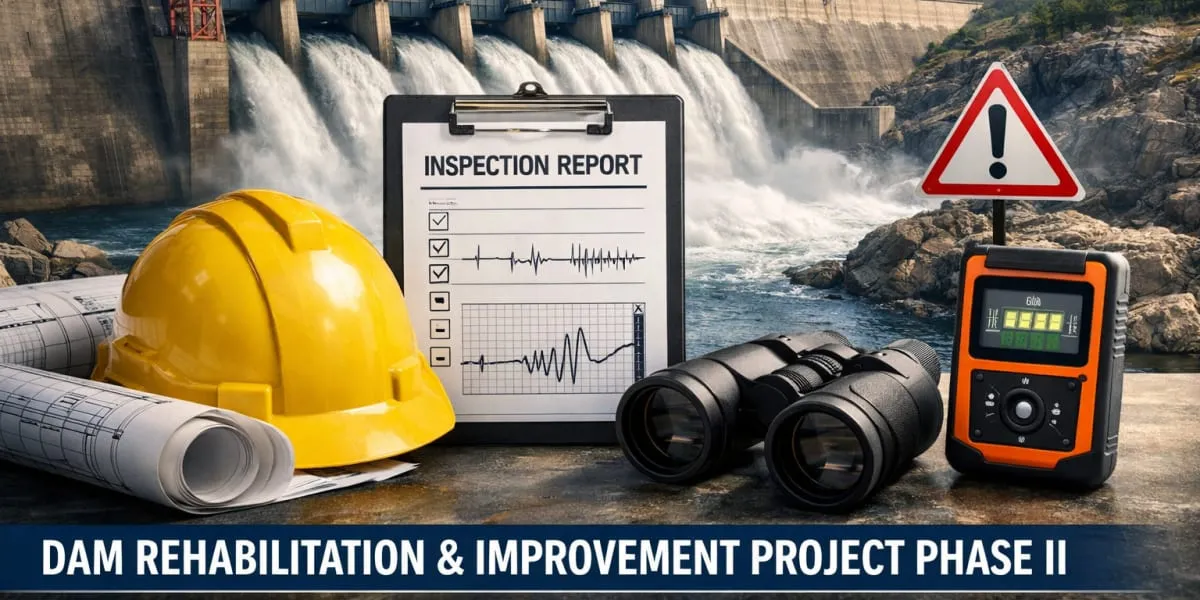
To improve safety and operational performance, the Government is implementing the Dam Rehabilitation and Improvement Project, Phase II and Phase III, with external funding, targeting rehabilitation works, safety enhancement and capacity building for selected dams. Digital tools developed under DRIP Phase II are assisting dam owners, State Dam Safety Organisations and the National Dam Safety Authority to meet statutory obligations within prescribed timelines, while technology demonstrations and diagnostic studies are promoting cost effective rehabilitation techniques. Major rehabilitation works on 40 distressed dams have been completed and project allocations are made on the basis of comprehensive proposals that include structural and non-structural measures.

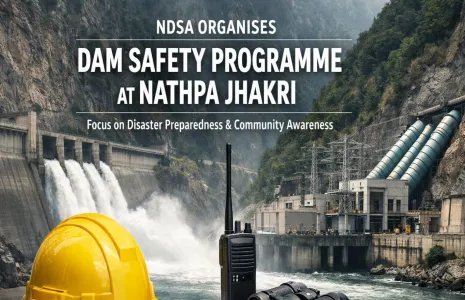
Central support includes standard bidding documents prepared by the Central Water Commission, technical assistance for instrumentation plans and guidance on Emergency Action Plans, which are being developed and tested through mock drills in coordination with State Governments and disaster management agencies. Community awareness programmes have been organised at various dam sites to strengthen preparedness and stakeholder coordination. The information was provided by the Minister of State for Jal Shakti, Raj Bhushan Choudhary, in a written reply to a question in the Rajya Sabha.

The Union Government enacted the Dam Safety Act, 2021, which came into effect on 30 December 2021, and established the National Dam Safety Authority to oversee implementation and standards. The authority has issued regulations and provided technical oversight while States and Union Territories have institutionalised mandatory pre-monsoon and post-monsoon safety audits of specified dams. Independent panels of experts have been constituted in several States and Union Territories to undertake comprehensive safety evaluations and strengthen surveillance and maintenance. According to reporting by dam owners, year-wise inspections show that in 2023 there were 6414 pre-monsoon inspections and 5881 post-monsoon inspections, in 2024 there were 6366 pre-monsoon inspections and 6456 post-monsoon inspections, and in 2025 there were 6524 pre-monsoon inspections and 6555 post-monsoon inspections. These figures reflect the institutionalisation of inspection cycles and improved monitoring under the Act. States have been encouraged to adopt early warning systems and instrumentation for health monitoring of dams. To improve safety and operational performance, the Government is implementing the Dam Rehabilitation and Improvement Project, Phase II and Phase III, with external funding, targeting rehabilitation works, safety enhancement and capacity building for selected dams. Digital tools developed under DRIP Phase II are assisting dam owners, State Dam Safety Organisations and the National Dam Safety Authority to meet statutory obligations within prescribed timelines, while technology demonstrations and diagnostic studies are promoting cost effective rehabilitation techniques. Major rehabilitation works on 40 distressed dams have been completed and project allocations are made on the basis of comprehensive proposals that include structural and non-structural measures. Central support includes standard bidding documents prepared by the Central Water Commission, technical assistance for instrumentation plans and guidance on Emergency Action Plans, which are being developed and tested through mock drills in coordination with State Governments and disaster management agencies. Community awareness programmes have been organised at various dam sites to strengthen preparedness and stakeholder coordination. The information was provided by the Minister of State for Jal Shakti, Raj Bhushan Choudhary, in a written reply to a question in the Rajya Sabha.

Next Story
Resources

Anant Raj Appoints Anish Sarin as Director

Anant Raj has appointed Anish Sarin as Director on its Board, marking a key step in the company’s leadership transition and long-term growth strategy. The announcement was made during the company’s Q4 and FY26 results declaration, reflecting the induction of next-generation leadership as the company expands across real estate, cloud infrastructure and data centre businesses. Anish Sarin, grandson of veteran industrialist Ashok Sarin, represents the emerging leadership at Anant Raj. Educated at Regent’s University London, he brings a global business outlook along with a strong focus on t..

Next Story
Technology

Vedanta eyes AI-led value growth

Vedanta Group expects to unlock USD 300–400 million in additional value over the next three years through large-scale deployment of AI-led industrial technologies across its businesses. The group said its V-Spark DeepTech Ventures platform has already delivered nearly four times return on investment since inception.Vedanta is scaling AI, predictive analytics, Industrial Internet of Things, digital twins, machine learning, automation and connected manufacturing technologies across its metals, mining, energy and industrial operations. These deployments are aimed at improving productivity, lowe..

Next Story
Infrastructure Urban

Hindustan Zinc inks pact with Group Nirmal

Hindustan Zinc has signed an MoU with Group Nirmal to set up a zinc wire manufacturing facility at its Zinc Industrial Park in Khankhala, Bhilwara district, Rajasthan. The partnership will expand downstream manufacturing activity and support value-added zinc applications in India.Under the agreement, Group Nirmal will manufacture zinc wire products using Hindustan Zinc’s Special High Grade zinc. The products will cater to infrastructure, renewable energy, automotive and industrial engineering sectors.Zinc wire is used in thermal spray coating and metallising processes to protect steel struct..

Advertisement

Subscribe to Our Newsletter

Get daily newsletters around different themes from Construction world.

STAY CONNECTED

Advertisement

Advertisement

Advertisement















