DCIL Marks Golden Jubilee, Sets Rs 30 Billion Growth Target
ECONOMY & POLICY

DCIL Marks Golden Jubilee, Sets Rs 30 Billion Growth Target

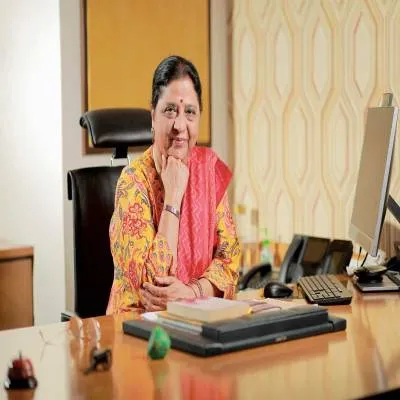
Dredging Corporation of India Limited (DCIL) marked its fiftieth year in March 2026 and set out an ambitious expansion and modernisation roadmap. The managing director and chief executive officer outlined growth trajectory, operational priorities and strategic targets for the coming decade. The company was established on 29 March 1976 as a central public sector enterprise supporting India's port infrastructure.

DCIL has grown from a fleet of one or two dredgers into a modern organisation with enhanced technical capability. Hopper capacity has increased from 3,500 cubic metres to 12,000 cubic metres and dredging depth capability has expanded from 10-15 metres to up to 25 metres. Port depths at major locations such as Paradip have risen from 10-12 metres to nearly 22 metres.

Financial performance has strengthened, with revenue rising from one point five to two billion (bn) in early years to 11.46 bn most recently. The current order book stands at about 14 bn and the company has set a target of Rs 30 bn turnover within the next five to ten years. DCIL is pursuing an equity raise of Rs 10 bn through a rights issue to fund growth and fleet modernisation.

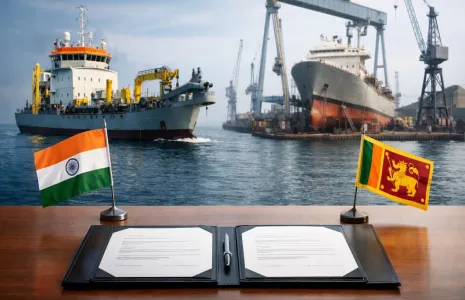
The company has expanded internationally with projects in Saudi Arabia, Bahrain, Taiwan, Sri Lanka and Bangladesh and has executed reclamation works involving 10 million (mn) cubic metres of dredging. It handles nearly 80 per cent of India's maintenance dredging, accounting for 110 mn cubic metres out of a total 150 mn cubic metres annually, while capital dredging remains around 10 per cent. DCIL is building capabilities in submarine cable trenching, offshore wind energy support and inland waterways operations.

Aligned with Maritime India Vision 2030, the company plans to induct 11 new dredgers and is collaborating with Indian shipyards to support Atmanirbhar Bharat. Productivity improvements of 10-15 per cent, modernisation of ageing assets and strengthened training through a skill development centre are priorities. With a role along India's 7,500 km coastline, DCIL aims to capitalise on national initiatives such as the Sagarmala programme worth one point four trillion (tn).

Dredging Corporation of India Limited (DCIL) marked its fiftieth year in March 2026 and set out an ambitious expansion and modernisation roadmap. The managing director and chief executive officer outlined growth trajectory, operational priorities and strategic targets for the coming decade. The company was established on 29 March 1976 as a central public sector enterprise supporting India's port infrastructure. DCIL has grown from a fleet of one or two dredgers into a modern organisation with enhanced technical capability. Hopper capacity has increased from 3,500 cubic metres to 12,000 cubic metres and dredging depth capability has expanded from 10-15 metres to up to 25 metres. Port depths at major locations such as Paradip have risen from 10-12 metres to nearly 22 metres. Financial performance has strengthened, with revenue rising from one point five to two billion (bn) in early years to 11.46 bn most recently. The current order book stands at about 14 bn and the company has set a target of Rs 30 bn turnover within the next five to ten years. DCIL is pursuing an equity raise of Rs 10 bn through a rights issue to fund growth and fleet modernisation. The company has expanded internationally with projects in Saudi Arabia, Bahrain, Taiwan, Sri Lanka and Bangladesh and has executed reclamation works involving 10 million (mn) cubic metres of dredging. It handles nearly 80 per cent of India's maintenance dredging, accounting for 110 mn cubic metres out of a total 150 mn cubic metres annually, while capital dredging remains around 10 per cent. DCIL is building capabilities in submarine cable trenching, offshore wind energy support and inland waterways operations. Aligned with Maritime India Vision 2030, the company plans to induct 11 new dredgers and is collaborating with Indian shipyards to support Atmanirbhar Bharat. Productivity improvements of 10-15 per cent, modernisation of ageing assets and strengthened training through a skill development centre are priorities. With a role along India's 7,500 km coastline, DCIL aims to capitalise on national initiatives such as the Sagarmala programme worth one point four trillion (tn).

Next Story
Real Estate

Indian real estate attracts USD 1.4 bn institutional investments in Q1 2026: Vestian

Institutional investments in India’s real estate sector touched USD 1.4 billion in Q1 2026, marking the highest first-quarter inflow since 2022, according to Vestian. While investments fell 62 per cent quarter-on-quarter due to an exceptionally high base in the previous quarter, they rose 74 per cent compared to the same period last year, reflecting sustained investor confidence despite rising geopolitical and macroeconomic challenges.Commercial real estate remained the key driver of investment activity during the quarter, accounting for 80 per cent of total inflows, sharply higher than 38 p..

Next Story
Infrastructure Transport

VECV crosses 1 lakh annual vehicle sales milestone in FY26

VE Commercial Vehicles (VECV), a joint venture between Volvo Group and Eicher Motors, has surpassed the 1 lakh annual sales mark in FY 2025–26, recording its highest-ever commercial vehicle sales performance. The company said it sold more than 100,000 vehicles during the year, marking a major milestone aligned with the original vision of the Volvo–Eicher joint venture.The strong performance was supported by demand across categories. Light and Medium Duty (LMD) trucks contributed 47,789 units, accounting for 46.1 per cent of total sales. Heavy Duty (HD) trucks recorded 26,867 units (25.9 pe..

Next Story
Technology

Rodic Digital & Advisory partners SatSure to deploy EO intelligence in public sector

Rodic Digital & Advisory (RDA), the strategic advisory and digital transformation arm of Rodic Consultants, has signed a strategic cooperation Memorandum of Understanding (MoU) with SatSure to jointly pursue opportunities in India’s public sector. The collaboration aims to integrate high-resolution Earth Observation (EO) data and geospatial AI into government workflows to strengthen monitoring, compliance, and operational decision-making across key sectors.The partnership combines SatSure’s Earth intelligence capabilities with RDA’s expertise in government digital transformation and ..

Advertisement

Subscribe to Our Newsletter

Get daily newsletters around different themes from Construction world.

STAY CONNECTED

Advertisement

Advertisement

Advertisement